
PHOTO
Over the June long weekend, Bathurst celebrated the 150th anniversary of the arrival of the Great Western Railway Line connecting the city to the capital and the coast.
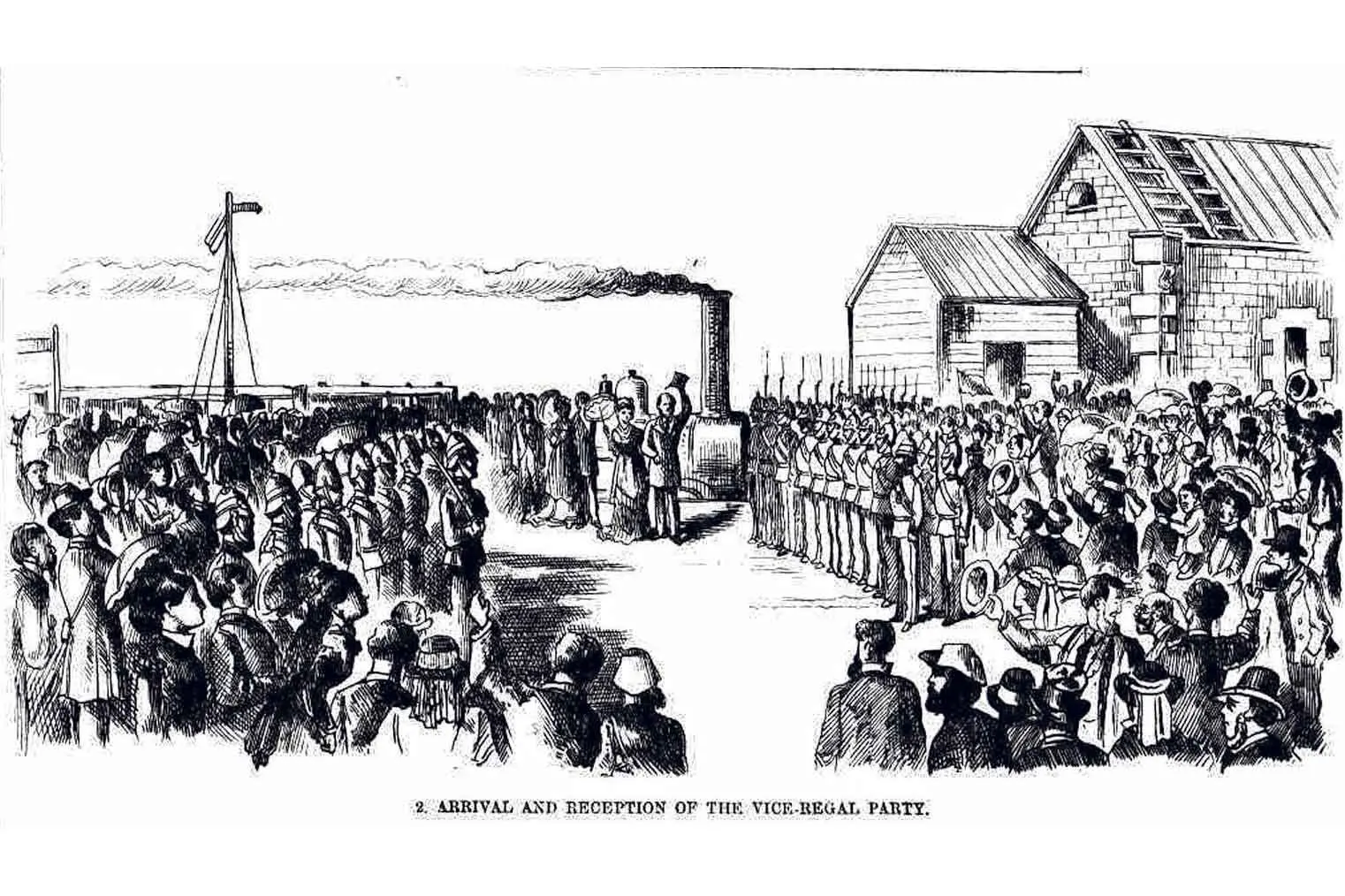
The official opening celebration took place at Bathurst railway station on Tuesday, 4 April 1876, with the line declared open by the then Governor of NSW, His Excellency Sir Hercules Robinson.
Ahead of his arrival on the first passenger train from Sydney, locals crowded around the station with some putting the number of people at 6,000.
“A round of cheering broke from the train as the crowd drew up, which was repeated when his Excellency alighted from the carriage, and the National Anthem was played by the band of the Bathurst Volunteer Rifles," reported the Illustrated Sydney News.
"The Mayor, the Aldermen, and the Reception Committee were waiting to receive his Excellency, and the whole party immediately proceeded to a raised platform, just outside the station yard, which had been erected for the transaction of the formal proceedings of the day. These were commenced by the Mayor reading an address, to which his Excellency made a suitable reply.
"Loud cheering followed the reading of the address and the reply, and three cheers were given for his Excellency and for Lady Robinson. His Excellency then said, 'I cordially congratulate you all on the completion of this great work, and I now declare this Great Western Railway open to Bathurst, and I propose that we commemorate the event by giving three hearty cheers for her Most Gracious Majesty the Queen.
"A luncheon took place in the evening, at which the usual toasts were drunk and a good deal of speechifying indulged in. A free dinner was given to the public on the Market Square. A ball followed, and on the whole the day was one of the most memorable ever experienced in Bathurst."
The arrival of the railway cut the journey to Sydney from days to hours, becoming a major economic and social boon for the city.
From Bathurst, the Great Western Railway Line pushed further west, arriving in Orange in April 1877, Wellington in June 1880, Dubbo in February 1881, Nyngan in June 1883, and the terminus at Bourke in September 1885.