
PHOTO
Lucknow is celebrating the 175th anniversary of the discovery of gold in 1851, just two months after the first payable gold was found at nearby Ophir. Lucknow was once one of the richest goldfields in NSW, but for a town that has had an oversized presence in the history of the region, it is surprising that no one today is exactly sure just why it was named “Lucknow”.
One theory you hear suggested is that it is a play on words, a combination of the “luck” and “now”, supposedly something miners would say in hopes of improving their fortunes. This could well be true, but looking through newspaper archives, the first sign of this you find is well into the 20th century, and we think it unlikely.
To our mind it is impossible to believe that it was not a direct, knowing reference to the North Indian city of Lucknow, the news of which had filled newspaper columns for six years before the local goldfields officially adopted the name Lucknow in 1863.
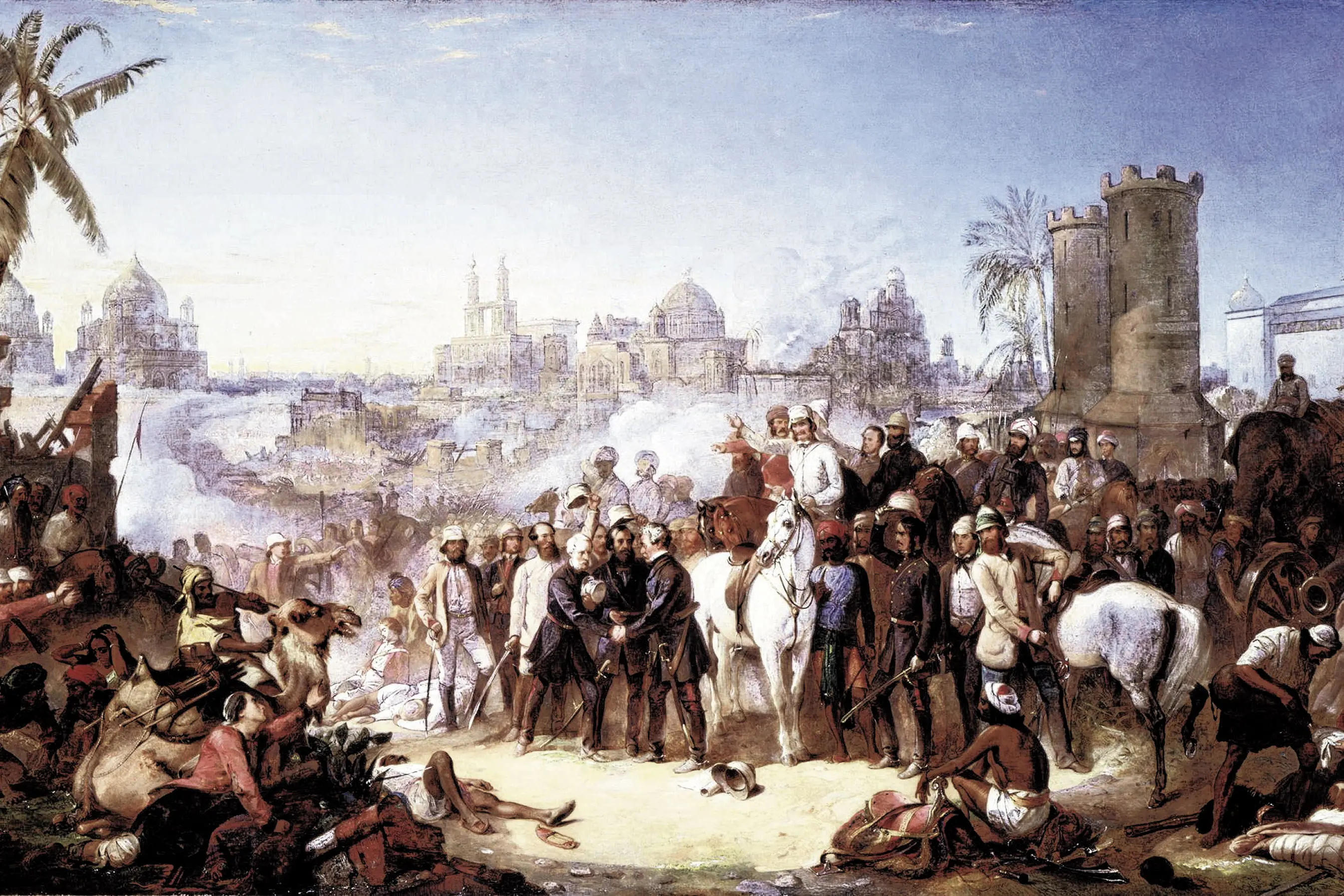
In 1857, a rebellion of Indian soldiers in the employ of the British East India Company sparked a major uprising and a bloody 18-month war against Company rule. At the city of Lucknow, a small British force of about 1,600, along with 1,200 non-combatants, including hundreds of women and children, was besieged in the British Residency complex.
The siege went on for months in fierce summer heat and terrible conditions, with those trapped constantly under fire and suffering from disease, heatstroke, and extreme hunger.
These dramatic events and the relief efforts that eventually led to the British evacuation were followed with intense interest all over the world. For years after, newspapers were full of retellings of the story and new eyewitness accounts. By 1860, scripted melodramas of the events at Lucknow were being performed in theatres all over Australia.
When Orange’s neighbouring village (originally known as the Wentworth goldfields) was officially gazetted as Lucknow in July 1863, there would not have been a person in the entire country who did not know of the famous siege of the Indian city.
But why might the name appeal to a small mining town in Central NSW?
The fierce fighting during the siege of Lucknow was waged just as much with pickaxe and shovel as with rifle and bayonet. Over a six-week period, the besieging army dug dozens of mines under the residency complex, with the British defender replying with a series of counter-mines and underground sorties to take the enemy tunnels.
Given the miles of shafts and tunnels at the Wentworth goldfields, it is no stretch to think that miners would make the comparison with the siegeworks in India.
And interestingly, across Australia, you can find other examples of gold reefs and coal mines named "Lucknow."
One of these, which predates our neighbouring village, is “Lucknow Lead,” located near the former gold-mining town of Havelock. The town was founded in 1858 and named for General Sir Henry Havelock, the British “Hero of the Relief of Lucknow.” It also featured a mine named for the man who eventually recaptured the city, Sir Colin Campbell.
Another possibility that has been raised is that there may have been a familial link between Wentworth mine manager John Rae, who proposed the name for the village post office, and a clerk wounded at the Siege of Lucknow named “Mr Rae.” From what we have read, the only evidence for this seems to be the common surname, and the theory seems tenuous.
While doing a little of our own digging, we stumbled across another intriguing idea: that the name “Lucknow” at the time brought to mind visions of vast wealth, much like the mythical South American city of El Dorado.
Prior to the uprising, Lucknow was known to be a fabulously wealthy city, but following its recapture in March 1858, the city was subjected to weeks of unrestrained plundering.
“Diamond bracelets, emeralds, rubies, pearls and opals, all so large and bright and beautifully set that we believed at the very time they were glass,” an eyewitness reporter for the 'London Times' newspaper wrote of the looting.
“Roads thronged with at least 20,000 camp followers, all staggering under loads of plunder - the most indescribable spectacle I ever beheld… Lucknow was born away piecemeal to camp.”
Just how much wealth was plundered from the city is impossible to say. The official tally of British “prizemoney” to be shared out to officers and the troops was 600,000 pounds, an amount worth hundreds of millions today. But this doesn’t include the vast amount of stolen gemstones and other treasures pocketed away by individual soldiers.
Early in 1863, a few months before the naming of our "Lucknow" Australian newspapers reprinted an interesting clipping from the 'Oudh Gazette' of India about the plundering of the Indian city. Given the timing, one wonders whether this piece served as inspiration for the name.
In the article, the writer recounts the events following the siege, particularly the accidental discovery by British soldiers of a vast, treasured horde concealed inside the walls and buried beneath the floors of a Lucknow palace.
It concludes: “Allured by this success, diggings have been going on in all parts of the city, with various success, till at length Lucknow has got the name of a gold field, and not a little of that feverish excitement approaching to a mania, of which we have read in the early days of Australia and California, has been felt there.
"Sober, sensible men, in various ranks of life, excepting the very highest, have thrown away for the time their usual good sense and prudence, become indifferent to any work, and occupied themselves in hunting up information, preparatory to hunting up treasure.”
The headline of the piece is “The Gold Fields of Lucknow.”
Of course, it could be the mining town was named for a combination of all these reasons - even the play on words.
There is a famous anecdote that on receiving news that Lucknow had been recaptured, the Highlander general Sir Colin Campbell quipped:
“By God, like Caesar, I can describe my victory in three words - Nunc fortunatus sum!”
Seeing his aide perplexed by the Latin pun, Sir Colin explained: “Why mon, dinna ya twig? Nunc fortunatus sum - I’m in Luck-now!”