
PHOTO
Decentralisation was one of those bright social policies of the 1970s, that has inexplicably fallen out of favour in recent times.
The hugely ambitious Bathurst Orange Development Corporation (BODC) — that eventually intended to establish a super city in the Central Tablelands — was only one manifestation of this philosophy (see main article).
There have been others though, with the move in 1976 of the then-Central Mapping Authority (CMA) to Bathurst, the first such concrete relocation of a major government agency to the country.
Orange has also been the longtime beneficiary of a similar initiative; the 1992 decentralisation of the then-Department of Agriculture to a purpose-built office block in Kite Street that brought hundreds of well-paid jobs to the Colour City.
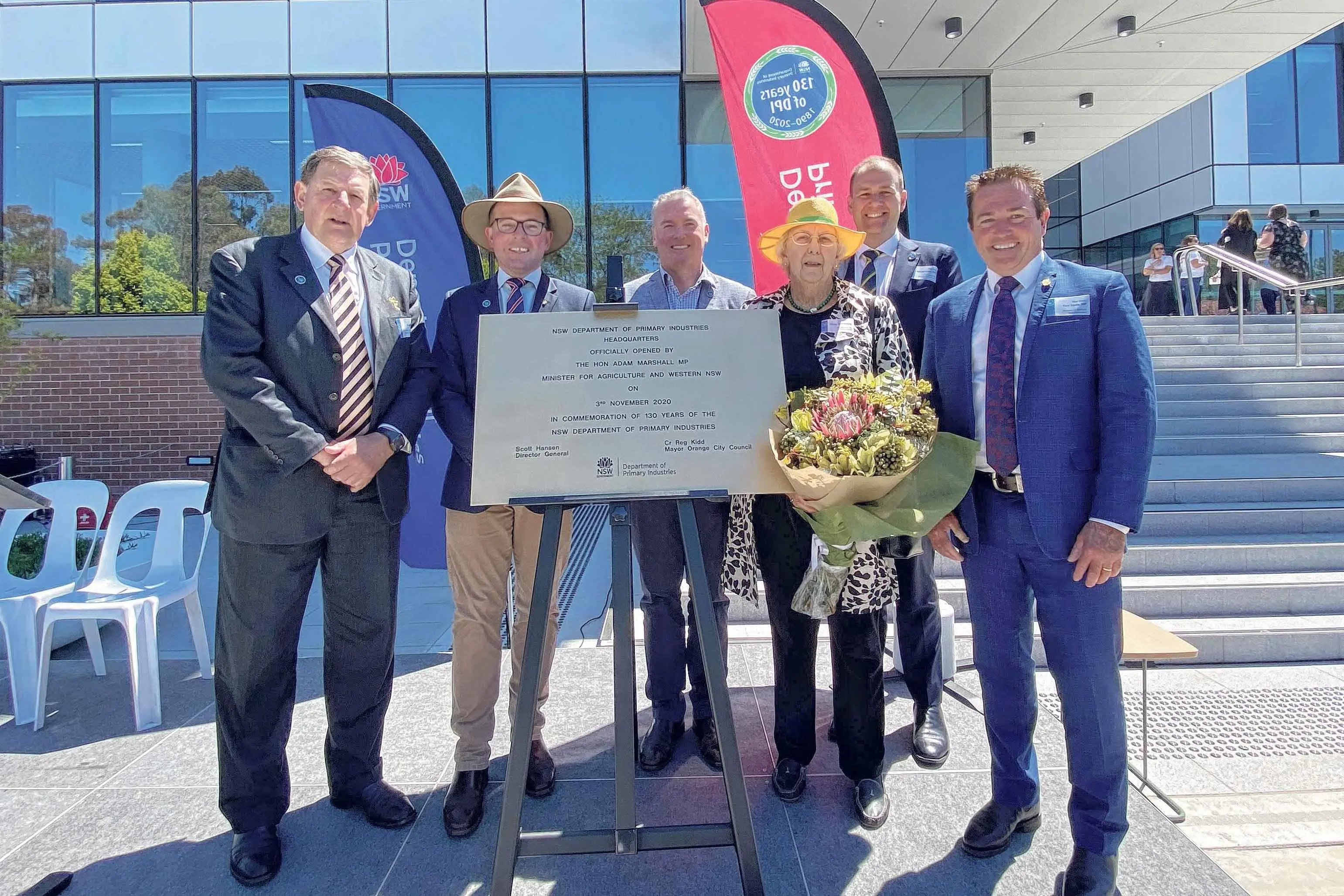
Its transformation into variations of a primary industry department over the decades only saw it grow and eventually move to new state-of-the-art offices in Prince Street, ironically, during the height of the pandemic lockdowns in late 2020, when most people were still working from home.
At the official dedication in November of that year, former Director-General Dr Kevin Sheridan told of a late-night conversation he had had with the then Minister Ian Armstrong about the possibility of taking the whole department bush in the late 1980s.
This, he said at the official ceremony for the aptly named Ian Armstrong Building, was the genesis of a move that many believed would be a template for the future.
However, despite technological advances in communications, computer clouds, and teleconferencing, and the increasing congestion of our major cities, no other major moves have been made in recent decades.
According to a locally-based member of the NSW Legislative Council, Scott Barrett — whose father was actually an employee of the BODC in its heyday — it appears the trend is actually being reversed “by stealth” in the current NSW Government.
He claimed that it was recently revealed that the head office for DPI is no longer based in Orange, with senior leadership positions having been moved to “the coast”.
He added that suggestions by the relevant minister that leadership of the current Department of Primary Industries and Regional Development was never actually based here were pure semantics and wordplay.
“Minister Moriarty is trampling on the legacy of Ian Armstrong, who originally moved the department to Orange in the 90s and showed that decentralisation can be an amazing boon to regional communities like Orange,” Mr Barrett said.
Decentralisation, it seems, is a dream that — due to the constrained economics of 2026 — is now largely defunct.