
PHOTO
A local elderly couple find an injured magpie on the side of the road south of Orange and take it to the WIRES-approved vets listed on their smartphone – it’s then that the real drama starts.
Restrictions have now been placed on NSW veterinary surgeries, with some local facilities refusing entry to bird species altogether – whether pets, domestic fowl or wild varieties.
This is part of a strategy to control the exotic disease that scientists fear could devastate flocks of not only native and domestic bird species but also many other animal families.
Indicating the urgency of the threat, the State Government last week launched a mass roll-out of targeted vaccinations for vulnerable species, aiming to isolate them from the H5 avian influenza (bird flu).
The State Coordination Centre in Orange has been managing the emergency animal disease hotline and statewide preparedness for the outbreak.
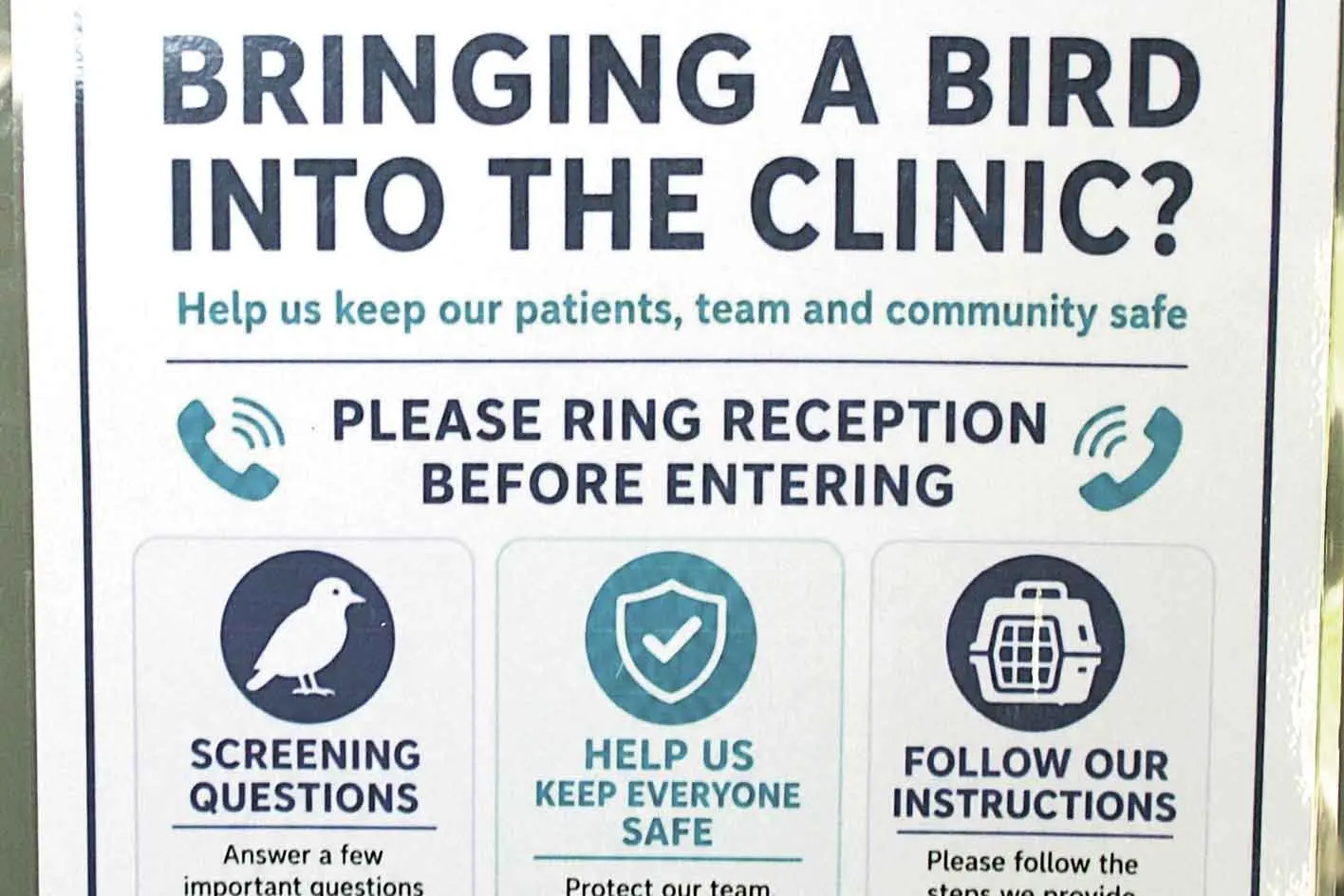
The couple took the bird to a well-known local surgery, where a sign on the front door warned against walking straight in.
The sign read: “Bringing a Bird Into the Clinic? Please ring reception before entering.”
It went on to explain that a series of screening questions would follow, with the aim of reducing the spread of disease and to “Help Us Keep Everyone Safe”.
Once inside, the wildlife rescuer was asked a series of questions about where they had picked up the animal, its likely cause of injury and its general condition. Their answers were forwarded to the Exotic Disease Hotline, with the vet confirming the surgery had stocks of the vaccine on hand.
Calls to other veterinary surgeries in the district drew few responses to emailed questions on the issue, though a nurse at the Summer Street Veterinary Clinic offered a summary of the clinic’s approach.
“Basically, we require clients to call us and we make notes of the symptoms, after which the vet will call them back,” the nurse said.
“We then ask them to notify the Hotline if they show any signs of the disease – we don’t want people bringing any birds into the surgery at all,” the nurse added.
In seeking to combat the disease, which has devastated wild and commercial bird flocks around the world, Taronga Conservation Society Australia last week vaccinated the first local birds in a trial, with Little Penguins, Carnaby’s Black Cockatoos and Red-tailed Black Cockatoos among the first species to receive the initial dose of the two-dose vaccine course.
The vaccine requires two doses, administered three to four weeks apart. Birds in the trial must remain in a controlled environment while completing their primary vaccination course, and for 14 days following the second dose, so they can be closely monitored for any adverse effects.
More than 5000 calls have been received by the Hotline, which has been running since June from the State Coordination Centre in Orange, Minister for Agriculture, Regional and Western NSW, Tara Moriarty, said.
“This targeted vaccination program is another important step in NSW’s ongoing work to prepare for and respond to H5 bird flu,” Ms Moriarty said.
“Vaccination is not a silver bullet, but it is one practical tool we can use alongside surveillance and preparedness planning to help protect vulnerable native wildlife,” she added.
The disease poses risks for both native wildlife and poultry producers, with top veterinary and scientific advisers working closely with industry and wildlife groups.
Australia recently recorded its first confirmed case of H5N1 bird flu in a mammal, after a dead long-nosed fur seal tested positive at Beachport on South Australia’s Limestone Coast.