
PHOTO
As a tiny tot, Jane Crowley's dad used to let her tag along to second-hand sales, buying up old furniture and fittings.
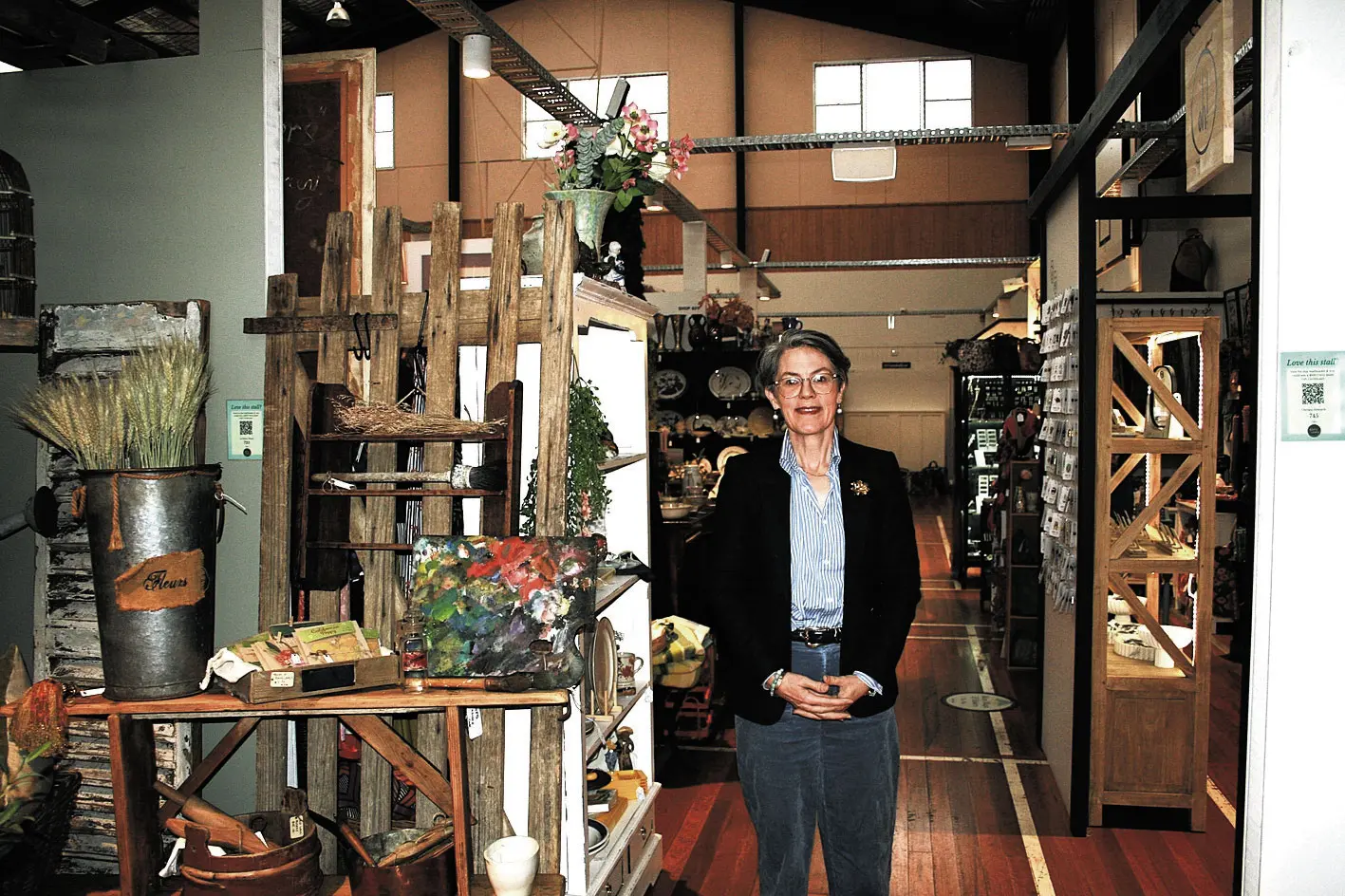
Growing up in the industry, she now runs Orange's unique Dirty Janes vintage and artisan market out of the converted PCYC building on Byng Street.
Her advice for local retailers in these tough times: keep adapting, because business is always on the move.
"My father Athol used to take me along from when I was two and put me at the auctioneer's feet up the front, because that was the best place to watch all the action," Jane recalled.
"I'd look at all this beautiful old furniture he would buy, a lot of it broken, falling apart, and he would restore and sell it," she added.
However, changing tastes and a trend to modern styles led to Jane learning the most important rule that every retailer finds out in the market economy.
"My father began stripping the old varnish and shellac back to very basics, and selling individual chairs and the like as light and bespoke furniture.
"The lesson he taught me is that you cannot go from year to year and expect everything's going to go on as it has always done; you've got to be constantly aware of what the world is doing, and react," Jane said.
It was during a major economic recession late last century, with interest rates in the high teens, that dad and daughter hit on the idea of offering small spaces for independent craft creators to sell their wares.
"Probably even going back a bit further, my father looked at the vintage stuff and said, 'it doesn't work anymore, why don't we have in artisans, who could rent a tiny space?'
"We call it 'The Community' — the whole business is based on this model where we support about 210 overall and 70-odd here in Orange. It's all completely curated and we ask, 'what is their point of difference?'," Jane explained.
With stores already in Bowral and Canberra, this, she said, is how Dirty Janes came to renovate the old barn of a building that for decades reverberated to the joyful yells and laughter of kids playing basketball, futsal, gymnastics and boxing under the watchful eye of local police volunteers.
"We identified early on that it is very hard to successfully run a shop in the main street area of town; that's why we looked at the old PCYC.
"In a way, it's another expression of our love of recycling, making good use of a building that had another purpose, and rebranding it," Jane said.
The virtue of small retailing, she argues, is that it keeps business local, with a range of economic, social and even environmental benefits for all concerned.
"People get so much online now. I call it 'the landfill of tomorrow', but people buy it because it's cheap.
"I take running my business seriously. I'm responsible for them taking home a product that is designed to be used; as retailers, we're making a promise to our customers," Jane said.
The rather striking name of the enterprise, she related, comes not from her own — "that's just a coincidence" — but from a famous early Australian entrepreneur who trekked 240 miles (390km) across country to her first job and arrived covered in dust, leading to her rather unflattering moniker.
"Jane Dumphrey was a convict girl from Ireland who had grown up learning how to buy and sell, working with her father as a 'rag-and-bone' trader — a door-to-door recycling merchant.
"She got a pardon on the way out to Australia and started a business in Gundagai as a trader, and that's what we are!" Jane said.
It is, she believes, this spirit of turning conditions to your advantage that those struggling in the current economic climate must adopt to survive.
"Customer service is core to our business, and we have an amazing team of staff behind us," Jane said.
"Where there's a crisis, there's an opportunity; there's no guarantees in retail, you've got to keep changing… I'm on my toes and I always ask, 'how are we getting better?'."