
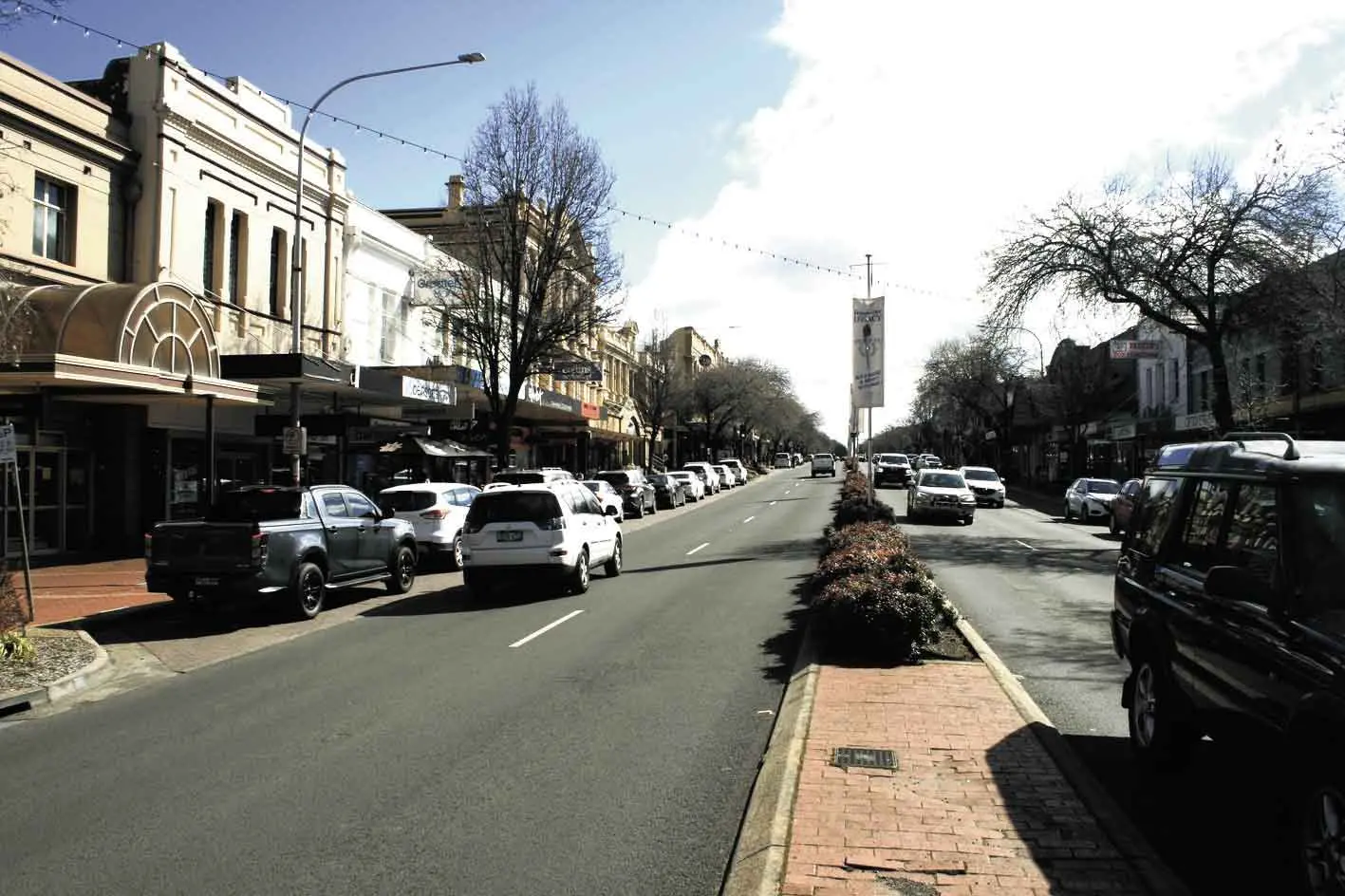
PHOTO
With the recent appointment of contractors and funding for long-awaited repair work on the shuttered convict bridge at Victoria Pass, there is finally some light at the end of a very long tunnel for our beleaguered tourism sector.
Following a tough few months for local operators, things are starting to look up just a tad for the Colour City, council's tourism lead Charlotte Gundry believed.
With local traders already struggling with high inflation and interest rates – followed in quick time by the double blow of renewed conflict in the Middle East on February 28 and the full Mitchells Causeway closure on March 9 – it was a tough start to the year for tourism-focussed operators.
"If you look at the closure of the Great Western Highway at Victoria Pass, coupled with the Iran War and the impact on fuel prices, there was definitely a quick, immediate impact to the visitor numbers," Charlotte revealed.

"We definitely saw that at the caravan park that we manage; we had some cancellations of bookings and there were some surveys and things done around the region by Business NSW and Destination Central West that did suggest there was an immediate impact," she added.
The downturn though, has levelled out with some signs of hope appearing on the economic horizon.
"Since then, and while the detour has been in place, it would appear that visitor numbers have stabilised," Charlotte explained.
"We've just looked at some July data which has indicated that there has been some stabilisation in visitor activity in the region."
She warned, however, that it's not exactly boomtown with activity not returning to pre-closure levels as council's tourism team seeks to do their bit to lift visitor numbers while one-off seasonal events also help.
"Although there has been some stabilisation, there has been some unevenness across some of the sectors; generally speaking, we continue to engage and support businesses where we can to make sure we have as much information as possible," Charlotte said.
"There was that initial blip but there has been a stabilisation in the visitor numbers, especially over the July school holidays, which is a busy period; we've also just had the Winter Fire Festival, which was very well supported."
Other factors other than just the Victoria Pass closure are also playing a part in the sombre outlook for the travel trade, Charlotte believed. Tweaking well-tried strategies, however, can play a positive part in turning that around, she argued.
"In terms of tourist activity, you can have very heavy economic shifts that impact tourism almost immediately and, at the moment, households are under stress due to mortgages plus fuel costs, and, more obviously, the road closure.
"We continue to work on encouraging visitors to come to the region to stay a little bit longer, stay overnight or an extra night; they're the things we can contribute to in terms of marketing and support, but largely a lot of bigger economic levers are still out of our control."
The council, Charlotte explained, is also working with a range of other agencies to alleviate the impact of the causeway closure, for which the state and federal governments are splitting the $200 million cost.
"Following the Great Western Highway closure, there was money allocated to the Central West LGAs [Local Government Areas] for an additional campaign for the Orange region; money that is being used to promote Orange between October and June next year," Charlotte said.
"We also continue to work closely with Business Orange and Business NSW on business sentiment and what's happening in the region, and we try to present opportunities for grants and other resources that can help local businesses that are finding things challenging," she concluded.
Note: Construction company Seymour Whyte was recently awarded the contract to rebuild Mitchells Causeway and reopen the Great Western Highway at Victoria Pass, with the main western thoroughfare forecast to reopen sometime between April and June 2027.