

PHOTO
Almost half of Australians who expect to fall short of the income they need in retirement plan to cut spending, up from about one in five a year ago, a national survey has found.
The Brighter Super and Investment Trends 2026 Retirement Income Report found 49 per cent of those anticipating a shortfall planned to spend less, up from 21 per cent in 2025. Cutting spending was the most common response, ahead of working longer or putting more money into superannuation.
The report, released on November 10, found just 28 per cent of people approaching retirement felt prepared, down from 38 per cent a year earlier and the lowest level in a decade.
More than half of those yet to retire expected a shortfall in retirement income, while three-quarters cited inflation and the cost of living among the biggest influences on their finances.
“When people expect to fall short, they are now more likely to plan to spend less than to save more,” Investment Trends head of research Julian Cappe said.
Among people already retired, the proportion who said they were living comfortably fell from 58 per cent to 38 per cent. Three in 10 said they could cover only the basics or were struggling, up from 14 per cent. The proportion struggling to make ends meet rose from 4 per cent to 13 per cent.
Nearly three-quarters of retirees cited inflation and living costs as major influences on their finances. The proportion confident they had enough money to fund their retirement fell from 60 per cent to 41 per cent.
The decline in living standards was most pronounced among retirees with lower super balances. The proportion living comfortably fell by 17 per cent among those with less than $100,000 in super, compared with a three per cent decline among those with more than $750,000.
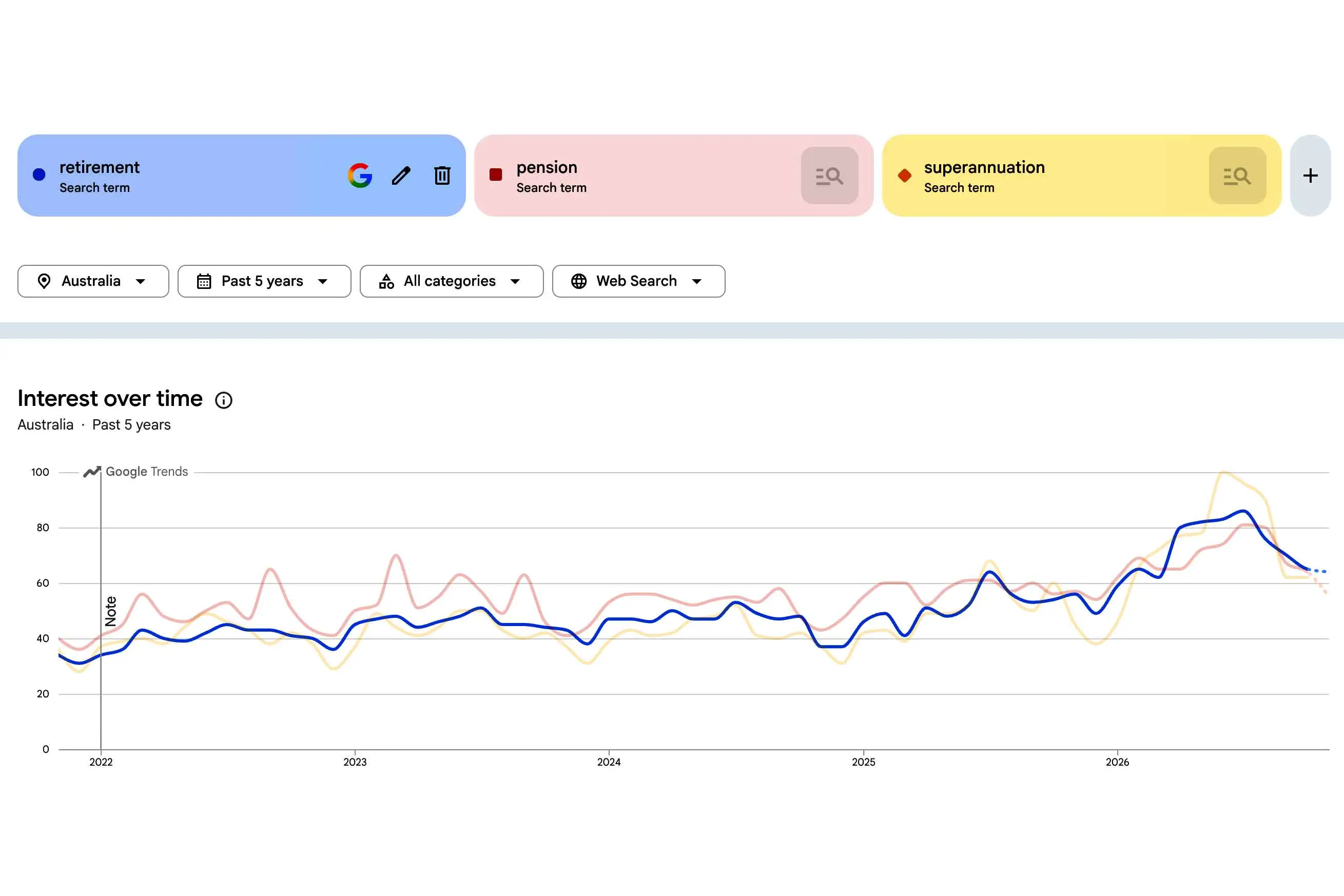
Google Trends data for Australia showed search interest in “retirement planner” rose 70 per cent in the five years to mid-November. Interest in “retirement savings” rose 40 per cent, while “retirement calculator Australia” and “retirement advice” each rose 30 per cent. The Google Trends data showed search interest in super fund account information was growing particularly fast.
Orange-based financial planner Daniel McGregor said people should start by considering the lifestyle they wanted in retirement and how they would pay for it.
Writing in Orange City Life, Mr McGregor said a regular pay packet could make it easy to put off planning. Once wages stopped, maintaining the same spending could drain savings quickly, while cutting back could mean giving up activities people had looked forward to in retirement.
He urged people to review their finances while they still had time to make changes, including looking at household cash flow, mortgage repayments and how much they were putting into super.
“You don’t have to live on baked beans to get your money working a lot harder,” Mr McGregor wrote.
Asked what they would have done differently during their working lives, more than 30 per cent of retirees surveyed said they would have put more into super, according to the Brighter Super and Investment Trends report. Among those who began planning before the age of 40, 64 per cent said they were living comfortably, compared with 17 per cent of those who had never actively planned.
The survey found 37 per cent of people approaching retirement who had received financial advice were making extra super contributions, compared with 15 per cent of those who were not open to advice. The report noted that people’s financial circumstances also played a part.
The Australian Securities and Investments Commission’s Moneysmart retirement planner estimates how much super a person could have when they retire. For those already retired, its retirement income calculator estimates how much they could spend over the next 12 months, taking into account their super, the Age Pension and other income.
* This content is part of a paid partnership with Google to promote Google Trends.