
PHOTO
“Scientist dies, 59” is the sparsely-worded headline above an all-too-brief newspaper obituary of the remarkable Dr Oliver Owen Pulley.
Born in Wellington in 1906, Pulley’s early schooling was in Molong and Manildra before he attended Orange High School, where he excelled as both a student and a sportsman. Obtaining first-class honours in physics and mathematics, Pulley won admission to the University of Sydney, where he earned a degree in science in 1927 and engineering in 1929. He also won the university medal along with a research scholarship to further his studies overseas.
At King’s College in London, Pulley worked with pioneering physicist Sir Edward Victor Appleton, the man who in 1924 had proved the existence of the ionosphere (for which he would later receive the Nobel Prize) and was busy researching the propagation of radio waves.
Pulley obtained a doctorate for his work under Appleton, which included designing the first manual ionogram equipment, furthering the investigation of the upper atmosphere.
On his return to Australia in 1934, Pulley was headhunted to work as a research scientist for Amalgamated Wireless Australasia (AWA), making national news with his prediction that television would be incorporated in most Australian radio sets within five years.
In 1936, Pulley co-authored an important paper on conditions in the upper atmosphere with Dr David Martyn, another student of Appleton’s, who would go on to make significant contributions to the field.
Perhaps their most startling discovery at the time was their conclusion that temperatures in the ionosphere reached 1000 degrees Celsius.
At the outbreak of the Second World War, Pulley was one of a remarkable group of scientists recruited for the Council for Scientific and Industrial Research’s radiophysics division.
This top-secret research group, based at the University of Sydney, was headed by Pulley’s colleague Dr Martyn who had returned from England with tightly guarded technical information on the use of radio waves to detect aircraft and shipping, later known as radar.
The scientists and engineers of the radiophysics division built on the work begun in England and went on to improve radar capabilities for the war effort.
One of their most significant innovations was the design of the Light Weight Air Warning radar (LW/AW), a transportable radar which could be disassembled and reassembled in the field in a matter of hours. Its simple, rugged construction made it invaluable, particularly in the Pacific theatre.
At the same time this radar was being developed, Pulley had been busy on a project of his own, designing a Doppler radar that could measure a target's speed as well as its location, essentially a precursor to modern speed guns.
But Pulley’s innovative idea was never put into production due to the lack of resources and pressing need to construct the valuable LW/AW units.
By the time the war was won, the radiophysics division had designed more than 20 radar models and produced more than 2000 radar systems in their workshops.
In the years after the war, members of the division, many of whom rose to eminence, put their expertise to developing radar for civilian navigation and meteorological use, and were at the cutting edge of radio astronomy, giving humans an entirely new way to explore the universe.
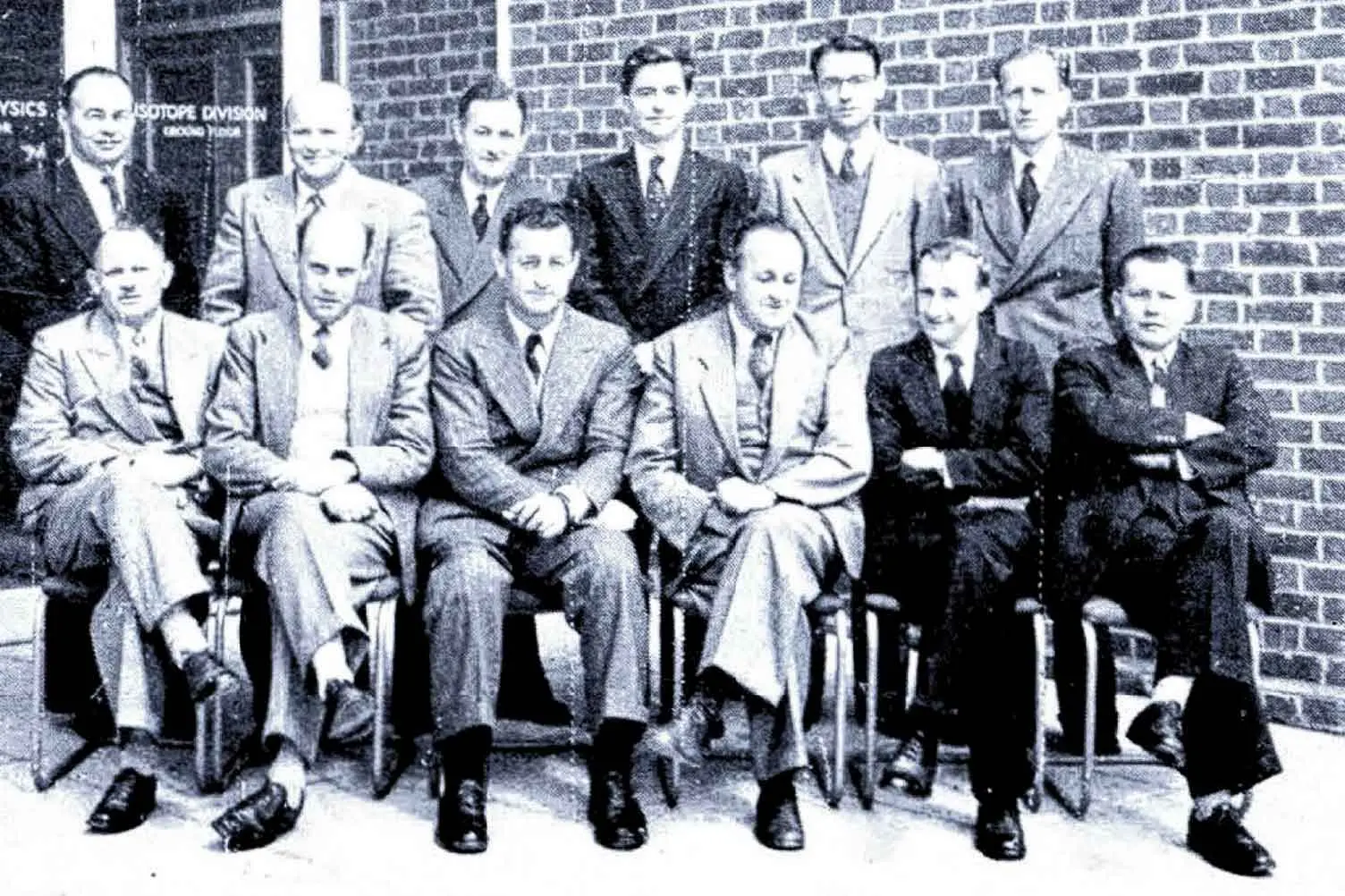
As for Pulley, he went into another new scientific field at the time. He was one of the first Australians to join Britain’s atomic energy research laboratory at Harwell, England, where he made significant contributions and held several of the original patents for liquid-metal circuitry technology.
He was also involved in the development of reactors for Britain’s first nuclear power station at Calder Hall.
In 1956, Pulley was appointed as the first Australian Atomic Energy Commission Liaison Officer in London and served as an Australian Governor of the International Atomic Energy Agency Board of Governors in Vienna.
He returned to Australia in 1959, where, until his death in 1966, he was head of the engineering research division at the Lucas Heights nuclear reactor in southern Sydney.