
PHOTO
Tucked between the Orange old town hall and the expansive Ex-Services Club in Anson Street, it is easy to overlook the RSL Memorial Hall, but inside is a remarkable collection of local history largely unknown to the public.
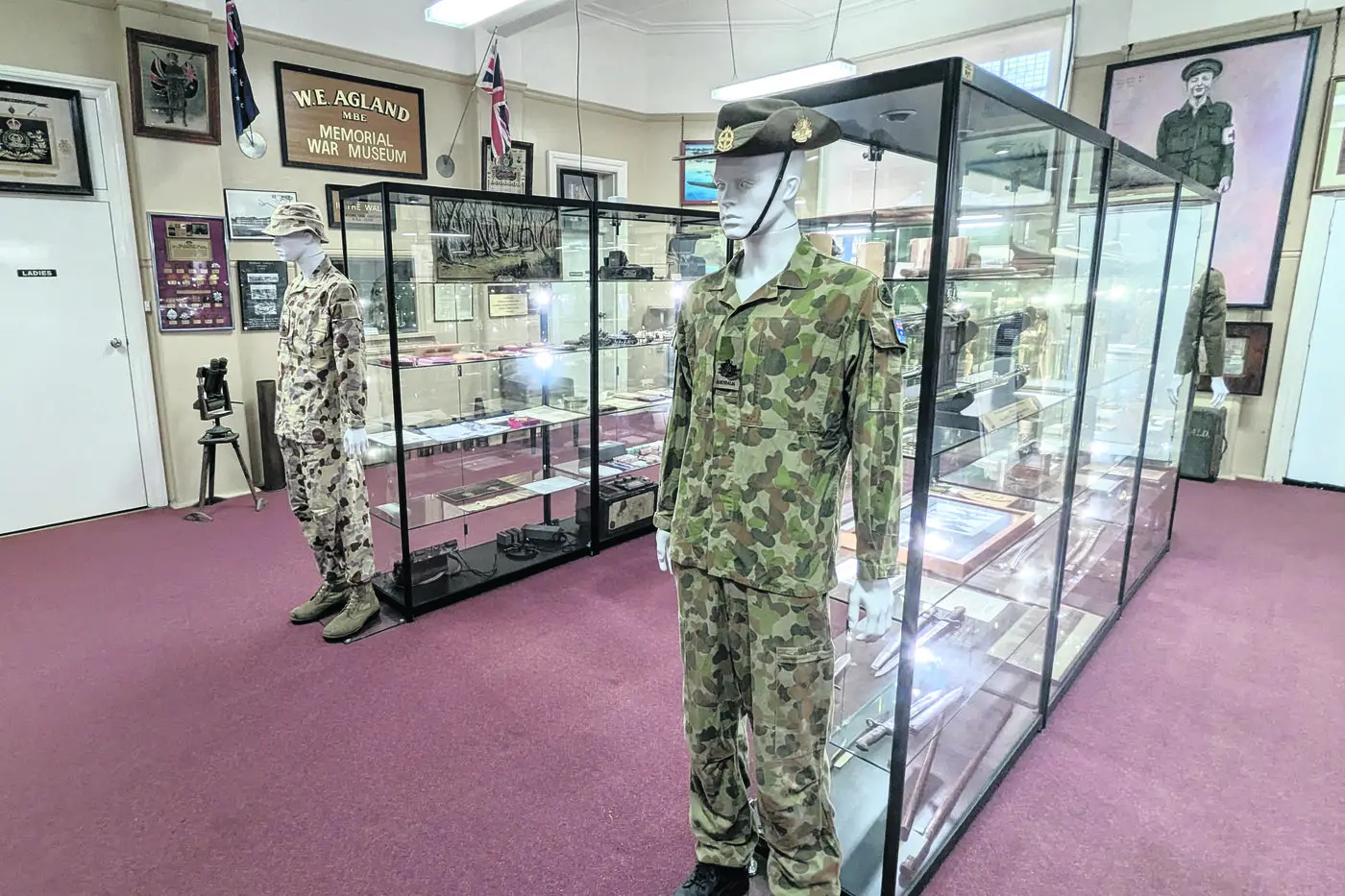
The RSL Hall is home to the W.E. Agland Memorial War Museum. It was officially opened 40 years ago this month on May 9, 1985, by the Governor of NSW, Sir James Rowland.
The museum is home to more than 1500 items, from historic firearms and uniforms, to trench art and other oddities brought home from foreign wars by Orange’s servicemen and women.
Inside, you’ll find the company flag of the Orange Volunteer Rifles dated 1874, a German Imperial Flag captured by Sir Neville Howse in New Guinea during WW1, and the saddle and slouch hat of W.E. Agland for whom the museum is named.
William Edwin Agland was working as Assistant Town Clerk in Orange when he enlisted in WW1. The 21-year-old private, later General, saw action in several battles, including the second battle of the Somme, as well as heavy fighting around Pozieres.
He was wounded in the hand whilst operating a Lewis gun, and almost had his feet amputated due to severe trench foot and subsequent gangrene.
After the war, Agland continued reserve duty with the 6th Light Horse until just before WWII. He and his comrades participated in the re-enactment of the famous WWI charge on Beersheba, which was filmed in Orange as part of the 40,000 Horsemen film.
Agland worked tirelessly for the Orange RSL Sub-Branch, dedicating 73 years to the organisation. He died in Orange in February 1982, aged 86.
The Orange RSL Museum is normally open every Tuesday and Friday mornings, from 9am to 12pm.
The museum is also home to items relating to the local volunteers who fought in the Sudan and Boer Wars. At 11am this Sunday, May 25, the City of Orange RSL Sub-branch will hold a service in memory of these men at the Boer War Memorial in Robertson Park. All are invited to attend.