
PHOTO
Central West residents were shaken out of their evening repose on Tuesday, April 14, by the largest earthquake ever recorded in the area.
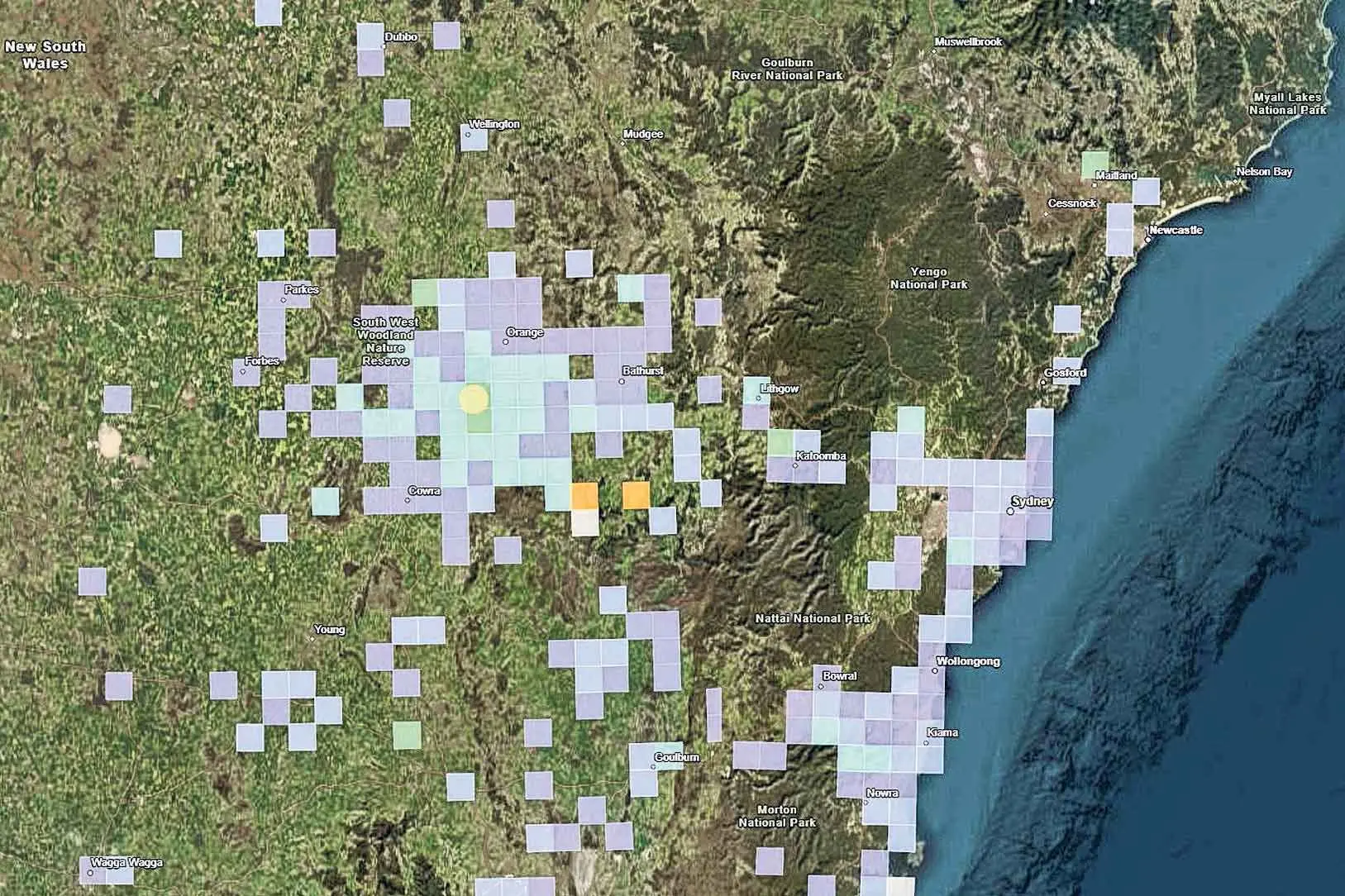
The magnitude-4.5 earthquake occurred at about 8.20 pm at Panuara, about 35 kilometres south of Orange and just a few kilometres to the west of the Newmont Cadia gold mine .
The quake reportedly shook homes throughout the region for up to 30 seconds in places, with the accompanying sound described as being like a jet engine or roar of a large motor.
“My windows rattled like crazy,” reported one Orange resident on a local social media group.
“Biggest one I’ve ever felt here,” another commented.
“Heard it more than felt it — wild.”
Miners at the Newmont Cadia site were all evacuated following the quake, and the mining company has paused underground operations while specialist teams undertake inspections and assessments.
Geoscience Australia Senior Seismologist Dr Phil Cummins said the earthquake was felt up to 250 kilometres away.
“It is the largest earthquake in this immediate area that we've ever recorded,” Dr Cummins said.
“There was a 4.3 recorded in 2017… previous to that there’s earthquakes generally much smaller, around 3.8, 3.5 and lower.”
While Dr Cummins said he would describe this earthquake as large compared to most recorded in Australia, it is far from unusual.
“We get quite a few of these earthquakes of this size occurring every year throughout Australia,” he said. “They more often occur in less populated areas where it doesn't cause as much of a disturbance... so people don't tend to notice them as much.”
In the 24 hours following the earthquake, Geoscience Australia received more than 2300 ‘felt reports’ from people as far away as Batemans Bay and Wagga Wagga to the south and Tamworth to the north.
The felt reports are essentially brief, voluntary surveys about the severity and nature of people’s earthquake experience at their location.
“They provide information that is complementary to what we receive from our instruments,” Dr Cummins said, explaining the value of the crowd-sourced information.
“Our instruments allow us to locate and estimate the magnitude of an earthquake, but they don't really tell us that much about the shaking that's felt on the surface, and that's of course what's important in terms of its social impact.
“So we really need to get those felt reports because that takes into account all the effects of local geology that our instruments don't always tell us about.”