
PHOTO
Lisa Stewart talks about creativity the way some people talk about the weather. It arrives in bursts of sunshine, clouds of doubt, sudden storms, and moments of astonishing clarity. But the remarkable thing is not that she has supreme talent in two art forms. It is that she has kept going.
From the outside, her story sounds almost cinematic. A child growing up in a single-parent household in Western Sydney. Parramatta in the 1970s was hardly the conventional launching pad for an international classical music career. Yet by the age of eleven she was performing violin solos in Japan. The route there was not privilege or prodigy mythology.
Her violin teacher was travelling to Japan with students for a summer school. Lisa wanted to go but the family simply could not afford it. So she did what driven children sometimes do: she solved the problem herself. “I got the money busking in three nights outside Woolworths,” she says, still sounding amazed.
Her mother had introduced her to music. A pianist, she had read about the Suzuki violin method and thought it might suit her energetic daughter. Lisa began lessons at five and quickly became obsessed. Unlike most parents who have to coax children to practice, her mother had the opposite problem — sometimes the violin had to be locked away to give the household a break.
She had an unusual way of imagining music. She thought the violin was like a bird and that when she played she wanted to be a bird herself. The sound she admired most belonged to the great Russian violinist David Oistrakh. Listening to his recording of ‘Khachaturian’s Violin Concerto’ became a guiding star. For years she dreamed of playing that piece herself. When she finally performed it as a young adult with the Queensland Symphony Orchestra, it became the turning point that opened doors to study overseas.
Thirteen years in Germany followed. Cologne, playing with world-class ensembles, collaborating with musicians from London Philharmonic circles, recording, the kind of artistic life that sometimes had her pinching herself.
Yet even in those moments of success the nagging voice of self-doubt was always nearby.
Other violinists seemed calm. “But I think with me, wow, Your face is so expressive and, Oh my God, I look like a Muppet!”
Lisa describes hearing extraordinary musicians and thinking “I still have so much to learn.” Yet the best performances don’t discourage her, they ignite another round of practice. “You never get there,” she says matter-of-factly.
Creative lives, however, rarely follows a neat single arc. At twenty-six she hit a major fork in the road. Her mother became seriously ill with cancer, and Lisa returned to Australia. She missed out on a major orchestral opportunity and began wondering whether a different creative path might emerge.
The answer arrived through something far less glamorous than a concert hall: Art therapy.
During a difficult period marked by serious postnatal depression and physical complications after the birth of her daughter Claire, drawing became the one activity that lifted her mood. In a German clinic she began sketching whatever appeared in her imagination. Fish turning into birds. Strange creatures with wings. Swirling landscapes. Pure Hieronymus Bosch.
“We were all nuts in different ways,” she says with disarming honesty about the patients in the ward. A regular visitor was fellow musician Stefan Duwe.
She found drawing gave her peace.
That discovery led her back to Australia and to the National Art School in Sydney. She did not study illustration there, rather her major was sculpture.
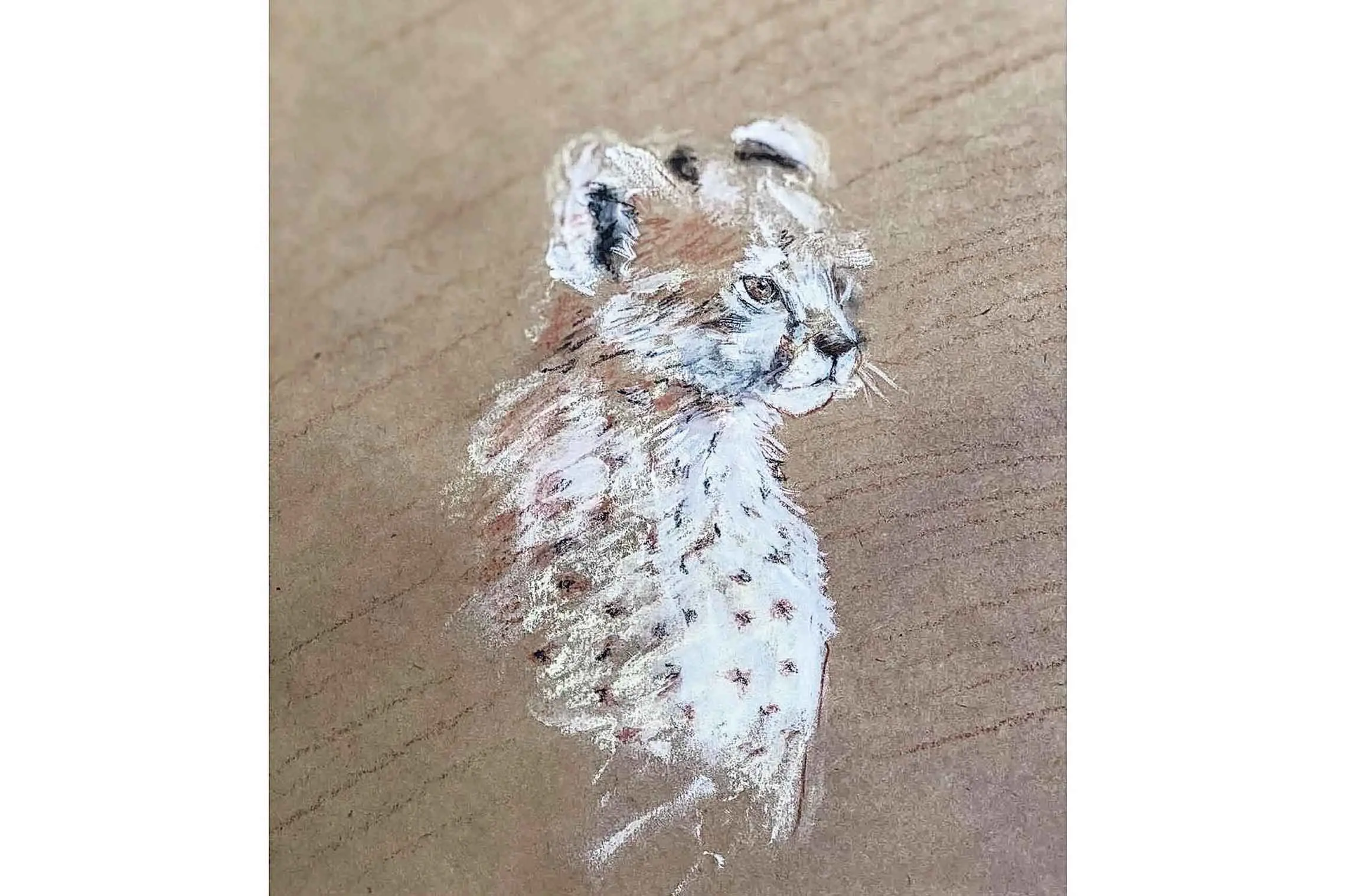
The spark that lit the illustration path came from another artist she admired from afar: the celebrated British illustrator Jane Ray. Lisa first encountered Ray’s cards and wrapping paper in a small shop in Newtown, Sydney. The luminous colours and imaginative designs felt like a small beam of sunlight. She wrote a letter to Ray simply to say thank you.
To her amazement, the illustrator wrote back.
Years later the two would meet, and Lisa even stayed in Ray’s house while performing in England. It was one of those surreal full-circle moments.
Still, her own success with illustration did not arrive overnight. It took nearly a decade of quiet persistence before her first illustrated book ‘Can I Cuddle the Moon?’ with Kerry Brown was published. Even now, with multiple successful books behind her and a flourishing illustration practice, the imposter syndrome never quite disappears.
After years overseas she and her husband Stefan eventually settled in regional New South Wales. They first arrived in Orange around 2019 and were struck by the warmth of the local musical community during Covid. The Orange Regional Conservatorium welcomed them immediately. For two professional musicians who had spent years moving between cities and orchestras, that sense of belonging meant a great deal.
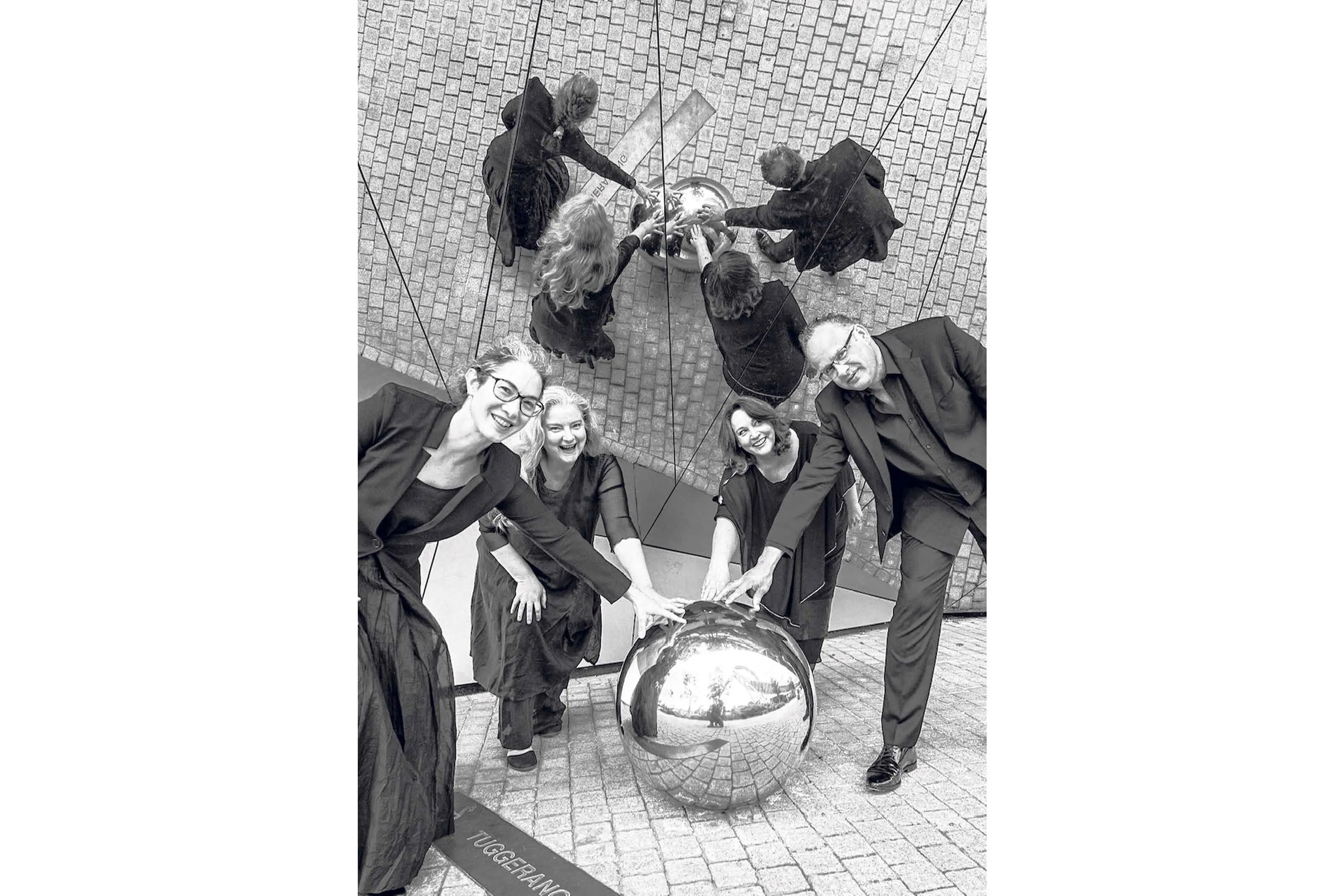
Today they live in nearby Canowindra, and both enjoy a busy schedule with their Acacia Quartet, a chamber music outfit that tours and records to great acclaim.
Ask Lisa what she loves most about the Central West and she doesn’t hesitate. “I find the skies phenomenal, really vast never-ending sky, especially if it's cloudy.” The quiet. The sense that creativity needs room to breathe. After decades of intense artistic life, the peace of the countryside feels like a gift. Animals, nature, and long horizons have become part of the rhythm of her work.
Through all the twists of her career, one phrase seems to capture her philosophy. It comes from a Japanese proverb she often repeats: “Fall down eight times, get up nine.”
It is an apt summary of a life that has been shaped by talent, persistence, gratitude, and humility. From busking on Sydney streets to concert halls in Europe, from hospital art therapy sessions to children’s books, the common thread is her effort. Flying high like a bird under our vast Central West skies.