
PHOTO
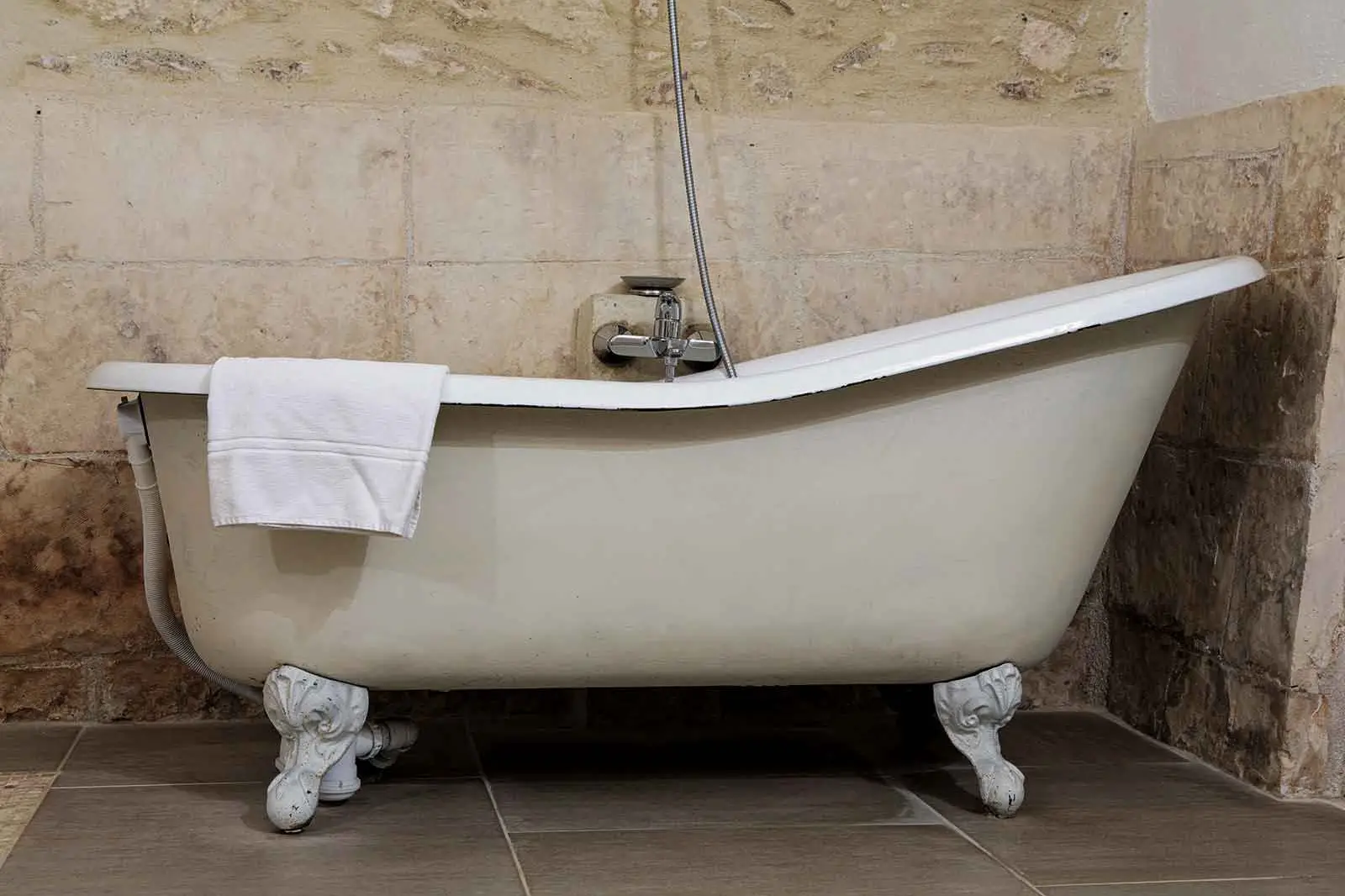
An enamelled cast-iron bath can remain a bathroom centrepiece for decades, but stains, mineral deposits and chipped enamel need to be treated carefully to avoid turning a cosmetic problem into permanent damage.
Limescale is particularly common in areas with hard water. SA Water says water containing more than 200 milligrams per litre of calcium carbonate equivalent is considered hard and can cause scaling on appliances and taps.
For light mineral deposits, vinegar can be effective because its acidity reacts with and dissolves limescale. However, homeowners should first check the bath manufacturer's care instructions, as acids and abrasive cleaners can damage some surfaces.
Routine cleaning is best approached gently. Porcelain enamel is a non-porous, durable surface that resists dirt and staining, according to Australian plumbing retailer Reece's specifications for Caroma enamelled baths. A soft cloth or non-abrasive sponge and mild cleaner are preferable to steel wool or aggressive scouring products.
Chips and scratches require a different approach. Enamel repair kits are available in Australia for minor blemishes, although you should read the instructions as some repair kits will only minimise a chip rather than completely conceal or repair it.
Any exposed metal should be dealt with promptly, particularly if corrosion is developing. Large chips, widespread rust, deep scratches or a badly deteriorated finish may warrant professional resurfacing rather than repeated DIY repairs.
The simplest way to preserve an older bath is regular gentle cleaning, wiping away standing water and tackling small chips before they become larger problems.