
PHOTO
Orange City Council is set to proceed with two major water projects that will improve the security of the city’s water supply in times of extended drought.
Earlier this month, council announced that it would be proceeding with the next phase of the city’s innovative stormwater harvesting project.
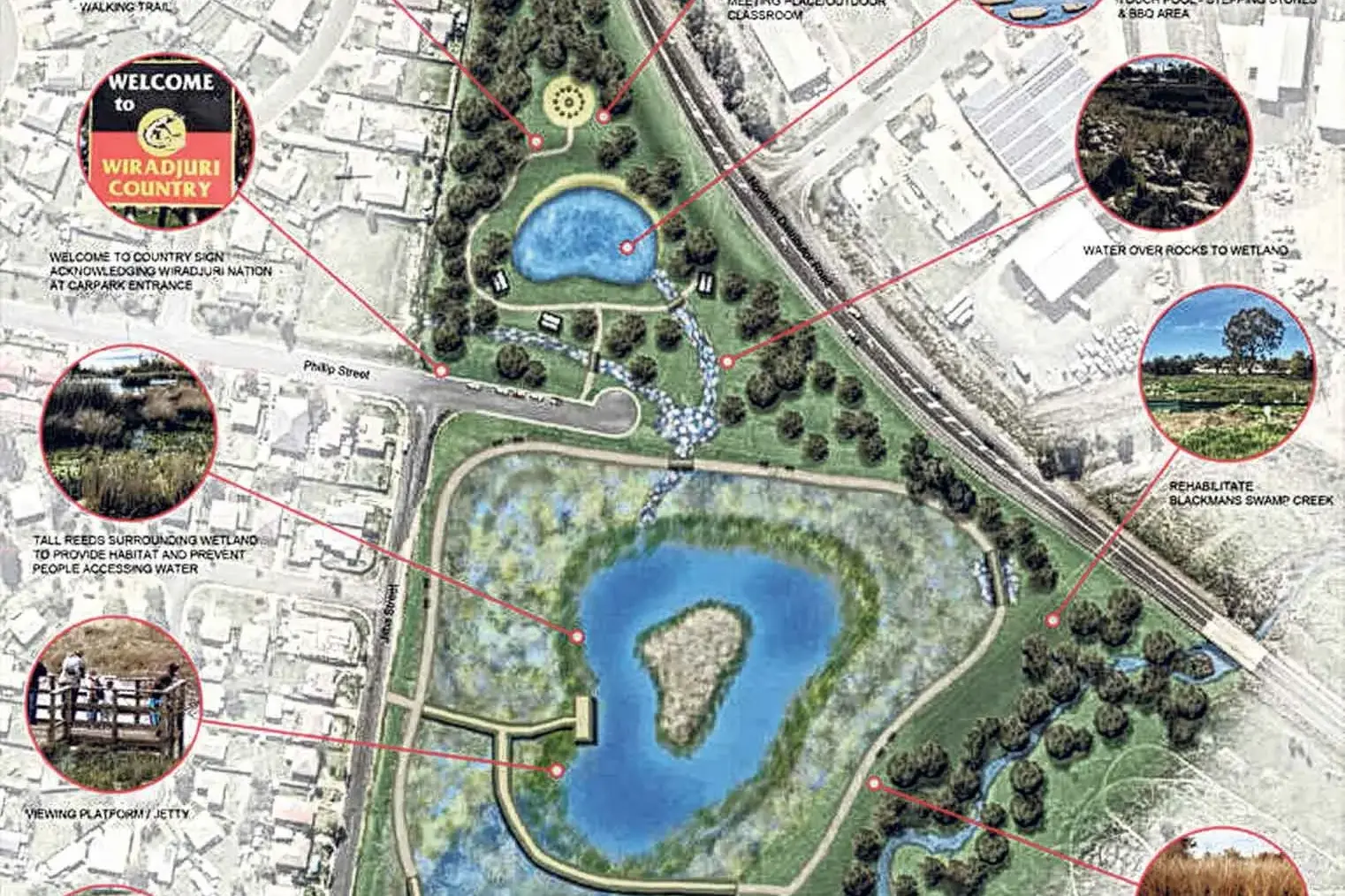
The $10 million East Orange Harvesting Wetlands (EOHW) project has been on hold awaiting a decision by the Land and Environment Court, which council says has now been resolved.
Stage One was the first large-scale, indirect-to-potable stormwater harvesting project in Australia. It contributes approximately 900 ML (secure yield) of reliable treated stormwater each year, which is approximately 20 per cent of the water used by Orange.
The EOHW will build on that, with council estimating it will supply an additional 600 ML (secure yield) each year. Built upstream of Stage One at Blackmans Swamp Creek, at the intersection of Jilba and Philip Streets, the new infrastructure will include a 13 ML wetland pond to hold water, enabling stormwater from the urban area to be collected during high flows.
Council says high-tech inlet and outlet controls, along with a small weir, will allow water to be extracted for a longer period when required.
Funded by $5 million each from the NSW Government and Orange City Council, construction is expected to start by late 2026 and finish in 2027.
Orange Mayor Tony Mileto said given Orange’s unique location and lack of a large river, it is vital to diversify options for accessing water
“While Orange does receive good rainfall, it sits at the top of the catchment, meaning a lot of the water runs off onto lower grounds before it can be collected, which is why having a way to regulate and retain flows is an absolute game-changer,” Cr Mileto said.
“Our existing harvesting station at Blackmans Swamp Creek gives us 900 ML in secure yield per year and these new wetlands we’re building at the intersection of Jilba and Philip Streets will maximise the potential to collect more.”
Further looking to diversify the city’s water supply options, council is also investigating the potential for recycling wastewater and recently announced it had let the tender for a preliminary business case for a Purified Recycled Water (PRW) demonstration plant and education centre.
The $460,000 project, to be undertaken by global consulting firm TSA Riley, will investigate PRW as a rainfall-independent water security opportunity for Orange and look to educate the community on the benefits of PRW.
While only at an early investigation stage, council says the project would use cutting-edge technology to treat and recycle wastewater to an extremely high standard, which would be used by the Cadia gold mine for industrial purposes.
But the water would be purified to meet Australian Drinking Water Guidelines and could one day be used for the city’s potable supply.
It is proposed that the plant would produce approximately 3.5 ML per day, which is roughly a quarter of Orange’s daily needs.