
PHOTO
Artificial intelligence has cannibalised online content but news organisations are being warned they must take a leading role in shaping it.
Reuters' editor-in-chief Alessandra Galloni has advocated for an adapt-or-perish approach to ensure AI excels beyond pink slime – a term for automated news sites that scrape data of others for clicks.
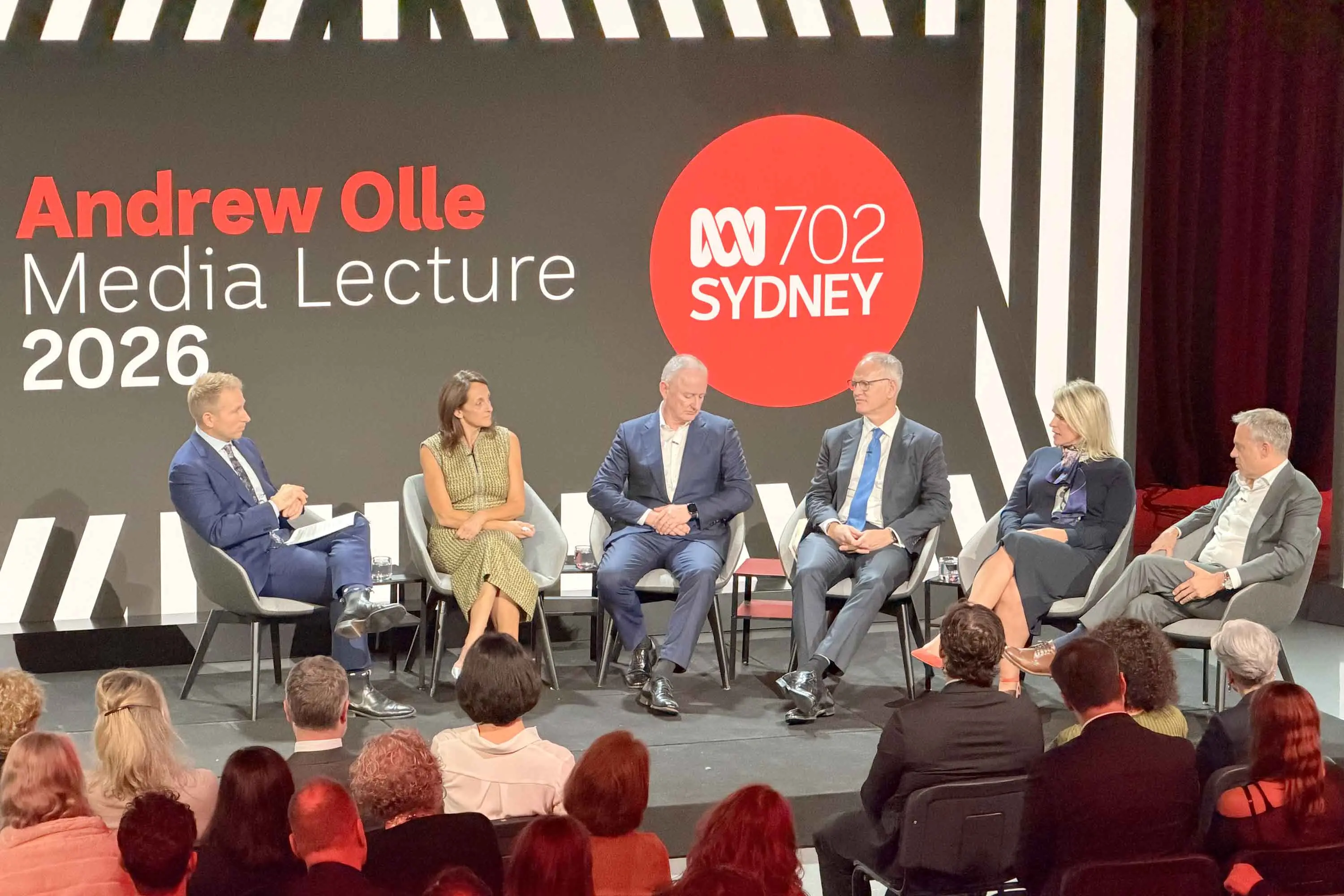
Delivering the 2026 Andrew Olle Media Lecture on Tuesday evening, the head of one of the largest news agencies described data machine models as a potentially existential challenge for news outlets.
"Our journalism should be licensed, not taken," Ms Galloni told an audience at the ABC Studios in Sydney.
"The fear is AI companies will continue to expropriate the content we have worked hard to gather and use it to train their models, stripping us of our intellectual property largely without consent or compensation."
The respected newsroom leader argued mainstream media should sell verified reporting to AI companies, provided it was properly represented, attributed and compensated.
"It is our collective responsibility – to the public, to society – to enhance our and their understanding about the pitfalls and possibilities of AI," Ms Galloni said.
But she warned media outlets were navigating uncharted waters.
"AI can be a powerful tool – a force multiplier – in this crucial endeavour, but we have to find ways to use it responsibly."
She cited ethical and troubleshooting examples from Reuters, which has more than 2500 journalists across 165 countries.
Testing a third-party AI tool before introducing it to clients, Reuters used keywords in a search function but the program mistook a SpaceX spaceship for a missile.
Experienced journalists and engineers caught the bug before widely disseminating the tool.
"The further news travels from a human reporter, the less people believe it. The AI tech companies know it," she said.
Ms Galloni, the first woman to lead the global news agency in its 175-year history, mentioned the long-standing role Australian Associated Press played for seven decades in its previous iteration as a co-owner of Reuters until 2020.
AAP transitioned to a not-for-profit newswire model six years ago, delivering public-interest articles to hundreds of outlets, including many in regional areas.
Ms Galloni's address coincided with more staff cuts at Nine mastheads on Tuesday, with 30 jobs axed in the publishing and print divisions as the ASX-listed company moves towards a "digital-first future".
Just days ago, Prime Minister Anthony Albanese vowed legislation on mandatory standards for AI by early 2027 as part of a "world-first" framework.
- AAP