
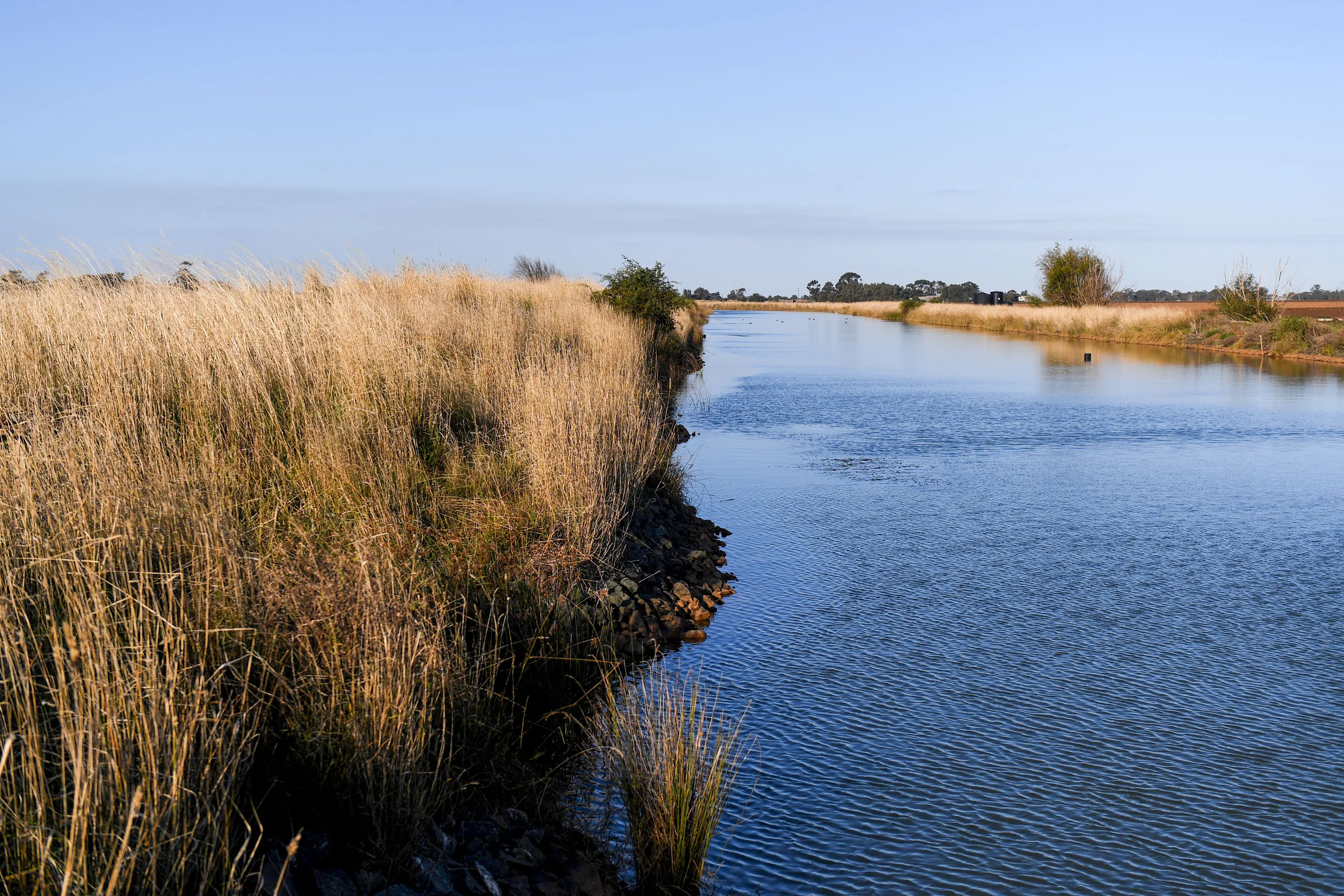
PHOTO
Australia is the driest inhabited continent on the planet, but its approach to treating water as a tradeable asset can be confusing.
WHAT IS WATER RIGHTS TRADING?
* Water trading allows individuals, farms, corporations, federal agencies and environmental bodies to buy and sell water rights
* Under the "cap and trade" system, the Commonwealth government sets a hard cap on how much water can safely be extracted from a river system (Sustainable Diversion Limit), and within that cap, rights are distributed and traded
* People and organisations can sell some or all of their water rights on a temporary or permanent basis
* Australia has one of few markets where water rights can be separated from land ownership and traded
WHAT CAN BE TRADED?
* A water entitlement, or water license, is the perpetual, ongoing right to an exclusive share of water within a catchment. It can be traded once.
* A water allocation is the physical volume of water distributed to an entitlement holder, which is determined by state authorities based on water availability. They can be traded as they arise.
* Irrigation rights and water delivery rights are also tradeable in areas managed by an Irrigation Infrastructure Operator (IIO)
WHY TRADE WATER?
* Selling water rights can help farmers manage business risk or supplement income by selling unused allocations
* It provides balance sheet flexibility to upgrade farms, rest land, transition to higher value crops, or assist in succession planning
CAN THE COMMONWEALTH TRADE WATER?
* Australia's market allows non-landowners to take part in water markets, including financial investors, water brokers, and the federal government via the Commonwealth Environmental Water Holder (CEWH)
* The CEWH holds a significant proportion of total water entitlements
* In wet years or when ecosystems are stressed, the government can use its allocations to flood wetlands or revive river systems
* During droughts, the CEWH can sell its temporary allocations back to farmers
* Under government water buybacks, the Commonwealth purchases (permanent) entitlements from growers (voluntarily) to add to their pool of "environmental" water
WHY INVESTORS ARE INTERESTED
* The scarcity of Australia's water and intense climate cycles support price volatility
* Agriculture is considered a stable asset class, given its steady demand profile and the gradual appreciation of scarce arable land
* Water rights investing provides access to the value of soft commodities without the operational, environmental or production risks of farm ownership.
READ MORE: Global capital eyes $50b water market, raising stakes