
PHOTO
UPDATED: The wife of a former US fighter pilot has vowed to keep fighting after her husband lost his bid to block his extradition from Australia over claims he unlawfully trained Chinese military personnel.
Daniel Duggan has spent three-and-a-half years in custody over allegations he breached US arms-trafficking laws by training Chinese pilots in South Africa between 2010 and 2012.
He was arrested at the behest of the US in 2022 while at a supermarket in Orange in regional NSW, where he lived with his wife Saffrine and six children.
The Duggan family's years-long fight against extradition was dealt a heavy blow in December 2024 when then-attorney general Mark Dreyfus approved the extradition.
They challenged the decision in the Federal Court, which handed down its ruling on Thursday in the nation's capital.
Justice James Stellios dismissed the appeal and ordered Duggan to pay the government's legal bill in a brief but bruising decision.
An appeal against the judge's ruling can be lodged within 28 days.
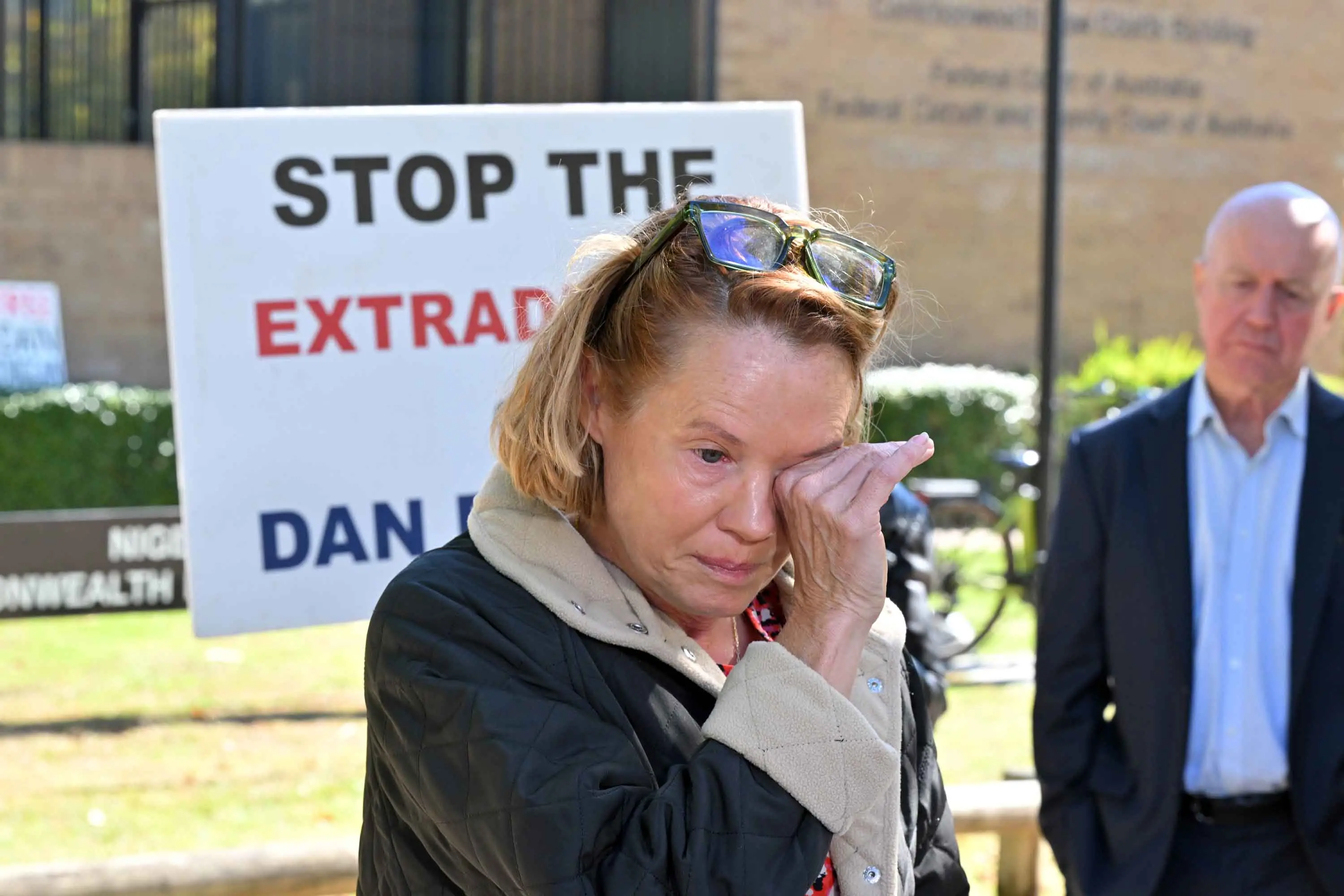
Ms Duggan said she was very disappointed by the ruling and would be considering her options carefully.
"But make no mistake – we will not give up," she vowed outside the courthouse.
"Today does not end our search for justice, for fairness and for the sovereignty that the Australian public expect."
Duggan was an ordinary Australian who had dropped off his kids at school just hours before his arrest, which shattered the family's sense of safety, his wife said.
He has been kept in a maximum security prison in central NSW about 100km from his family since his arrest.
"He has missed so much – first and last days of school, sporting events, birthdays, Christmases and wedding anniversaries," Ms Duggan said as she vowed to continue fighting.
"This has gone on long enough – enough is enough."
Duggan's lawyers had argued his extradition was invalid because the offence he is accused of was not classified as an offence in Australia at the time.
An offence must be unlawful in both the requesting and requested countries for an extradition to be legal.
But Justice Stellios said he wasn't persuaded that the offences had to be illegal in both countries at the time of the alleged commission.
He upheld the extradition decision, finding the attorney-general did not make an error.
Charges and an indictment were first filed against the Australian citizen in a sealed court case during US President Donald Trump's first term.
One of Duggan's legal representatives said the judge's decision had been based solely on a legal point but the merits issue has always lain with the government.
"Now it's a decision for the prime minister whether he wants to send an Australian citizen... into the hands of the Trump administration, who have taken a close interest in the matter," Lynn Stocker said outside court.
In a letter from prison, Duggan previously wrote that he believed his activities were not illegal, and Australian and US intelligence services were aware of his work.
His years-long legal battle has taken a crippling financial toll on his family, who estimate their legal bills total about half a million dollars.
Duggan has been refused Legal Aid, while an injunction placed on his family's half-built house means they can neither sell it nor live in it.