
PHOTO
Operating a planetarium is not everyone's idea of core council business.
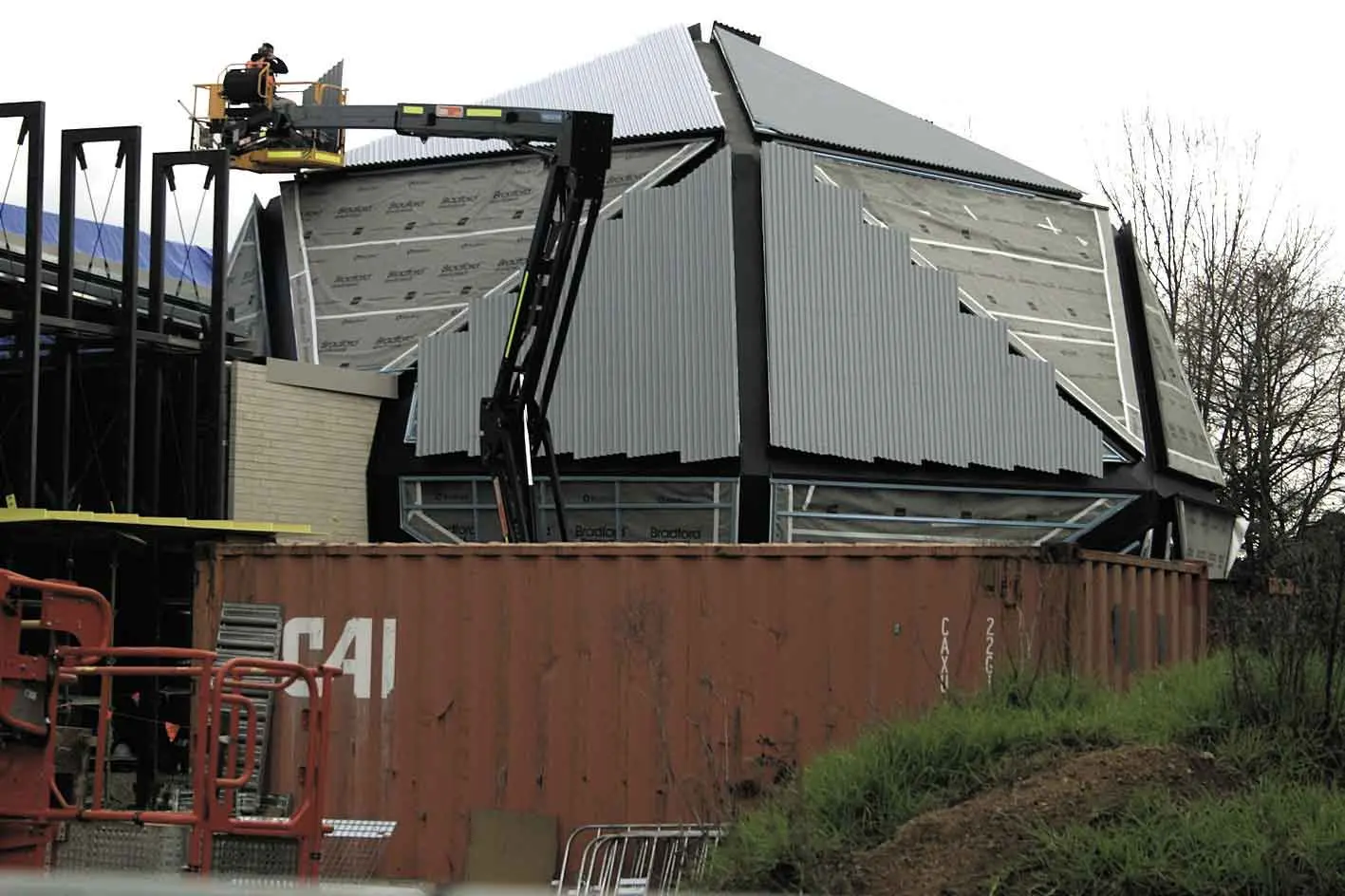
This could be the outcome, however, of the imminent completion of the $40 million conservatorium and planetarium project located behind the library on March Street.
Originator and driving force behind the project way back in 2003, Rod Somerville says he no longer has the stomach for taking on the task and is not confident that council has the know-how to research, install and operate such a high-tech facility properly.
While the basic audio-visual and projector set-up is now being fitted by its contract builders, council is likely to be the planetarium's operator, at least in the short term, Councillor Steve Peterson told Orange City Life.
Raising the matter at a recent ordinary meeting, he also said council will likely be left funding the high-tech cost of its electronic furnishings.
"Part of these works is being paid for by the builder, the dome, the acoustics and a big screen," Cr Peterson said.
"But at least some of the audio-visual set-up, we envisaged that a business operator would pay for that."
This, however, he was recently informed, is not how the project has unfolded.
"I think they came up with this idea that there was a community group who would take it over. That's how it was sold to council at the time, or that there would be a private operator, but it looks now like we're going to have to do that.
"I wanted to know about these added costs. Is council paying for the whole project, and how much is this likely to be?" Cr Peterson asked.
Council officers, however, could not even estimate a likely charge for such work and said figures would have to be provided at a future council meeting.
"The project was designed to complement the Parkes Radio Telescope and Coonabarabran's Siding Spring Observatory, otherwise, why would council decide to have a planetarium?
"It will be pretty cool to go to it once, but you're never likely to want to go again. We're planning to open it in September so I suppose we'll find out then," Cr Peterson concluded.
Mr Somerville told Orange City Life that his Southern Skies group had originally planned to build the facility, long before it was folded into the new conservatorium project.
"It was myself and a few other locals who got together all those years ago and came up with the idea," Mr Somerville said.
"We thought we would raise the money ourselves, and then had the idea of council donating land for the project. However, we had a lot of trouble getting any sort of grant money," he added.
It was then, he revealed, that the idea of blending two community-building projects into one was devised.
"The conservatorium wanted a new centre and they actually rang us and we had a meeting.
"That's how it came about that we joined forces, because it was easier to get funding for joint projects," Mr Somerville recalled.
It was only in 2019 when the Commonwealth came calling, he said, that the project looked like it would become a reality.
"The Federal Government then offered $10 million at a time when the whole project was only estimated to be about $15-16 million.
"Then we had state government funding, and council topped up the lot to ensure it got built."
It was then, however, that Mr Somerville believes the project started to go off the rails.
"Once started, council demanded they were in charge. Since then I haven't heard from them. It was their project, after all.
"They appointed the architects and, over the years, it has been cut back to a minimum, though it's going to still be a brilliant facility for the community."
A science communicator nearing retirement, he said he no longer has the drive or energy to take on the planetarium as a business venture.
"Not now. Maybe 10 years ago I could have done it, but now I know how difficult it is dealing with local government. It's 23 years since we first came up with the idea and started our group, Orange Planetarium Incorporated. It's been a long haul for us," Mr Somerville said.
His other major concern is whether council has the expertise to source the specialist technology needed to make the facility viable.
"With a planetarium, the electronics is the infrastructure, otherwise it's just a room with no corners," Mr Somerville said.
"All the planetariums in Australia are moving to a similar system. It requires very specialised set-up but, I understand, council is going with a different arrangement."
Either way, he believes the cost will be substantial.
"The industry standard is called Digitiser, from Salt Lake City in Utah in the US, and costs about $850,000. I fear that council is going to try to do it on the cheap," Mr Somerville said.
"The equipment, however, is the planetarium. It is the fundamental infrastructure of the whole project," he concluded.