
PHOTO
Homelessness is an issue that not only affects our major cities, but has become increasingly common in regional centres like Orange, with council developing a plan to reduce the problem.
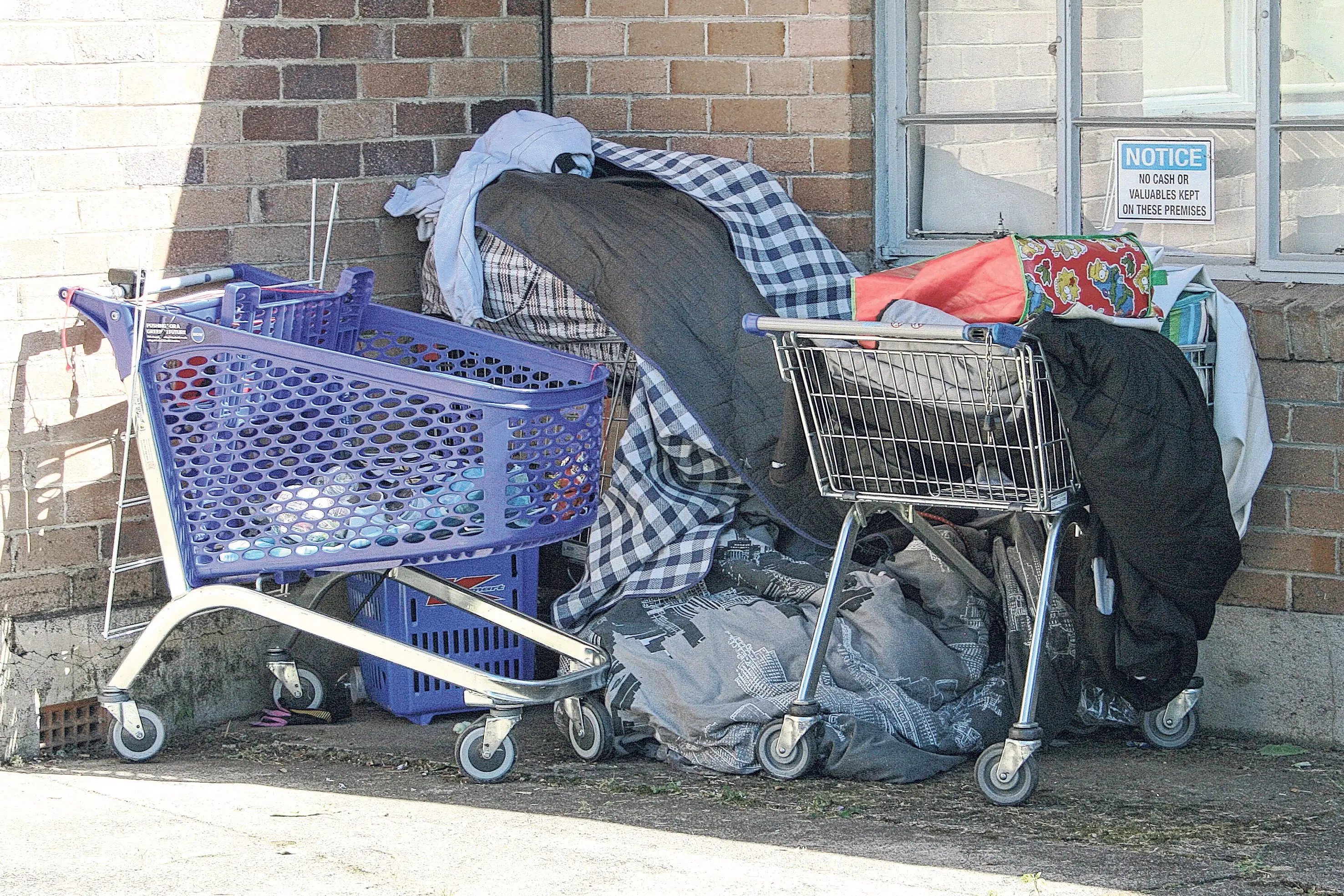
A recent high-profile case involving a homeless man collecting shopping trolleys, old blankets, tin cans, shopping bags, and various other detritus, and hoarding them outside of Orange Art Society in the Woolworths carpark, has highlighted the issue.
Orange Council says that, while numbers have definitely increased, local government is not necessarily the lead agency in seeking to alleviate the issue.
“The problem is getting worse, and it is also more prominent,” Orange Mayor Tony Miletto told 'Orange City Life'."We try and help out where we can, but while you can provide accommodation for the homeless, you can’t make them use it… often there’s mental health issues underlying their situation,” he added.
Council statistics bear out the mayor’s observation, with homelessness — once considered an American and European problem almost unknown in the “lucky country” — now a seemingly permanent feature of our society.
Firstly, a council spokesperson said, however, that it is important to differentiate those who simply can’t find accommodation due to economic, social, or supply-and-demand issues, and those who sleep out while battling drug abuse and mental health issues.
“'Homelessness’ involves individuals actively seeking housing, while ‘rough sleepers’ choose to remain outdoors, despite available support,” a council spokesperson said.
“The man seen at Woolworths, and now at Emus (rugby ground), is identified as a ‘rough sleeper’,” they added.
Although council is often targeted as the “do something” government body for an increasing range of issues in our society, they are not the primary agency for this persistent social problem, the spokesperson emphasised.
“Both groups fall under the responsibility of Housing Plus (HP), which is funded to provide assistance.
“Typically, homeless individuals accept help when offered, whereas rough sleepers often decline accommodation,” they explained.
To combat the issue, council has developed a plan utilising an existing asset to alleviate the matter locally.
“To address this, a safe location at the Showground is being finalised for those awaiting housing or choosing to sleep rough. However, attendance at this site cannot be enforced, due to limited regulatory powers.”
Orange is aware of increasing concern over the subject and can institute by-laws to try and reduce potential issues in council-administered parks and gardens.
“Council cannot forcibly relocate individuals, but it can designate specific public areas in Orange — such as Robertson Park, Cook Park, and the Botanic Gardens — as ‘no camping zones’,” the spokesperson said.
“With appropriate signage, staff can ask people to move on, and if they refuse, police may be involved; having a designated alternative like the Showground, is essential for referrals,” they explained.
As with the health, community, and safety issues with the rough sleeper at the Woolworths carpark, council also has other regulatory powers that they can enforce.
“In cases where health concerns arise, such as rubbish accumulation, council can intervene.
“Council staff have also had direct contact with this person to provide assistance; council’s main role here is to nominate and maintain a location for homeless/rough sleepers.”
Council estimates that there are now scores of homeless people in the Colour City.
“Numbers are increasing in Orange; current numbers indicate there are approximately 110 homeless/rough sleepers in Orange. Most are in temporary accommodation, awaiting permanent accommodation,” they added.
With local government now called on to deal with social and community issues within their boundaries, staff and elected officials will need to come up to speed.
“Input is needed from councillors to identify which areas should be marked as no-camping zones, and staff will require training to handle related inquiries effectively,” the spokesperson said.
“As above, it is the primary responsibility of HP (Housing Plus); council supports where we can,” they concluded.