
PHOTO
“Solar Energy – the power of the future,” reads the headline in Dubbo’s Western Magazine report on the Orange Field Days of 1976, where a pioneering solar-driven turbine attracted intense interest from attendees.
With conflict in the Middle East disrupting oil production and sending global fuel prices skyrocketing (sound familiar?), countries in the 1970s began to seriously explore alternative energy sources like solar and geothermal. So for western farmers attending the 1976 Field Days in Orange, many of whom lived on properties not supplied with electricity, it was easy to see the potential of the innovative power generator that ran on nothing but sunshine.
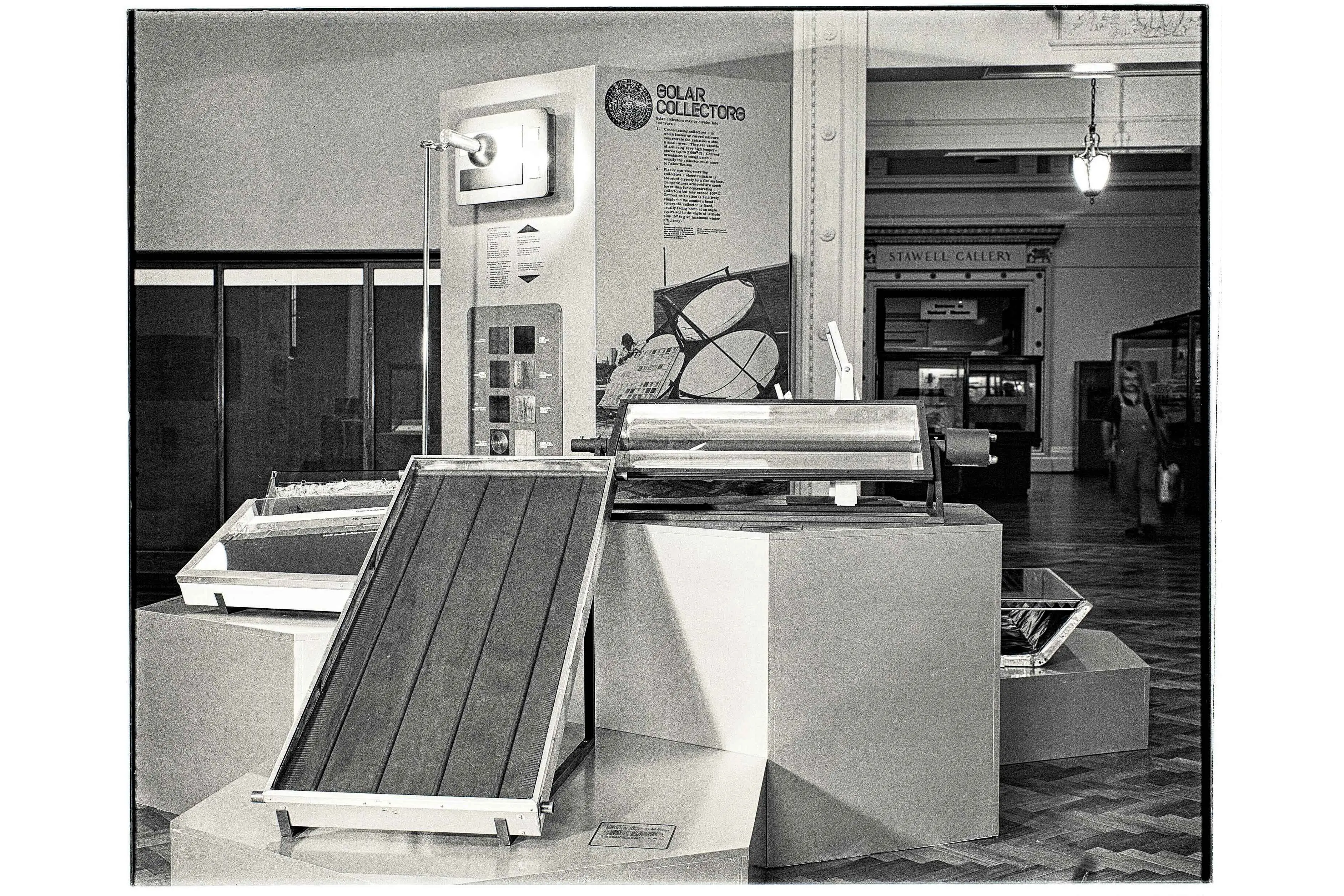
This solar turbo-generator was built by the Israeli Ormat Turbine Company – Israel being a major exhibitor at the Field Days that year. Fifteen large heating plates, each consisting of sandwiched metal plates covered with two layers of glass, were on display in Orange. Water heated to 120 Celsius then passed through an enclosed tank containing an organic liquid with a low boiling point, building pressure to drive the turbine generator. The same technology is still used today in geothermal and waste-heat recovery systems, and it certainly impressed those who saw it in 1976.
The Western Magazine’s reporter enthused: “In my opinion, this Israeli machine, although not adapted to Australian conditions, is going to suit the landholders in far western NSW and any part of Australia where low rainfall, hot weather, and the travelling of long distances to essential services are everyday events. I am sure we will be seeing a lot of these most beneficial solar energy converters in Australia.”
Then Country Party MP for Calare Alex McKenzie also stressed the importance of solar energy for Australia’s future.
“Solar energy can have widespread application in Australian conditions… Many areas in our country are still without electricity and, in the long term, solar power could solve this problem,” he told the Australian Jewish Times, warning that Australia’s gas and oil resources were limited.
“Unless new or alternate resources are found, we shall be heavily dependent on other countries,” he continued. “We have the ‘nuclear opportunity’, but must, at the same time, recognise that solar energy is the next phase in our development.”