
PHOTO
Op shops, “oppies”, Vinnies, second-hand stores, thrift shops… by whatever name you know them, charity retailers of donated clothes, accessories, DVDs, books, and furniture at strictly bargain-basement prices provide a fantastic service to our community. Not only are they a wonderful way to recycle other people’s hand-offs, thereby giving much-loved items another lease on life, but they also handsomely reduce the amount of landfill and waste in our disposable society.
Their earnings are then used to support those doing it hardest in these tough economic times.
The whole system relies on the selfless hours, days, weeks, months, and years put in by an army of volunteers prepared to give back to their community. This army, however, is generally getting older, is overwhelmingly female, and is shrinking, as so many senior Aussies are still working full time, minding grandkids, or off on the great grey nomad safari.
The Australian Red Cross Shop in Anson Street is one such charity struggling with the structural decline of volunteering in our increasingly time-pressed society, manager Rebecca Weatherburn recently told Orange City Life. “We’ve been going 20 years and we sell clothes, shoes, handbags – a lot of handbags – knick-knacks, menswear, DVDs, books, and collectibles,” Ms Weatherburn explains. “We’ve traditionally been open 9–4 each day, but we’re trialling 4.30 closing at the moment, but we’d love to open six days a week,” she adds.
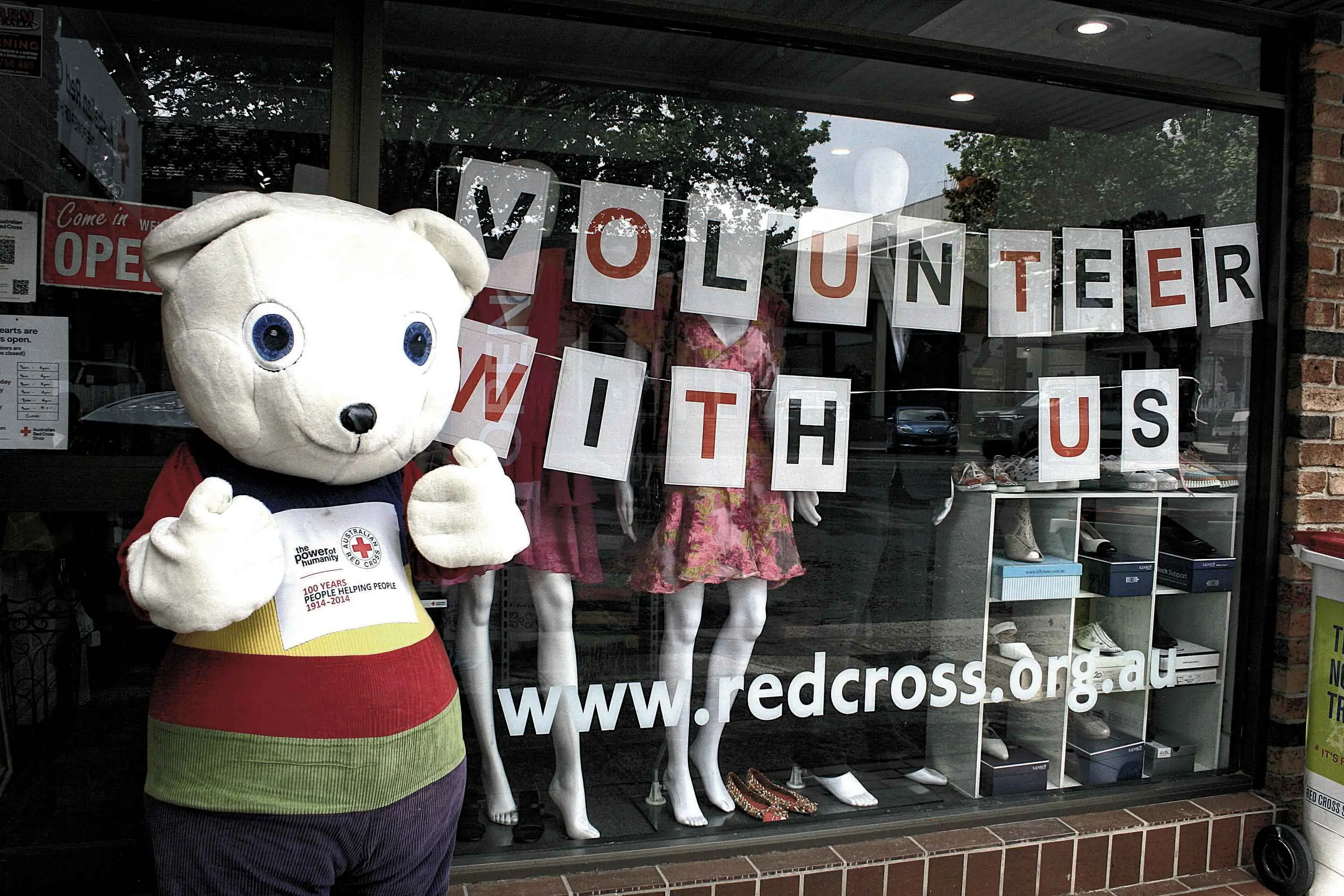
With a high attrition rate for volunteer staff, she recently donned the Red Cross’s “Trauma Teddy” costume for a walk around the City Centre, to try to drum up some more recruits. “We’re down to about 15 regulars from an average of about 20. We’ve lost a lot to old age, sickness, family needs; a lot of people are still working at retirement age or looking after grandkids. “That’s what they told us when we had a stall in the shopping centre for a month; we actually had a lot better response with the Trauma Teddy,” Ms Weatherburn reveals.
Volunteers are only required to spend a few hours at the shop each week, and she argues volunteering for the local Red Cross shop is not exactly hard yakka. “You work your own times, we’re very flexible, there’s lots of cups of tea and cake and chat, it’s just like being at home; it’s a good place to work, we all get in and help,” Ms Weatherburn says. “You also get to choose to do shopfront or sorting out the back – many people don’t like working the store – and we have four sheds out the back, and this sorting helps out other Red Cross stores as well.”
Helping shoppers make use of items cast off by others is also highly satisfying, two-decade volunteer Chris Lewis says. “People do ask, ‘Do you have this or that item?’ and it’s great to find what they’re looking for that they might not be able to see,” Ms Lewis says. “A lot of it is just meet and greet and putting on a friendly face,” she adds.
Ten-year volunteer Lorraine Bond says: “I meet people, and it’s a great way to give back to the community.”
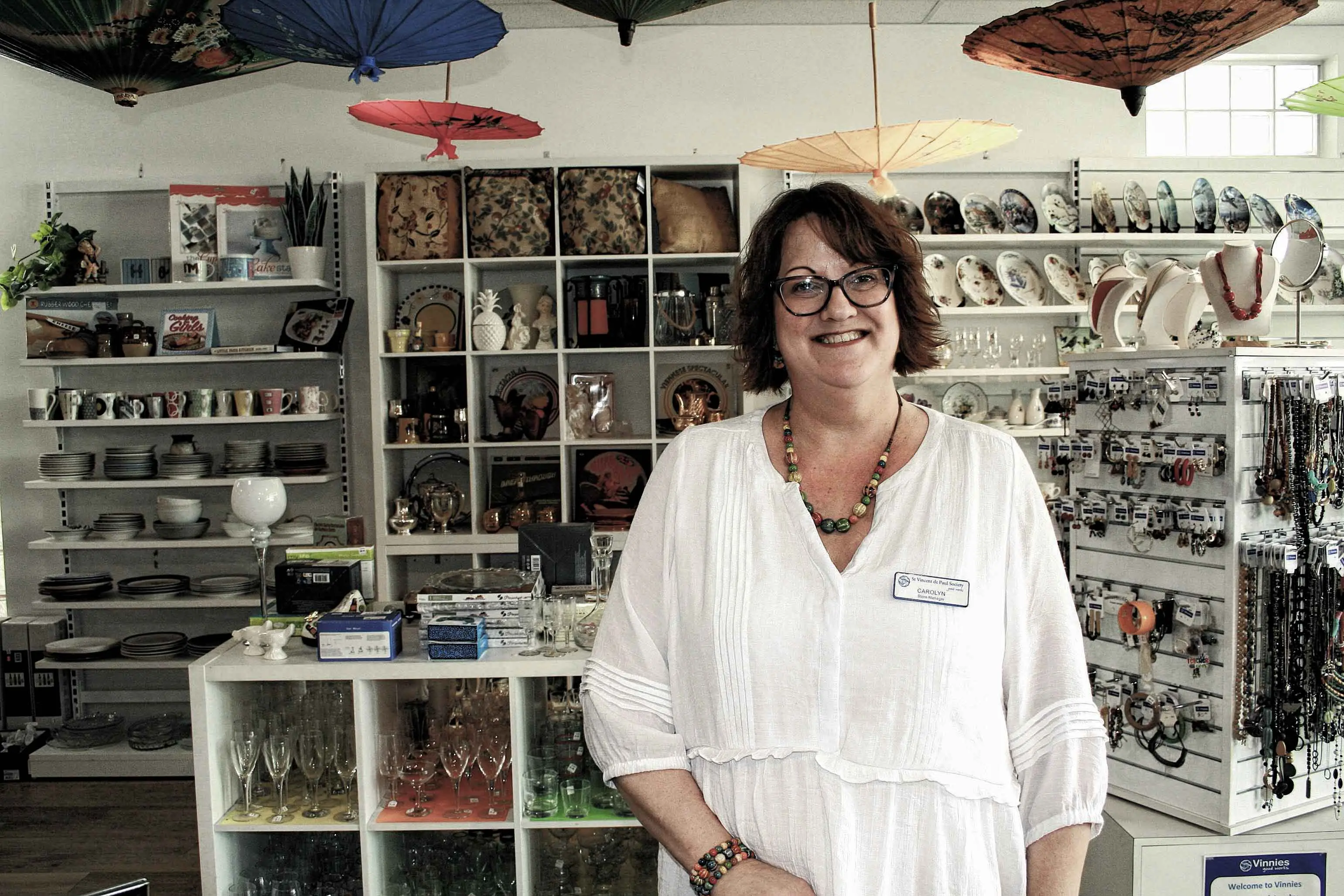
If you think you may be able to help, Ms Weatherburn asks, why not give it a try? “We all have busy lives, but ring us up, come into the shop, or go online and find out,” she concludes. The situation is not quite as desperate for St Vincent de Paul, but store manager Carolyn Wright says it is always after a new set of hands. “We have about 30 on the books, some doing as little as four hours a month, but we can always do with more,” Ms Wright emphasises. “We’re open now seven days a week, but we had to get a paid casual who does up to a 40-hour week,” she adds.
With increasing numbers of irresponsible locals using the shopfront as a free dumping ground for everything from broken toys to any old rubbish, there is far more to the service than just its Peisley Street store.
“Waste disposal is a huge problem, and Orange City Council doesn’t give us any discounts on that, but we use volunteers for a bunch of other services as well. “We have retail, sorting, logistics and warehouse, the Vinnies Van [emergency hot food], and assessment,” Ms Wright reveals. She confirms all volunteering, donations, and sales go to very important causes in the Colour City. “All the money goes to care and support. This involves helping people who are pretty much struggling, with gift cards and other help,” Ms Wright says. “We’re the largest textile recycler in Australia. Anyone who wants to volunteer, it’s all online – go to vinnies.org.au,” she concludes.
UPA Buena Vista Opportunity Shop manager Pauline Oldroy says the store is doing reasonably well at the moment but is also always after new blood. “We have in excess of 35 workers, but we always need more and it’s an ageing volunteer group, so there is that,” Ms Oldroy says. “We all work around our other commitments and it’s like a little family, everyone does everything, and there is a guy that helps get rid of the rubbish,” she emphasises.
As far as commitment goes, everyone helps out when they can at the Peisley Street outlet, which is open from 9am to 4pm on weekdays and on Saturday mornings, and the volunteering duties barely qualify as work. “They can work whenever available, they can give me three hours or a whole day, they give me what they can, and it’s not difficult,” Ms Oldroy says. “We usually have at least four in the shop at any one time, but, for many people, it’s like asking them to give up a weekend, when they have other commitments like grandkids and sport,” she concludes.
Like most volunteer organisations, the Salvation Army store is increasingly relying on a smaller number of volunteers to keep its vital service open. Its sprawling shop, located in the former Strand Theatre on Summer Street, is now down to about a dozen volunteers. Out-the-back helper “Joe”, however, told Orange City Life that, despite the commitment, the work is satisfying and rewarding. “I think it’s a throwaway world, and it’s good to help out in recycling stuff that would otherwise be discarded.”