
PHOTO
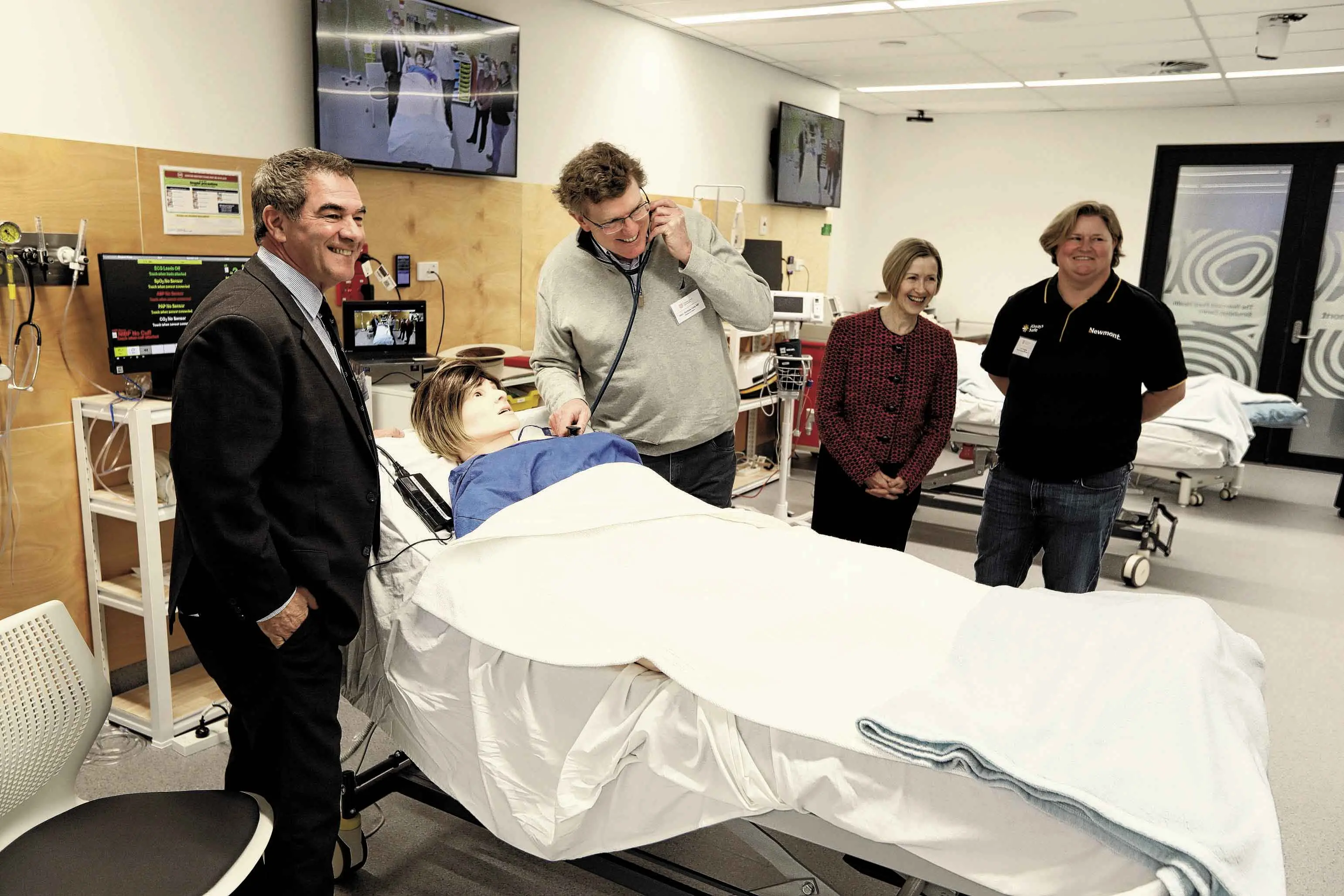
Charles Sturt University has unveiled a new $1.5 million medical Simulation Centre and Immersion Room at the Bloomfield Medical building.
The facility - the first of its kind in Orange - replicates hospital wards, operating theatres and emergency “outdoor” environments so students can practise procedures and responses in realistic settings.
The centre is equipped with state-of-the-art specialist equipment, including advanced patient manikins which mimic a range of medical conditions and responses.
The “immersion room”, a circular room with a 19.5-metre x 2.5-metre wraparound LED screen, can display vision and audio recorded using a portable 360-degree camera ring. This allows students to be virtually placed within a variety of “real world” locations to conduct training scenarios.
“Simulation-based education is now an essential part of modern healthcare training,” Charles Sturt Vice-Chancellor, Professor Renée Leon, told those attending the official opening of the Simulation Centre and Immersion Room last week.
“These facilities provide realistic and controlled environments where students and clinicians can practise complex procedures, work through emergency scenarios, develop teamwork and communication skills, and build confidence before applying those skills in real-world settings.”
Professor Leon said the training centre, made possible thanks to $1.5 million in funding from Newmont Cadia’s Community Investment Program, is a long-term investment in our regional healthcare system.
“The Newmont Simulation Centre and Immersion Room will help to address the greatest health challenge facing regional Australians: access to a skilled and sustainable healthcare workforce,” Professor Leon said.
“This facility will allow students, junior doctors and local clinicians and health professionals to build skills and expertise, helping to ensure patients across our communities receive the highest standard of care - now and into the future.”
Newmont Cadia General Manager, Lori Douglas, said the investment reflects Newmont's commitment to supporting the economic and social development of the Central West.
“We are proud to invest in the creation of this training facility that will help equip the next
generation of healthcare professionals with the experience to strengthen the region’s healthcare capabilities and improve outcomes for local communities,” Ms Douglas said.
Studies have shown that people living in regional, rural and remote areas - 27 per cent of the Australian population - have higher rates of hospitalisations, deaths and injury, and have poorer access to primary healthcare services.
The fact this facility is located in Orange makes it particularly significant, Professor Leon said.
“It enables world-class education and training to occur right here in Orange, close to the communities that need skilled healthcare professionals the most,” she said.
“That is why our School of Rural Medicine was established - to train doctors in regional Australia and for regional Australia.
“As we often say, if you want doctors to work in regional communities, the best place to train them is in regional communities.”