
PHOTO
While the spread of the exotic pest, varroa mite, has been a disaster for Australia’s commercial honey production, it’s not all bad news for Australian native bee species.
Reductions in domestic hive and feral European bee populations caused by the mite could mean reductions in introduced weed pollination and increases in native bee populations and the plants that they pollinate.
A study led by UNSW (Sydney) has highlighted both the threats and opportunities for native plants and pollinators.
The parasitic mite – first detected in a sentinel hive at the Port of Newcastle in 2022 – has devastated honeybee populations by feeding on their bodily fluids and babies, while spreading disease.
Once the mite establishes itself in an area, populations tend to collapse, however, this might not all be bad news, according to Dr Tom Le Breton from the UNSW School of Biological, Earth and Environmental Sciences (BEES).
“While the European honeybee has become the dominant pollinator for some native species, recent research shows that they can also have a negative impact on others, by stealing pollen or deterring more effective native pollinators,” Dr Le Breton says.
“As Australia is the last honey-producing country to become infected with the varroa mite, we are in a unique position where we can review global experiences,” he said.
Honeybees were first introduced into Australia in the early 1800s and while no long-term research exists on how the bees impacted native plant species, today they are widespread in feral populations, pollinating natives as well as harmful weeds.
“Our population of feral honeybees is among the highest recorded anywhere in the world,” co-author Dr Chantelle Doyle said.
“They exist in up to 128 colonies per square kilometre in southern Australia, with as many as 50,000 individuals in each colony,” she added.
In other countries, the spread of the parasite has led to the loss of around 96 per cent of feral honeybee populations within just a few years of its arrival.
Such a large decline of a key pollinator species could change the pollination landscape. But with limited existing research, predicting what these changes will be and what they mean for native flora is a difficult task.
By comparing current pollination patterns with those after the decline of honeybees, researchers could gain valuable insights into how native plants may adapt and how conservation efforts should be directed.
“Preparing for these changes is crucial,” Dr Le Breton said. “Especially in regions such as Western Australia, where it will take longer for the mite to reach.”
Honeybees are sometimes direct competition for native pollinators – other bees, birds and mammals – often outnumbering these species.
The decline of feral honeybees could give any native pollinators that have struggled to compete a chance to reclaim their role in the ecosystem.
Without honeybees dominating flower visits, native insects may be able to pollinate more effectively, leading to plant-pollinator communities closer to those that existed before colonisation.
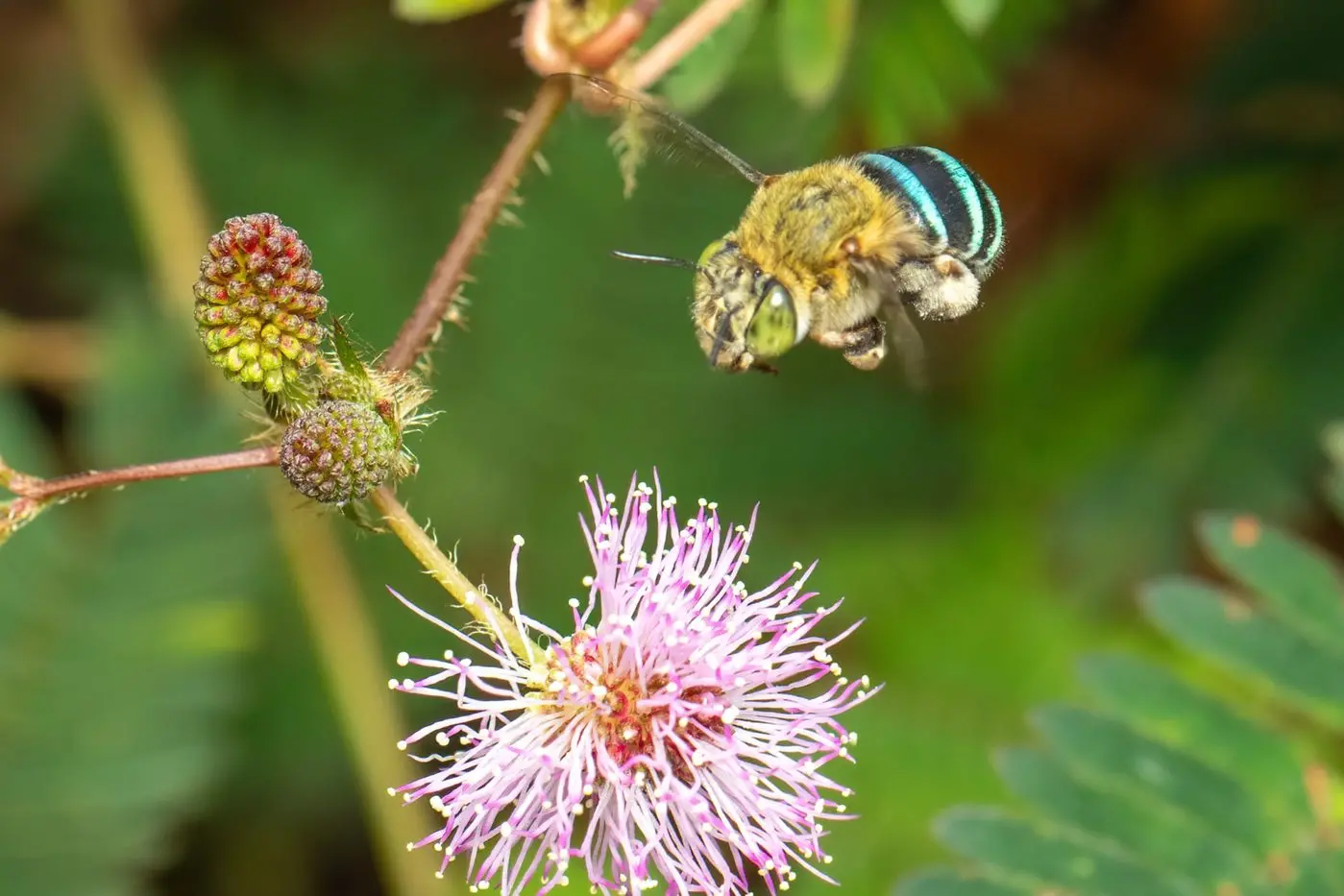
This includes more than 1200 native bee species – some of which have unique features that honeybees don’t. Native bees also aren’t affected by the mite.
“Some native bees, like the Reed bee, use thoracic vibrations – or 'buzz pollination' – where they vibrate their thorax really quickly,” Dr Doyle says.
“So, buzz pollinators are really effective – way more effective than honeybees, which is one of the reasons why honeybees are detrimental to some species of plants,” she concluded.
A loss of feral honeybees could therefore help reduce the seed set of harmful weeds and slow their spread, the study found.