
PHOTO
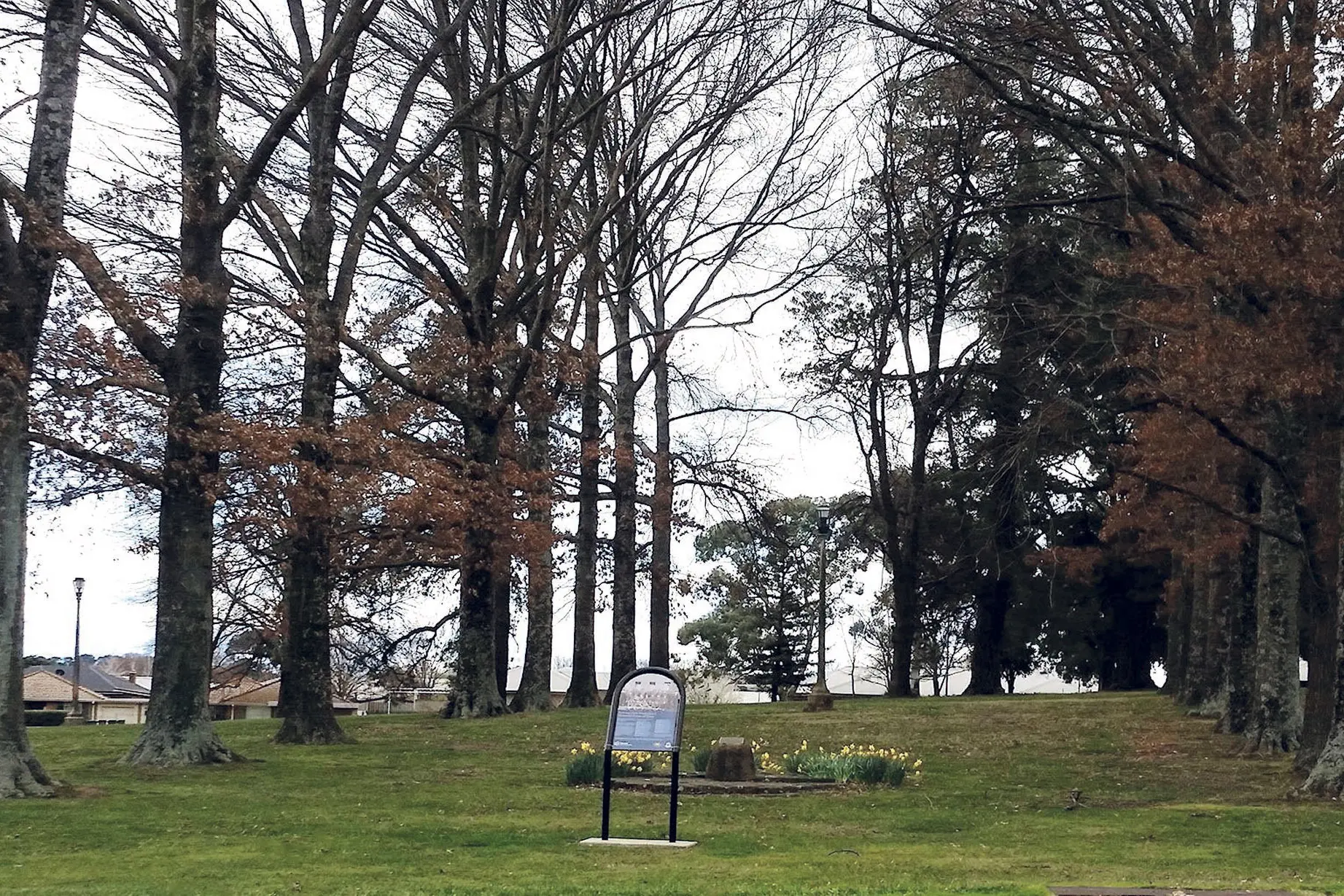
Recently announced funding for the Newman Park Great War Memorial Avenue in east Orange ensures that the "Lest We forgets" uttered on Remembrance Day are meaningful.
The park is one of the few remaining memorial avenues of trees still around, more than 100 years after its planting in 1919 and, but for a campaign by the local RSL many years ago, might not exist anymore.
Hardly the best-known war memorial in the district, it does, however hold particular significance to the nearby East Orange School, whose former pupils it memorialises.
Groves of planted trees were a popular alternative to the traditional man-made stone, rock, concrete, and metal plinths, cenotaphs, statues, carillons, and daises that proliferated after World War I in Australia.
These had the symbolic value of comprising living trees, often one planted for each soldier who died in 'The Great War' — what we now know as World War I — or for each soldier who served from that area or organisation.
The $12,265 funding for Newman Park is aimed at improving access and utility of the site those at official events, or who just want to meditate at this solemn location, East Orange Principal Glen Bourke told 'Orange City Life'.
“I think they’re upgrading the memorial itself, putting in seating, making it wheelchair accessible,” Mr Bourke said. “The money was granted after consultation with the school and the sub-branch, who were very much the drivers of the project,” he added.
Despite the passing of the years, he emphasised that that the school still takes its responsibilities for this memorial very seriously.
“It has a huge association with the school; we are custodians of the site and hold an Anzac Day event there every year towards the end of Term One with bagpipes, buglers, the full list,” Mr Bourke said.
“About 100 ex-students served in World War I, and 17 died and, after the war, the principal planted the trees in their honour, there are stories of people leaving memorials there, tying yellow ribbons, all that sort of thing,” he added.
The school community, he explained, has also researched a history of each of the young men who perished in the industrial-scale slaughter over mere yards of soil on the Western Front during the four years of bloody battle.
“Each year, we read a history of two of the serviceman, where they were from, when they died, where their grave is located.
“As it’s been over a hundred years, you don’t see a lot of groves of trees like this still intact -- it’s unusual to see one with the original trees still alive,” Mr Bourke said.
The history of the memorial goes back to August, 1919, when the then principal of East Orange Arnold T Caldwell arranged for a group of returned soldiers to take part in planting a memorial avenue in Newman Park, adjacent to the school.
The 16 trees that form the avenue are Pin Oak (Quercus palustrus), with an English Elm (Ulumus procera) positioned at the head of the avenue.
In the early years after the planting, vandals destroyed the name plates attached to each tree, which signified who it was planted for.
At one time, council actually considered removal of the avenue, but a strong protest by the Returned and Services League of Australia (RSL) saved the trees.
In August, 1978, a memorial plaque attached to a large basalt stone was donated by the Orange RSL Sub-Branch and Orange City Council to replace the plaques.
It is inscribed with the names of the 17 former students who were killed in action or died of wounds during the war.
The 27 State Government war memorial grants were awarded to councils, RSL sub-Branches, and community groups in cities, regional towns, and rural centres throughout NSW.
Meanwhile, the sombre line of century-old trees at Cameron Park in east Orange still stands as a silent sentinel to another age and a sacrifice not to be forgotten.
“It is a very special part of our school’s history,” Mr Bourke concluded.