
PHOTO
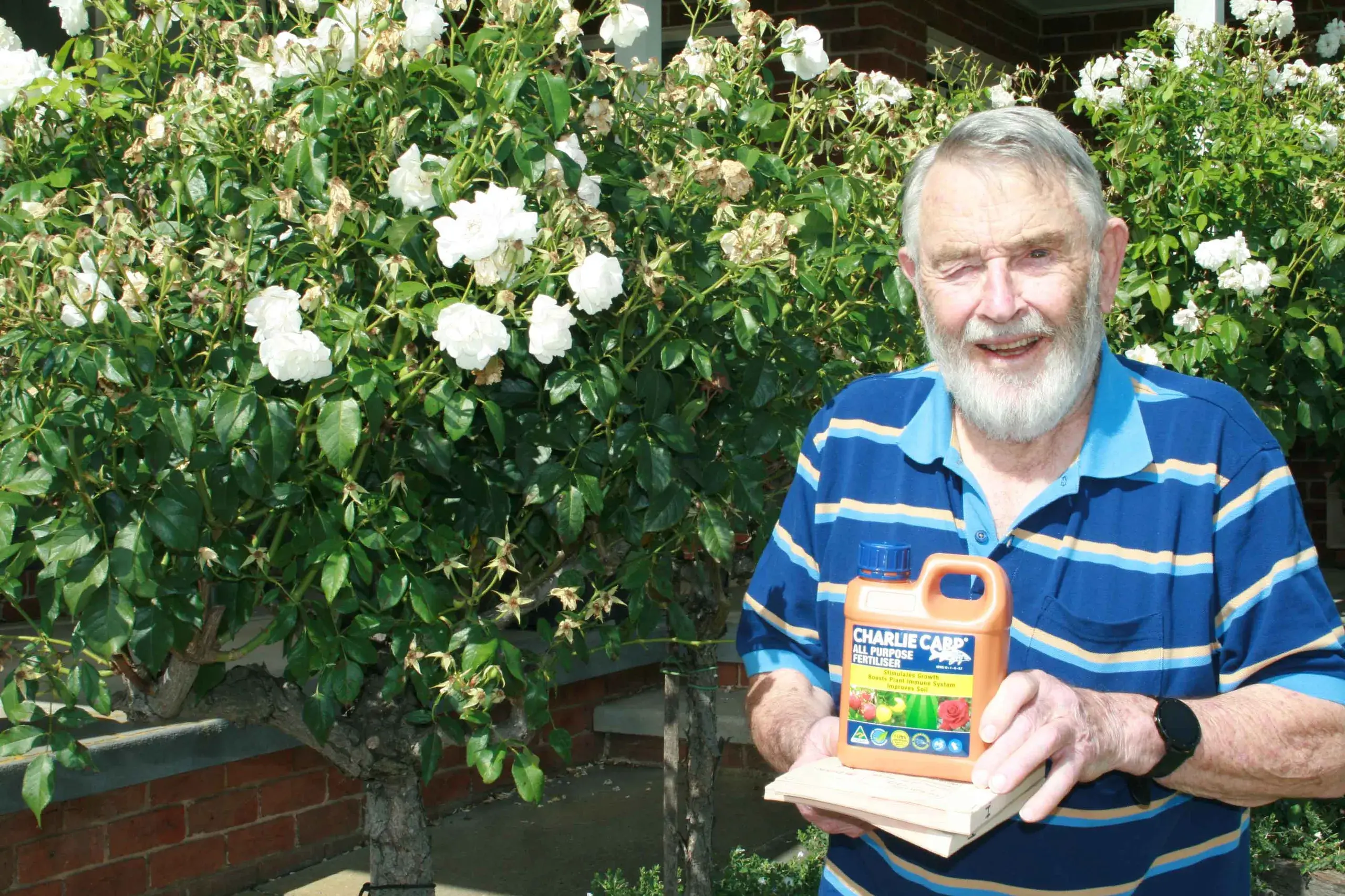
Life-long farmer on the Lachlan River, and one of our real doers, Bob McFarland remembers when European carp began their decades-long destruction of our waterways.
Vowing to make a virtue out of necessity, he and a few friends set about exploiting this invasive and destructive fish species for good use, developing one of the best fertilisers there is on the market.
The Orange retiree now has a new mission, trying to halt the release of a carp virus that, he believes, could destroy our inland rivers as millions of the plague-level fish die in quick order.
For McFarland, it all began in the early 1960s on what he now recalls as one of our most idyllic and pristine inland waterways.
“My family had been farming on our cattle and sheep property, Oxley Station west of Hay, for 105 years and, before the carp got into the river, it was a beautiful spot,” he remembers nostalgically.
“We used to catch yellow fin, red cod, silver perch, catfish; we’d throw a line in in the morning, and we’d bring a fish home for breakfast,” he added.
It was then that a fish breeder emptied a truckload of the prolific and invasive Boolarra strain of common carp (Cyprinus carpio) into the Murray River, setting off an environmental time-bomb in our inland waterways.
“I said, ‘We gotta do something.’ It was then that the four of us, myself, my brother-in-law, our accountant, and a neighbour, raised tens of thousands of dollars in 1968.
“It was a lot of money in those days, people were that desperate and, although I only graduated from the ‘University of Wide Open Spaces in Bugger All,’ I had an idea,” McFarland remembers.
“We had called it the ‘Crusading Carp Control Company’, the Four C’s, but it was decided that a name like that was simply too long-winded,” Bob revealed.
“So, we sent it to one of Australia’s best copywriters, and he came-up with the title ‘Charlie Carp’. It doesn’t mean anything, it’s just a catchy name.”
Their first efforts at transforming the captured carp turned into top-grade fertiliser, however, did not end well, taking some trial-and-error to get the recipe right.
“We advertised, and this bloke who was making fertiliser in Queensland from the head, guts, and other fish waste from restaurants and resorts, came down to see us,” Bob revealed.
“He sets it to boil, goes off to lunch, and comes back and there’s carp all over the floor, down the walls, seeping out the door; there was a lot more nutrients in the carp than the other fish, and it had all exploded,” he laughs.
Although not the easiest fertiliser to produce, Charlie Carp is certainly one of the best, with a few drops promised to lift any garden, Bob believes.
“Our soils have all been leached of nutrients — molybdenum, zinc, boron, selenium — by decades of farming and we’re only putting nitro-potassium phosphorous (super phosphate) back in.
“You can use these synthetic trace elements out there, but then they dissipate. With this product, it brings back the earth worms, the nutrients come back, it’s perfect for that role.”
Now retired and no longer with an active role in the company that produces Charlie Carp, he argued that the environmental benefits of reducing carp numbers in our hard-hit waterways, is an added benefit.
“To do something for the environment, we really had to go out on a limb. We created a fantastic product to utilise carp and to help the soil, though it’s not a cheap product.”
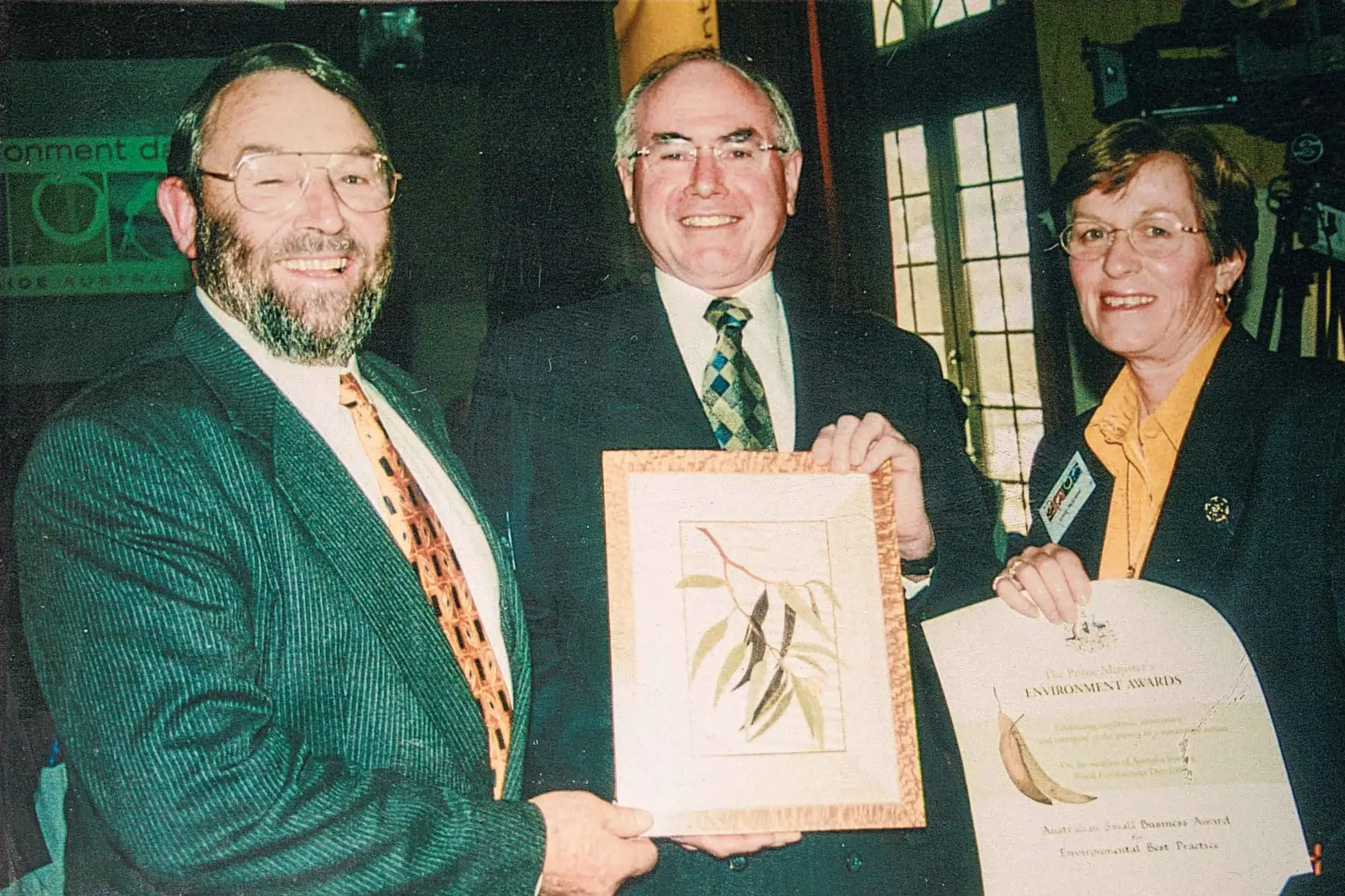
Awarded a prestigious environmental award by Prime Minister John Howard in 2000 for his efforts, he says that a proposed biological weapon soon to be trialled in our waterways could end-up doing more damage than the fish themselves.
“The carp virus will turn our waterways into sewers... you’ll have millions of the fish dying at one time, it will remove all the oxygen and kill all the other species as well.
“They claim they’re going to get the volunteers to get them out, well how many volunteers will you need to do the whole Murray-Darling River system?”
No friend of the carp, he said that less drastic control measures are being ignored for this big, bold, high-publicity approach of the Cyprinid herpesvirus 3 disease.
“We’ve got billions of carp in our inland waterways, and this guy, examining the way they swim, designed a carp trap that only catches this one species,” Bob said.
“We’ve got huge unemployment issues in many of these river towns; you could get the locals off the dole, and they’d become the fishermen from these traps, without destroying the whole river.”
He believes that our parliamentary system has failed Australia, and government departments should now be headed not by politicians, but by expert outsiders, as in the American republican model.
“Politicians have no idea how to solve real-world problems, but, where there’s a will, there’s a way,” McFarland said.
“I’m a bit of an outsider myself and, as some people see problems, I see solutions.”