
PHOTO
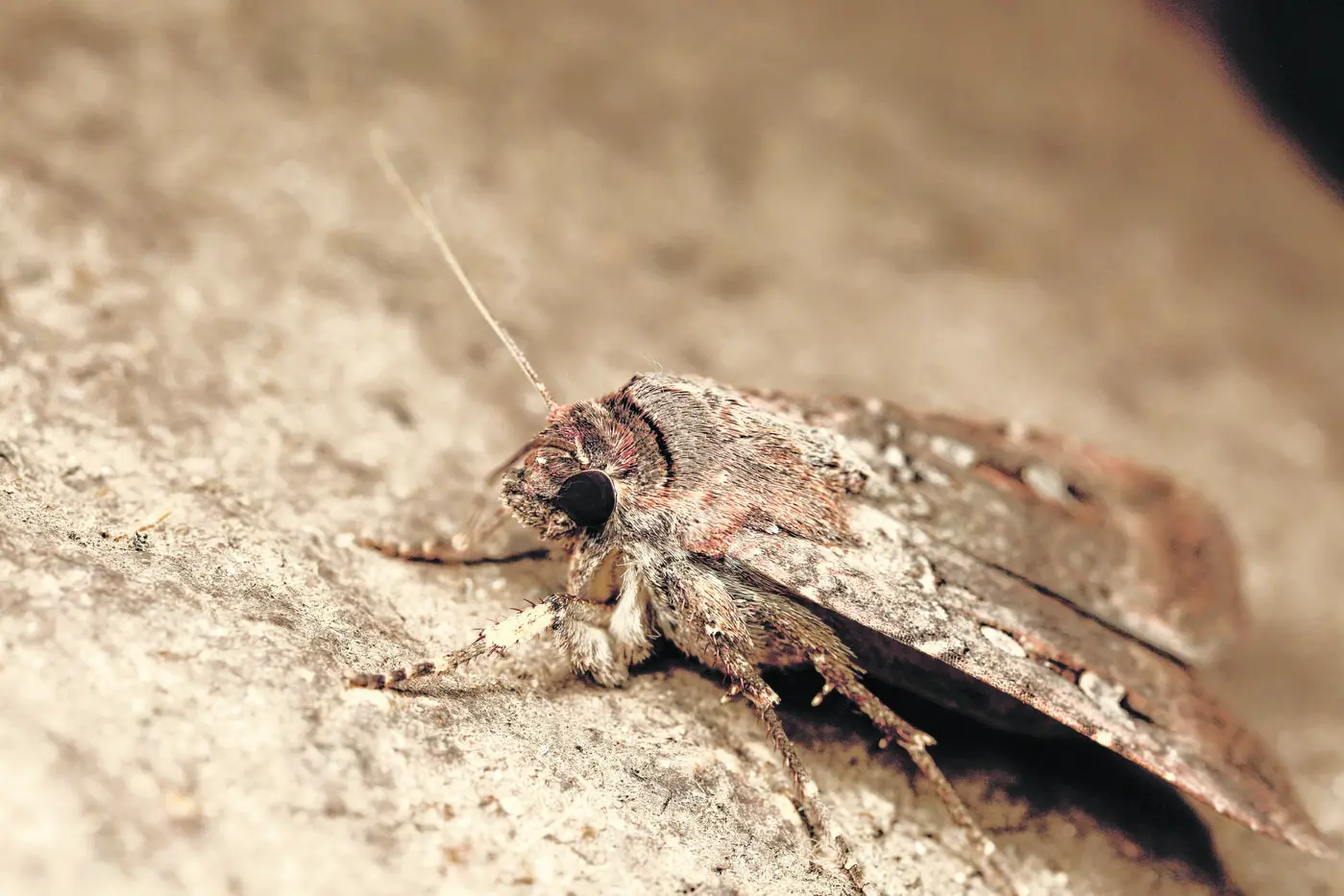
Bogong Moths, generally thought of as befuddled and confused insects that get under one’s feet on their annual migration from western NSW, are actually the stellar navigators of the insect world, a new study has shown.
In a world-first discovery, researchers found that about four billion Bogong Moths use the stars to navigate up to 1000km each summer to a few select caves in the Australian Alps – the first known invertebrate to rely on a stellar compass for long-distance travel.
The landmark study published in the magazine “Nature” reveals how this unassuming nocturnal moth combines celestial navigation with Earth’s magnetic field to pinpoint a specific destination it has never visited before: the cool alpine caves of the Snowy Mountains, where it hibernates for the summer.
Led by an international team of scientists from Lund University, the Australian National University (ANU), the University of South Australia (UniSA) and other global institutions, the research sheds new light on one of nature’s great migration mysteries, involving approximately four million moths each year.
“Until now, we knew that some birds and even humans could use the stars to navigate long distances, but this is the first time that it’s been proven in an insect,” said Lund University Professor of Zoology Eric Warrant, who is also a Visiting Fellow at the ANU and an Adjunct Professor at UniSA.
“Bogong moths are incredibly precise. They use the stars as a compass to guide them over vast distances, adjusting their bearing based on the season and time of night.”
Each spring, billions of Bogong moths (Agrotis infusa) emerge from breeding grounds in southern Queensland, western NSW, and western Victoria, and fly up to 1000km to their destination in caves and rocky outcrops in the Australian Alps.
The moths lie dormant in the cool, dark shelters throughout summer, and in autumn make the return journey to breed and die.
Using sophisticated flight simulators and brain recordings in controlled, magnetically neutral environments, the researchers tested how moths orient themselves under different sky conditions.
When presented with natural starry skies and no magnetic field, they consistently flew in the correct migratory direction for the season – southward in spring, northward in autumn.
When the starry skies were rotated 180 degrees, the moths reversed direction accordingly, but when the stars were scrambled, their orientation vanished.
“This proves they are not just flying towards the brightest light or following a simple visual cue,” says Prof Warrant.
“They’re reading specific patterns in the night sky to determine a geographic direction, just like migratory birds do,” he added.
Interestingly, when stars were obscured by clouds, the moths maintained their direction using only the Earth’s magnetic field. This dual compass system ensures reliable navigation even in variable conditions.