
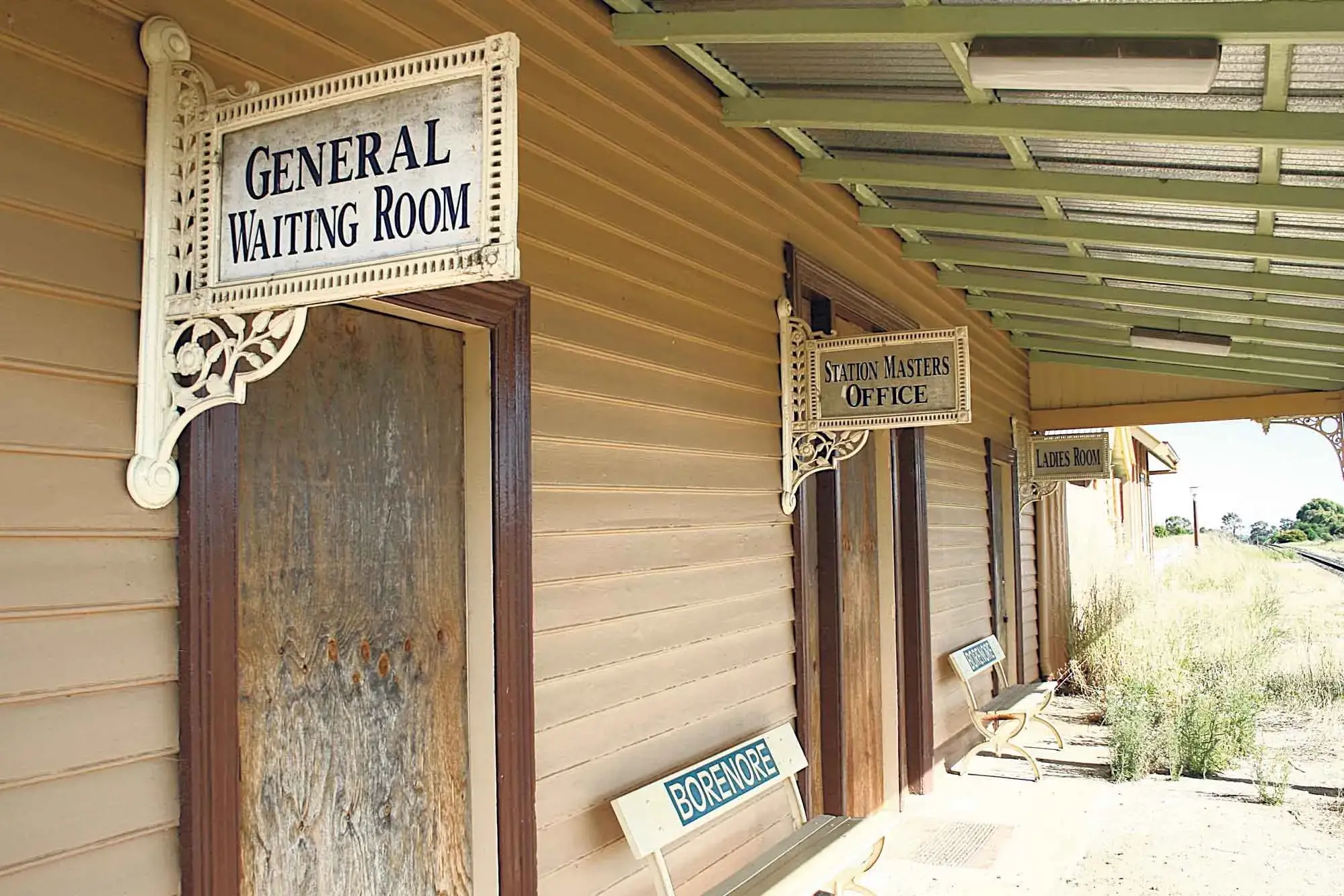
PHOTO
Closed now for a solid half-century, Borenore Railway Station, about 15km west of Orange, is a reminder of when railways and trains were the arteries and bloodstream of an isolated nation of a few million dispersed citizens spread across a giant island continent.
Many modern Australians probably don’t realise exactly how the introduction of the steam locomotive here in the 1850s transformed our society every bit as much as the motor car did in the early 20th century.
Tiny, impoverished communities were now mere hours away from major cities like Sydney, passengers travelling in comfortable carriages with dining cars and leather seats. Previously trips had taken days to cross the Blue Mountains on horseback or in rickety coaches rattling along at a few miles an hour.
Goods such as wheat, wool, and timber, that had been laboriously dragged on giant ox carts along rut-filled tracks, could now be loaded onto goods trains by the ton and shipped safely and quickly to our major ports.
As the rail system of the colony — each states had its own track gauges (widths) and could always transport people or goods between major centres — developed, communities begged, cajoled, and demanded that their parliamentary representatives lobby for their own train station and goods siding.
With such speed and access, the wealth of our country towns expanded almost overnight.
For instance, while it is estimated that the trip on a Cobb and Co Coach between Bathurst and Orange in the 1870s cost a week’s wages for a farm worker, train travel by 1890 was far cheaper.
To travel from Orange to Sydney in 1890, a single fare in First Class was about £1 14s (34 shillings), and for Second Class, £1 2s 8d (22 shillings and eight pence).
With the minimum wage for a manual labourer at the time about 42 shillings ($2.10 per week), this meant that someone could complete this journey in a modern carriage over a few hours, for half as much as the coach trip between Bathurst and Orange.
In Borenore, a major agricultural area at the time that is approximately 287km west of Sydney, their little station was opened in 1885.
It was constructed in the solid though unremarkable style favoured by government architects and builders that has been described as “Railway Gothic”, featuring solid brick with concrete rendering to provide natural insulation in both winter and summer for travellers who may have had to wait hours for their train.
Anachronisms of the old facility, believed to have been officially shut around 1975, include a Ladies Room, which was not a bathroom per se but an area set-aside so that the fairer sex could have the privacy and safety they required, and the Station Masters Office' because senior rail employees were almost exclusively all men!