
PHOTO
Collaborations between the Italians and Germans have not always had the happiest of endings, but this wasn't the case with the unique Karmann Ghia project.
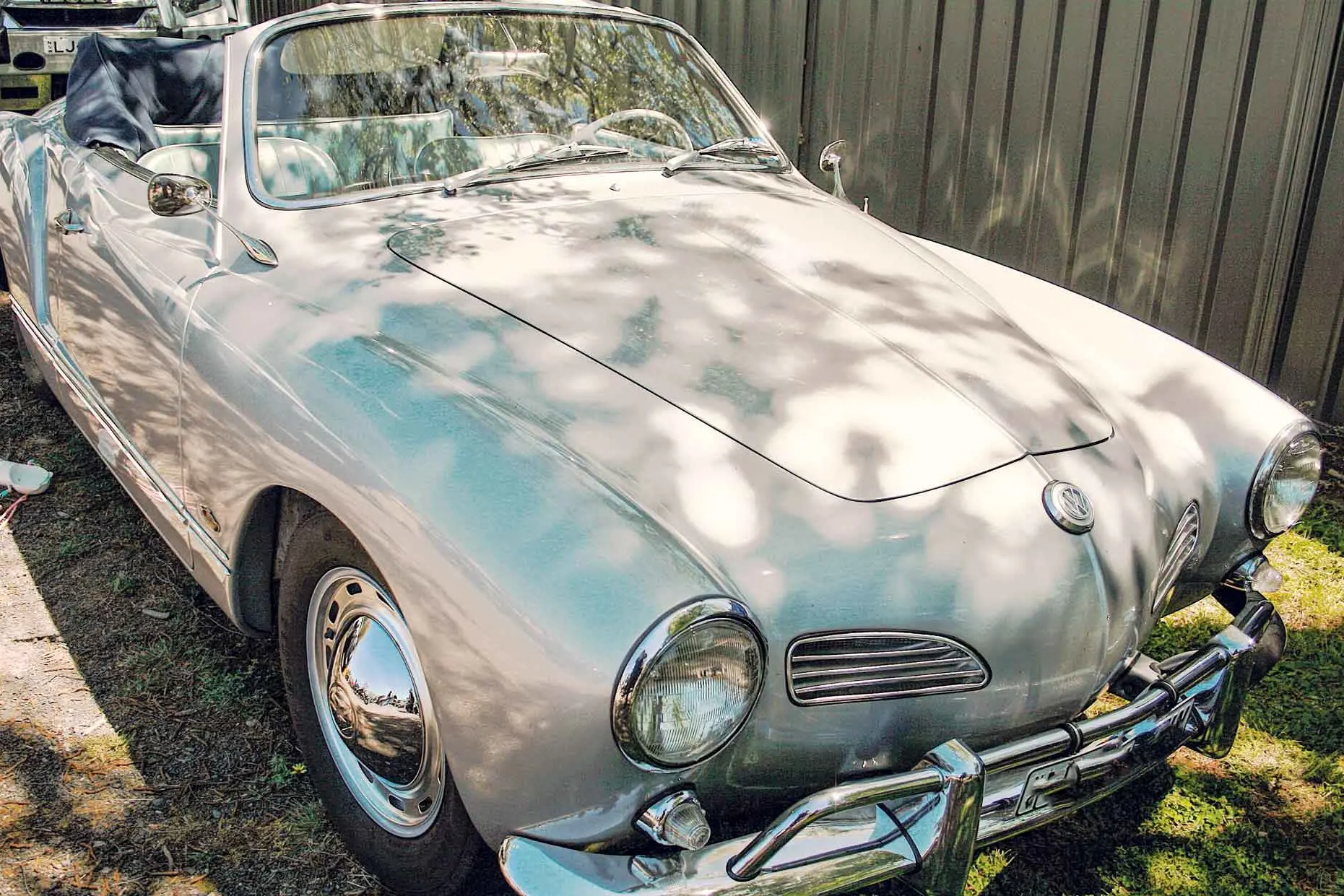
This beautifully-restored 1963 convertible model — photographed recently at a local motoring event — is a fine example of an eclectic sports marque produced in Europe from the mid-1950s to the mid-70s.
The Karmann Ghia, as the name partly suggests, was a combined initiative between three of Europe’s premier car-makers; German coach-builder Karmann, the Teutonic motoring giant Volkswagen, and Italian design house Carrozzeria Ghia.
The car combined the mechanical components of the VW Beetle with an elegant, hand-built body envisioned by Ghia’s legendary owner and chief designer Luigi "Gigi" Segre and his team of Italian stylists.
It was just the car for a want-to-be jet-setting European aristocrat to breeze around Monte Carlo in the Riviera, before a night out drinking martinis and champagne in a tuxedo while playing a few lazy hands of blackjack at Casino Royale.
Creation of the marque, in reality, did have a touch of the James Bond mystery about it...
To start the ball rolling the son of a Ghia executive surreptitiously obtained a Beetle in Paris, drove it back to Turin in northern Italy, where Ghia secretly customised the initial prototype before presenting the model on the quiet to Wilhelm Karmann, with whom Segre had previously discussed a collaboration.
The three companies ultimately came together through the impetus created by improved living standards after World War II. Volkswagen firstly started looking to create a boutique high-end sports model to supplement its utilitarian, mass-produced, and iconic Beetle range.
Ghia head Segre was also committed to expanding his motoring range, at the same time that Wilhelm Karmann, having taken-over his family coach-building firm, was himself eager to create a new Volkswagen convertible model so as to increase potential markets.
Karmann then had the job of selling the novel idea to Volkswagen, who approved the design in November 1953.
The Karmann Ghia subsequently debuted at the 1955 Paris and Frankfurt auto shows, before going into full production, first at Ghia’s plant in Turin, then later at Osnabrück in Germany.
As with typical Volkswagen models, the car featured a rear-mounted engine and rear-wheel drive producing a then-respectable, but hardly terrifying, 40-brake horsepower output delivered directly to the rear wheels.
The engine was a smallish 1.2-litre four-cylinder unit transferred through a four-speed manual gearbox reaching 100kph in about 16 secs with a top speed a rather sedate 120kph.
Production ultimately reached a total of 445,000 units over a two-decade run, solid but never stellar, with the model from year-to-year remaining virtually unchanged.
Now a beloved collectors' vehicle, the Karmann Ghia was ultimately an affordable yet stylish high-quality sports car — more expensive and stylish than the everyman Beetle — but less exclusive and exciting than that other famous VW spin-off, the Porsche 911 Carrera.