
PHOTO
Gold helped make Byng, but one long-time local now fears it could break it!
While the historic community east of Orange has strong ties to the founding of this transformative industry in 19th century Australia, new exploration in the district directly threatens its idyllic rural solitude.
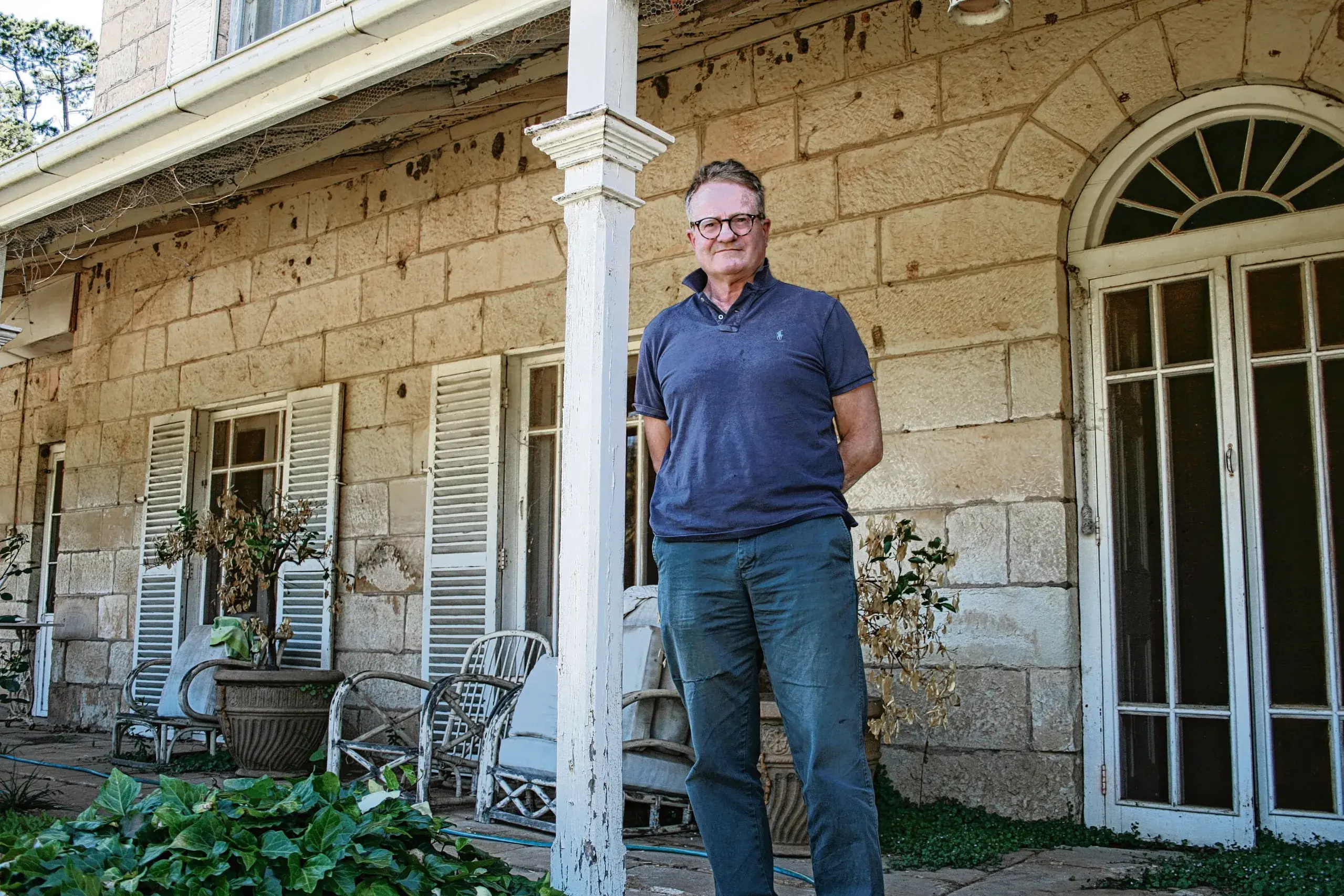
Well-known local medical specialist and academic Professor Simon Hawke — custodian of one of the region’s best-preserved convict-era homes — fears that test-drilling licences issued to a West Australian company active in the district, are portents of its ultimate destruction.
His own ties to the area go back decades from when his father Professor John Hawke moved his family from Sydney’s leafy North Shore to this isolated, historic community.
Simon is one of Australia’s top neurologists and medical academics, and says that he and other locals are prepared to fight to protect the heritage from a plan that would transform the locale, but not in a good way!
“If we have a mine here it would destroy the Byng Valley, all the old properties here, ‘Godolphin’, ‘Pendarvis, ‘Bookannon’,” Prof Hawke said of any plans to operate a commercial enterprise in the area.
“We cannot sit back and do nothing; we’re only here for a short time, and we therefore should look after it for future generations, that’s our obligation,” he added.
He said that the area, and his landmark house and property ‘Springfield’, played a central role in Australia developing from a tiny post-convict pastoral society into one of the world’s wealthiest economies.
“Historically, it was important for the Gold Rush of 1851, that itself had a huge impact on the colony.
“Wool hadn’t been going very well, and this sort of rescued the economy,” Prof Hawke explained.
Discovery of viable gold deposits in fact utterly transformed, not just NSW, but the other colonies on the continent, ultimately leading to our independence from Britian in 1901 (see attached article).
The house, Prof Hawke explained, itself had direct links to the little-known prospectors who actually found the gold, John Lister and the Tom Brothers — rather than the celebrity “entrepreneur” Edward Hargraves who claimed the £2000 reward — at nearby Ophir in 1851.
“This place was built by Parson William Tom, a Wesleyan, who was granted 640 acres (260 hectares) here in 1829, he had 13 children, and built this house here, ‘Springfield’, in 1847.
“The house was built facing the wrong way, the Cornish Way, facing the east, with convict labour and his sons… Byng used to be called the ‘Cornish Settlement’ and there was tin mining here also,” Prof Hawke explained.
With mining in their veins, one of the great inventions that made alluvial (above ground) prospecting by two-man teams possible, was recreated in the house, launching a gold rush that eventually tripled Australia’s population in a few short years.
“The Tom brothers, Willian Junior and James, and John Lister, were given a list of areas by Hargraves to start fossicking in, looking for the gold, which they eventually found.
“Hargraves had been at the California Rush of the 1840s, and he gave them instructions on how to build a ‘cradle’ (a primitive panning machine that looked like a 19th century baby’s bed), with the first one in Australia built here in this very room,” Prof Hawke said.
It was a bitter irony then for the 45-year locals John and Simon, when they were first notified that an exploration licence had been granted to a West Australian company for an area covering the whole of the heritage listed Springfield property and particularly about 1.5km either side of the Lewis Ponds Creek a 50 km watercourse that runs through it.
“The Mining Act allows for an access agreement, whereby we get $2500 in legal fees in the negotiation phase, a pittance, when you’re briefing barristers for hearings to try and save your property.
“We’ve gone through the mediation process, with no agreement, so now its... more like a court hearing,” Prof Hawke said.
The pattern for other rural communities is familiar, test drilling, and then increasingly frenetic activity, until a claim for a commercial mine is lodged with the relevant department.
“They say ‘we’re only going to be here three months for ‘shallow drilling probes’, but then they can go increasingly deeper to try and find worthwhile deposits.
“We get our final decision sometime in 2026 , but we can’t in fact oppose mining for heritage purposes, even on productive land like this with permanent water that's used to shear thousands of sheep,” Prof Hawke said.
Walking outside as the valley spreads before us in all its bucolic beauty and rural serenity, Prof Hawke points down the valley to the Lewis Ponds creek where drilling is proposed.
“My dad has been ill and we’re holding a 99th birthday for him; they paid $1000 for the tenement, and they’ve offered to sell it to us for $5 million as ‘go away’ money,” Prof Hawke believes.
“They can undertake exploration drilling only 200 metres from a residence; how can we value our colonial history… and then have a mining company come in and say, ‘we couldn’t care less about heritage!’?”