
PHOTO
Central Tabelands' key role in the discovery of our first payable gold — an event that launched the “rush” that transformed Australia from the 1850s on — remains largely unrecognised by many leading historians.
Orange and District Historical Society wants to change all that, however, and is now gearing up for a major celebration of the upcoming 175th anniversary of the momentous incident at Ophir near Byng in 1851.
Central to the occasion is a gala get together of current members of the Tom and Lister families from all around Australia at the Millthorpe Museum and Hall for descendants of the two Tom brothers and John Lister who were the actual prospectors who found the first payable gold in the colony.
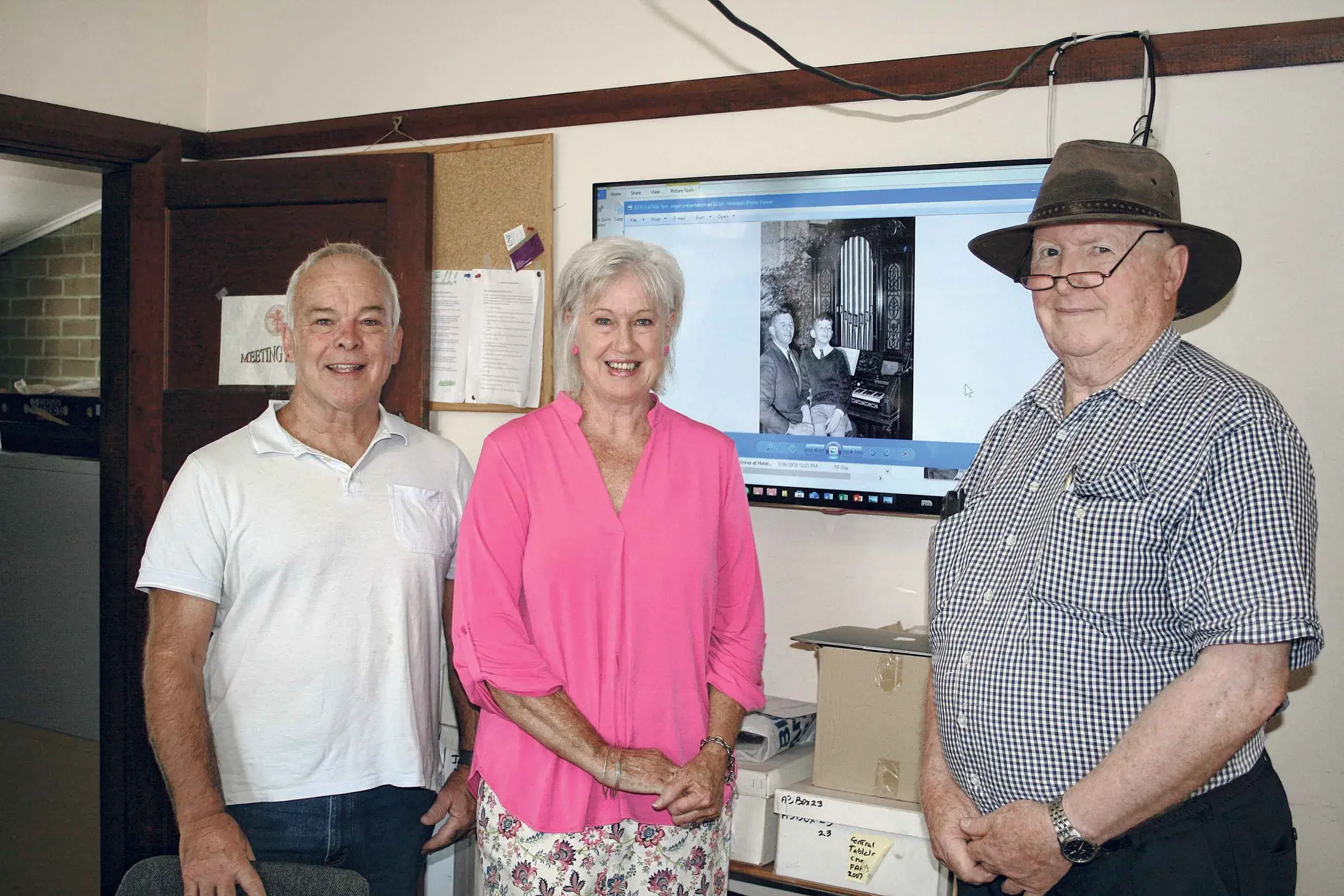
To get the ball rolling, the society recently held its first planning meeting with retired teacher Bruce Tom to start organising the Easter weekend event on Saturday, April 4, and Sunday, April 5.
The event is also a way of correcting an historical wrong, that of promoter Edward Hargraves, a businessman who oversaw the expedition and who instantly claimed the find as his own. After being rewarded with the princely sum of £10,000 (about $3 million in today’s terms) by the NSW colonial government for the Tom and Lister discovery, he was for decades hailed as the man who found Australia’s first payable gold.
“It was Wiliam Jnr and John Lister who actually found it over a three-day search, William Jnr was first, and his heart-shaped solid nugget weighed just under half an ounce.” Bruce explained.
“James, the other brother in the enterprise, had to move some cattle that day, and wasn’t there when they actually found the gold,” he added.
So the event over Easter, as well as a great occasion for the extended families, is also a way of highlighting the unheralded work by three largely-forgotten locals, whose find transformed Australia from a small post-convict farming society, into the richest country in the world in per capita terms.
“We’re having the Tom and Lister family reunion to acknowledge the discovery of the first payable gold in Australia. The find, not only enriched Australia, but also had the benefit of distracting people from going to California, where there was also a gold rush,” Bruce explained.
Although the Tom brothers and Lister were ultimately recognised as the true discoverers of the Ophir gold in an 1890 NSW Legislative Assembly select committee — each awarded a figure of £1000 in compensation (about $300,000 in today’s terms) — the historical injustice creates no bitterness in their descendants.
“Not at all, the work of these men is a source of pride more than anything,” Bruce told 'Orange City LIfe'.
“The family were early settlers at Byng, William was a parson, and he and his wife Anne settled in the area in the early 1800s.”
The clan, he added, were among those many redoubtable settler families who braved a new world to help build a new society.
“They were from Cornwall and turned to farming, the father, William Snr was a devout lay preacher of the Methodist faith from a family of tin miners and was known as Parson Tim.
“The family property he built with his sons, ‘Springfield’ includes the Celtic ‘Welcome” circle outside the front door, they also had a pipe organ built in America for the church and that was sent over the mountains, with William in attendance, on a dray,” Bruce revealed.
The celebrations, he explained, are looking to be a real old-fashioned family get-together.
“At this stage, 130 people have responded… if we could get more, that would be brilliant!
“On the Saturday, we’ve got a meeting with the mayor at the (Orange) museum; on Sunday, we’re going to Byng to the church, we may even have a preacher to re-enact an old-style sermon as well,” Bruce said.
The event is also being used in efforts to seek to protect Byng from proposed gold drilling operations near the village linked to a mining exploration licence granted to a West Australian company, local campaigner, Dennis Mead revealed.
“We are here today to also get the Springfield group to try and arrange a bit of a campaign against the proposal,” Dennis said.
“On the Sunday after church, we’re also going to the (gold) reef at Ophir and planting a tree where the obelisk is, with a plaque as well,” he added.
Social organiser for the Historical Society, Karen Kloosterman, announced that there are some great events for keen students of our colonial past being organised as well.
“We’re going to hold an event associated with the family reunion at the Canobolas Hotel,” Mrs Kloosterman said.
“We’re also trying to organise a tour of ‘Springfield’ there, for both visitors and locals,” she concluded.
Family or friends interested in being a part of this unique occasion, can contact Bruce Tom at: bmtom@hotmail.com