
PHOTO
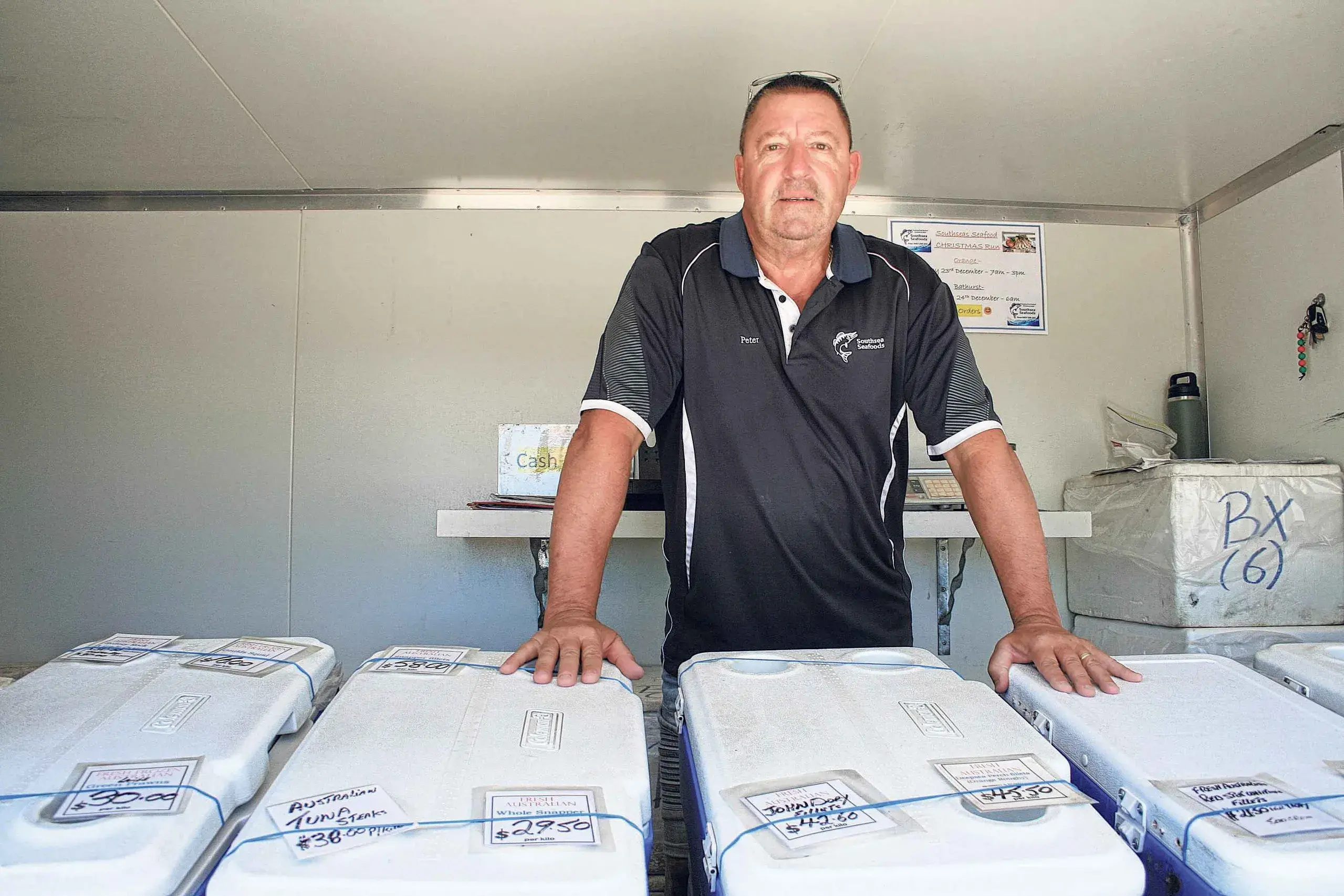
“Hawker vans” they used to be called — travelling sellers offering hard-to-find items not usually sold in the bush — with Peter Rogers one of the last of the breed.
Providing top-quality fresh seafood to towns including Bathurst and Orange for a quarter of a century, he says that, even in 2025, it’s a great living.
“I started it in 2001, this is my 25th year, I was on the coast at Cronulla and used to run a smash repairs business, but I came out of the city, and wanted a business that I could run by myself,” he recalled.
“There were not many seafood shops in the country then, and we also covered Forbes and Parkes for a while, with my wife Michelle helping,” he added.
Retailing his maritime merchandise in the Ashcroft’s IGA carpark each Wednesday, he says that wholesomeness is the key.
“I get everything from the Sydney markets, that’s where all the fish comes into now, including a lot from New Zealand," Peter said.
“I’m down there Monday and Tuesday, I sell Wednesday, then a truck comes up Thursday for Bathurst and the weekend restaurants... it’s all fresh.”
He says that, despite common misconceptions, fish can be kept for more than a few hours without spoiling.
“People think you have to eat it the day you bring it home, but, once a fish is cut, it can last six days. It’s just got to be managed right, though; that’s the most important thing.”
Regularly supplying such local favourites as Australian salmon, flathead, whiting, deep-sea perch, John Dory, snapper, and green and ocean prawns, he’s also gearing up for his traditional special festive season delivery.
“We’re doing a special run on the Tuesday before Christmas, with prawns, lobsters, oysters, (Balmain) bugs, sides of salmon, and large snapper,” Peter said.
“It’s a good life, though I’m at the fish markets at 3am for the auctions, and we also use our own filleters for the fish.”
A seafood fan himself, he lists Moreton Bay bugs, oysters, prawns, and salmon among his favourites. “I also like a nice, green curry with ling — it’s a fish that cooks well, and doesn’t fall apart.
“The secret is freshness and to cook it fast, quickly, not slow; if you do it too long, it goes limp,” Peter opined.
He said that the struggles faced by many bricks-and-mortar fish retailers in the country are due to the fact that there is only a small proportion of the Australian population, who regularly eat fresh seafood.
“The one thing I looked at, is you must have an overall population of about 200,000, that’s for combined country towns you’re going to.
“When I started this I said, ‘only about 5 or 6 per cent of people regularly eat fish’, and that’s who I serve.”
His business model harks back to an old Australian tradition when travelling “hawkers” battle the tyranny of distance to bring items sought but not readily available in rural areas.
Pre-internet and department store days, travelling sales vans were mobile shops that served remote communities with goods like fabrics, tools, and food, evolving from the horse-drawn carts that were a lifeline for the regions.
The hawker also played another central and important role in isolated rural Australia, bringing stories and gossip and a sense of connection to the wider world to help break the monotony of rural life.
Despite the world getting smaller with faster transport and larger populations every year, Peter says his enterprise is thriving.
“It’s always been a very good business, everything we bring up, we sell,” he said, before he begins packing up and heading back to his property north of Bathurst.
“I love the country, it’s a beautiful life!”