
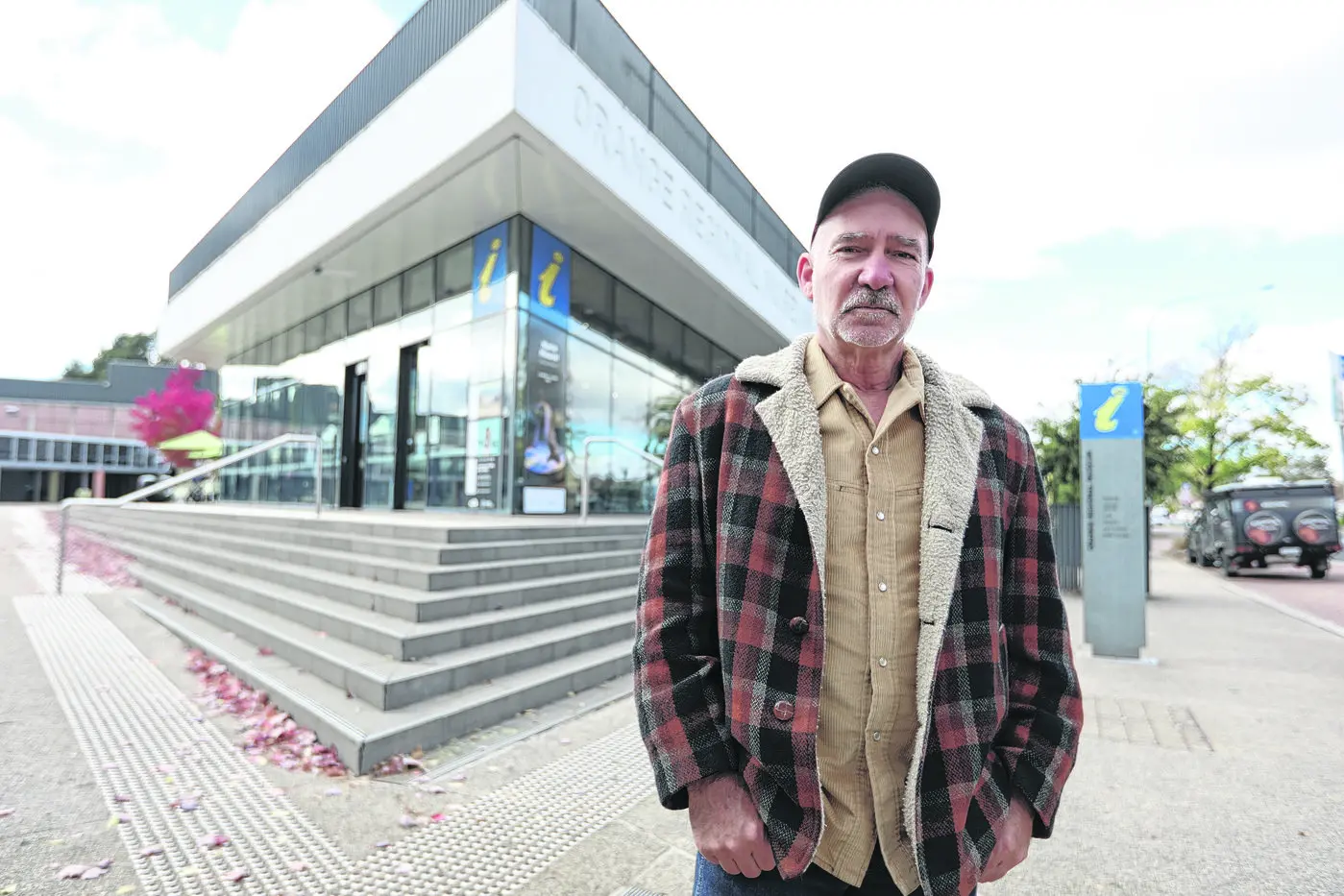
PHOTO
Dr Stephen Gapps is a historian committed to building greater public awareness of the Australian frontier wars, fought as European colonists and their livestock moved out along the coastline and into the interior of the continent. His award-winning 2018 book, The Sydney Wars, explores conflict with First Nations people in the early decades of the NSW colony, while in Gudyarra: The first Wiradyuri War of Resistance (2021), Gapps tells the story of the war between colonists and the Wiradjuri people around Bathurst in 1824, that eventually led to a proclamation of martial law being declared by Governor Thomas Brisbane.
Dr Gapps sat down with Orange City Life while in Orange earlier this month to talk about his latest book, Uprising: War in the colony of New South Wales, 1838–1844, in which he continues the story, delving into archival material, first-hand accounts and oral traditions to reveal a story of widespread coordinated resistance to colonial expansion.
What was it that made you take an interest in studying and writing about the Frontier Wars?
My initial interest in the Frontier Wars was sparked by historians such as Henry Reynolds, who were bringing out the true history of the Frontier Wars. I remember at a lecture Reynolds was talking at, and in one of his books, he made a call that Historians such as himself have been doing the big picture of the Australian Frontier Wars, what needs to happen now is the local stories of frontier conflict. And so that got me thinking about my local area, Western Sydney, and that's where I began working on the Frontier Wars that occurred around Sydney.
And then I've carried on trying to dig into a local area and tell those more detailed local stories.
What made you choose Bathurst and the uprising led by Windradyne as the topic of your follow-up to The Sydney Wars?
Because that conflict kind of moves across the mountains into the Bathurst area in the 1820s, so that took me there as well. And what interested me, when I looked at Bathurst, there had been one local history and one short book written on the Bathurst War and yet at the time martial law was declared. The colony was meant to be under threat. Colonial forces were sent to sweep the area. Windradyne travelled across the mountains to meet the Governor. There's all this documentation, all these amazing events occurred and yet there's been a tiny amount of history written about it!
It's changing, but I wanted to make that story a coherent, readable, accessible story of the warfare that occurred around Bathurst that everyone can now read and hopefully do more research on.
You’ve called the Bathurst War the ‘First Wiradjuri War of Resistance’ and your latest book, Uprising, tells the story of the Second Wiradjuri War of Resistance. Can you tell us the scope of that conflict?
In the late 1830s, early 1840s there were conflicts all along the edge of the expanding frontier from Morton Bay right down toward modern-day Melbourne and there were several contemporary colonial observers who said there was this coordinated uprising right across the frontier of the settlement, and when you start to look in detail, it all occurs at the same time, it does seem there is a really big push back.
Along the Murrumbidgee, squatters were pushed back a hundred kilometres or so from the runs they had occupied. In Queensland, around Darling Downs, there is this massive resistance movement. Around Benalla, in the northeastern Victoria area, another. And it all occurs in a very similar timeframe. How coordinated is that fightback, is the question I try to answer in the book.
What evidence have you uncovered in your research that led you to see these conflicts as a coordinated resistance movement?
Some settlers' diaries and journals and reminiscences report they were surprised by the coordination of these different groups that came to attack them. There are reports of Aboriginal groups travelling several hundred kilometres to join a fight. Other squatters reported that Aboriginal groups had messengers, who would send news across different Nation language groups...
It is running against the common historian's idea that Aboriginal nations, as separate groups, could not unite with each other to fight back and I can see that that is clearly not the case. There was a united response and coordinated response to that massive push in the late 1830s of squatters, stock, sheep, and cattle into Aboriginal lands.
Why do you think so few Australians are aware of these events and conflicts in our history?
Prior to historians from the 1970s, such as Henry Reynolds, historians wrote out of Australian history that story of resistance and conflicts... And I think that is why there is this debate, because people can say, “But you know, I was never told these stories, therefore you must be making them up or something.”
And so I feel that part of what I'm doing is rewriting those stories for general knowledge. It should be part of our general Australian history.